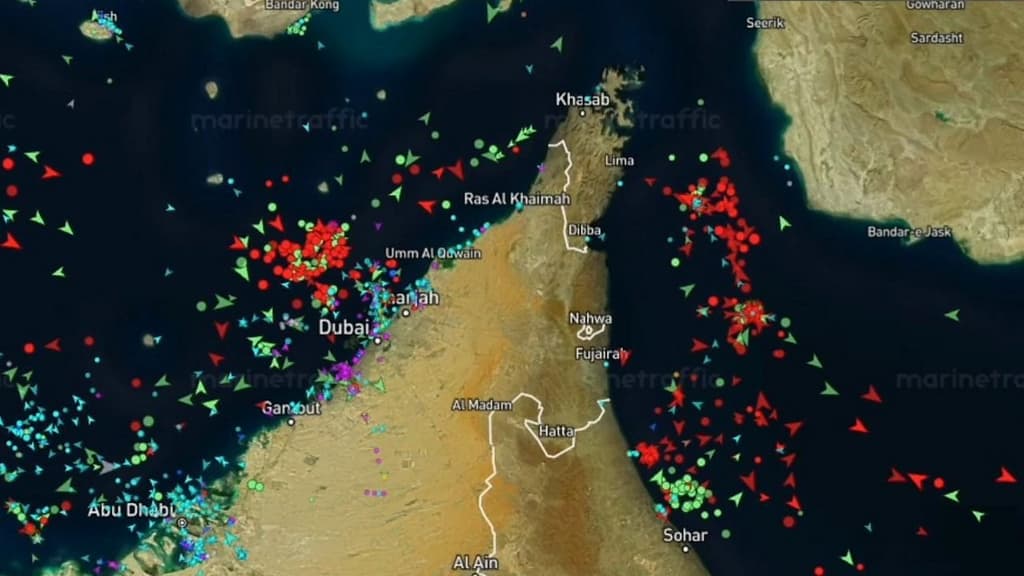
Ongoing U.S.-Iran tensions, triggered by February 2026 strikes, led Iran to assert control over the Strait of Hormuz, slashing daily transits from pre-conflict norms to fractions or near-zero levels amid strikes on vessels, a U.S. naval presence, and Iranian routing requirements. A June 2026 U.S.-Iran memorandum aimed at reopening produced only limited, uneven recovery in oil and other cargo flows before July exchanges and renewed Iranian demands—sanctions relief, U.S. withdrawal, and asset unfreezing—stalled progress and prompted further attacks. Shipping data through mid-2026 show persistent suppression, with Oman-mediated talks and U.S. enforcement actions creating uncertainty over safe passage. These factors keep the risk of full daily shutdowns elevated for traders assessing near-term closure probabilities.
Riepilogo sperimentale generato dall'AI con riferimento ai dati di Polymarket. Questo non è un consiglio di trading e non ha alcun ruolo nella risoluzione di questo mercato. · Aggiornato0 navi transitano a Hormuz in qualsiasi data entro..?
0 navi transitano a Hormuz in qualsiasi data entro..?
$729,212 Vol.
August 31
21%
$729,212 Vol.
August 31
21%
Transit calls include container, dry bulk, roll-on/roll-off, general cargo, and tanker ships. Ships not reported by IMF PortWatch will not be considered.
This market will resolve as soon as IMF PortWatch publishes a daily number of transit calls equal to 0, or once complete data has been published for the specified period without such a publication. If complete data for the specified period has not been published within 28 calendar days of the end of the specified period, this market will resolve based on data published up to that point.
In case of obvious data integrity issues (i.e., erroneous data), the market may remain open until the end of the third calendar day (ET) after the date on which such data is first released to allow for corrections. Data integrity issues refer only to clerical or other similar errors in the underlying data, and do not include cases where IMF PortWatch differs from alternative sources. Revisions to previously published data points made within this market’s timeframe will be considered. However, they will not disqualify a previously published data point from qualifying except in the case of data integrity issues.
The resolution source for this market will be IMF PortWatch, specifically the transit calls data published for the Strait of Hormuz at https://portwatch.imf.org/pages/cb5856222a5b4105adc6ee7e880a1730, both in the chart and through downloadable files.
Mercato aperto: Jul 29, 2026, 12:28 PM ET
Resolver
0x65070BE91...Transit calls include container, dry bulk, roll-on/roll-off, general cargo, and tanker ships. Ships not reported by IMF PortWatch will not be considered.
This market will resolve as soon as IMF PortWatch publishes a daily number of transit calls equal to 0, or once complete data has been published for the specified period without such a publication. If complete data for the specified period has not been published within 28 calendar days of the end of the specified period, this market will resolve based on data published up to that point.
In case of obvious data integrity issues (i.e., erroneous data), the market may remain open until the end of the third calendar day (ET) after the date on which such data is first released to allow for corrections. Data integrity issues refer only to clerical or other similar errors in the underlying data, and do not include cases where IMF PortWatch differs from alternative sources. Revisions to previously published data points made within this market’s timeframe will be considered. However, they will not disqualify a previously published data point from qualifying except in the case of data integrity issues.
The resolution source for this market will be IMF PortWatch, specifically the transit calls data published for the Strait of Hormuz at https://portwatch.imf.org/pages/cb5856222a5b4105adc6ee7e880a1730, both in the chart and through downloadable files.
Resolver
0x65070BE91...Ongoing U.S.-Iran tensions, triggered by February 2026 strikes, led Iran to assert control over the Strait of Hormuz, slashing daily transits from pre-conflict norms to fractions or near-zero levels amid strikes on vessels, a U.S. naval presence, and Iranian routing requirements. A June 2026 U.S.-Iran memorandum aimed at reopening produced only limited, uneven recovery in oil and other cargo flows before July exchanges and renewed Iranian demands—sanctions relief, U.S. withdrawal, and asset unfreezing—stalled progress and prompted further attacks. Shipping data through mid-2026 show persistent suppression, with Oman-mediated talks and U.S. enforcement actions creating uncertainty over safe passage. These factors keep the risk of full daily shutdowns elevated for traders assessing near-term closure probabilities.
Riepilogo sperimentale generato dall'AI con riferimento ai dati di Polymarket. Questo non è un consiglio di trading e non ha alcun ruolo nella risoluzione di questo mercato. · Aggiornato
Fai attenzione ai link esterni.
Fai attenzione ai link esterni.
Domande frequenti