icon for Chiusura del governo entro il 1° ottobre?

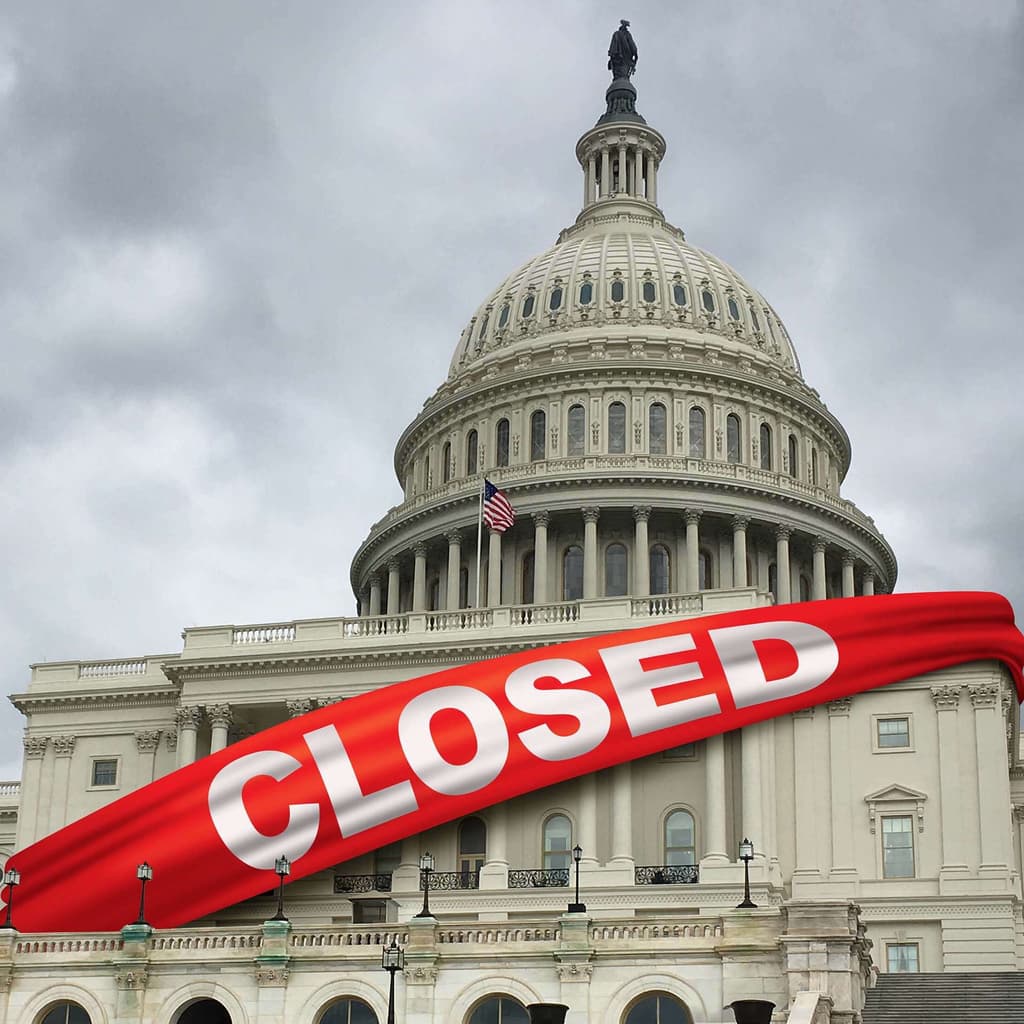
Chiusura del governo entro il 1° ottobre?

icon for Chiusura del governo entro il 1° ottobre?

Chiusura del governo entro il 1° ottobre?

45% probabilità
Polymarket
NUOVO

45% probabilità
Polymarket
NUOVO
This market will resolve to "Yes" if the United States federal government enters a shutdown due to a lapse in appropriations by the specified date, 11:59 PM ET. Otherwise, this market will resolve to "No". A U.S. federal government shutdown is considered to have gone into effect when there is a lapse in appropriations that results in federal government agencies suspending non-excepted operations, typically including the furlough of non-excepted federal employees. A lapse in appropriations occurs when Congress fails to enact, or the President fails to sign into law, legislation providing funding authority for federal government operations by an applicable deadline, resulting in a funding lapse. A lapse in appropriations where no federal agencies cease or suspend non-excepted operations will not qualify as a shutdown. Partial shutdowns qualify. A shutdown affecting one or more, but not all, federal agencies constitutes a shutdown. The following will qualify as a shutdown: - An official directive from the Office of Management and Budget (OMB) ordering heads of affected agencies to execute shutdown plans (e.g., an instruction to "execute plans for an orderly shutdown") that is in effect by the specified date and time - An official operating status published by the U.S. Office of Personnel Management (OPM) indicating that, due to a lapse in appropriations, federal government operations are suspended, reduced, or vary by agency (e.g., a notice that "due to a partial lapse in appropriations, Federal Government operations vary by agency") The following will not qualify as a shutdown: - A technical lapse in appropriations where OMB or other authorized authority directs agencies to continue normal or substantially normal operations - Government closures or operating status changes resulting solely from Federal holidays, inclement weather, natural disasters, or other emergencies, unless such closures coincide with a qualifying shutdown caused by a lapse in appropriations The primary resolution source for this market will be official information from the United States government, including the U.S. Office of Personnel Management (OPM); however, a consensus of credible reporting may also be used.**Congress has only recently begun the FY 2027 appropriations process, with House subcommittees advancing initial bills in late April and early June 2026.** This early timing, more than three months before the September 30 funding deadline, gives lawmakers substantial room to negotiate full-year measures or enact a continuing resolution (CR) to prevent a lapse. Recent experience reinforces this outlook. FY 2026 required multiple CRs and produced partial shutdowns tied to disputes over immigration enforcement and agency funding, yet Congress repeatedly extended stopgap measures and ultimately completed most appropriations. Similar dynamics—partisan divisions over spending priorities, border security, and policy riders—are expected for FY 2027, but the calendar buffer reduces the immediate risk of a lapse by October 1. Trader consensus reflected in the 57.5% “No” price incorporates these procedural realities: historical reliance on CRs when regular order stalls, the absence of an imminent fiscal cliff, and the practical incentive for both chambers and the administration to avoid another disruptive shutdown. While prolonged stalemate remains possible later in the summer, current conditions favor a temporary extension over an immediate funding gap.

This market will resolve to "Yes" if the United States federal government enters a shutdown due to a lapse in appropriations by the specified date, 11:59 PM ET. Otherwise, this market will resolve to "No".

A U.S. federal government shutdown is considered to have gone into effect when there is a lapse in appropriations that results in federal government agencies suspending non-excepted operations, typically including the furlough of non-excepted federal employees.

A lapse in appropriations occurs when Congress fails to enact, or the President fails to sign into law, legislation providing funding authority for federal government operations by an applicable deadline, resulting in a funding lapse. A lapse in appropriations where no federal agencies cease or suspend non-excepted operations will not qualify as a shutdown.

Partial shutdowns qualify. A shutdown affecting one or more, but not all, federal agencies constitutes a shutdown.

The following will qualify as a shutdown:

- An official directive from the Office of Management and Budget (OMB) ordering heads of affected agencies to execute shutdown plans (e.g., an instruction to "execute plans for an orderly shutdown") that is in effect by the specified date and time
- An official operating status published by the U.S. Office of Personnel Management (OPM) indicating that, due to a lapse in appropriations, federal government operations are suspended, reduced, or vary by agency (e.g., a notice that "due to a partial lapse in appropriations, Federal Government operations vary by agency")

The following will not qualify as a shutdown:

- A technical lapse in appropriations where OMB or other authorized authority directs agencies to continue normal or substantially normal operations
- Government closures or operating status changes resulting solely from Federal holidays, inclement weather, natural disasters, or other emergencies, unless such closures coincide with a qualifying shutdown caused by a lapse in appropriations

The primary resolution source for this market will be official information from the United States government, including the U.S. Office of Personnel Management (OPM); however, a consensus of credible reporting may also be used.
Volume
$6
Data di fine
2 ott 2026
Mercato aperto
Jun 10, 2026, 12:27 PM ET
This market will resolve to "Yes" if the United States federal government enters a shutdown due to a lapse in appropriations by the specified date, 11:59 PM ET. Otherwise, this market will resolve to "No". A U.S. federal government shutdown is considered to have gone into effect when there is a lapse in appropriations that results in federal government agencies suspending non-excepted operations, typically including the furlough of non-excepted federal employees. A lapse in appropriations occurs when Congress fails to enact, or the President fails to sign into law, legislation providing funding authority for federal government operations by an applicable deadline, resulting in a funding lapse. A lapse in appropriations where no federal agencies cease or suspend non-excepted operations will not qualify as a shutdown. Partial shutdowns qualify. A shutdown affecting one or more, but not all, federal agencies constitutes a shutdown. The following will qualify as a shutdown: - An official directive from the Office of Management and Budget (OMB) ordering heads of affected agencies to execute shutdown plans (e.g., an instruction to "execute plans for an orderly shutdown") that is in effect by the specified date and time - An official operating status published by the U.S. Office of Personnel Management (OPM) indicating that, due to a lapse in appropriations, federal government operations are suspended, reduced, or vary by agency (e.g., a notice that "due to a partial lapse in appropriations, Federal Government operations vary by agency") The following will not qualify as a shutdown: - A technical lapse in appropriations where OMB or other authorized authority directs agencies to continue normal or substantially normal operations - Government closures or operating status changes resulting solely from Federal holidays, inclement weather, natural disasters, or other emergencies, unless such closures coincide with a qualifying shutdown caused by a lapse in appropriations The primary resolution source for this market will be official information from the United States government, including the U.S. Office of Personnel Management (OPM); however, a consensus of credible reporting may also be used.
This market will resolve to "Yes" if the United States federal government enters a shutdown due to a lapse in appropriations by the specified date, 11:59 PM ET. Otherwise, this market will resolve to "No". A U.S. federal government shutdown is considered to have gone into effect when there is a lapse in appropriations that results in federal government agencies suspending non-excepted operations, typically including the furlough of non-excepted federal employees. A lapse in appropriations occurs when Congress fails to enact, or the President fails to sign into law, legislation providing funding authority for federal government operations by an applicable deadline, resulting in a funding lapse. A lapse in appropriations where no federal agencies cease or suspend non-excepted operations will not qualify as a shutdown. Partial shutdowns qualify. A shutdown affecting one or more, but not all, federal agencies constitutes a shutdown. The following will qualify as a shutdown: - An official directive from the Office of Management and Budget (OMB) ordering heads of affected agencies to execute shutdown plans (e.g., an instruction to "execute plans for an orderly shutdown") that is in effect by the specified date and time - An official operating status published by the U.S. Office of Personnel Management (OPM) indicating that, due to a lapse in appropriations, federal government operations are suspended, reduced, or vary by agency (e.g., a notice that "due to a partial lapse in appropriations, Federal Government operations vary by agency") The following will not qualify as a shutdown: - A technical lapse in appropriations where OMB or other authorized authority directs agencies to continue normal or substantially normal operations - Government closures or operating status changes resulting solely from Federal holidays, inclement weather, natural disasters, or other emergencies, unless such closures coincide with a qualifying shutdown caused by a lapse in appropriations The primary resolution source for this market will be official information from the United States government, including the U.S. Office of Personnel Management (OPM); however, a consensus of credible reporting may also be used.**Congress has only recently begun the FY 2027 appropriations process, with House subcommittees advancing initial bills in late April and early June 2026.** This early timing, more than three months before the September 30 funding deadline, gives lawmakers substantial room to negotiate full-year measures or enact a continuing resolution (CR) to prevent a lapse. Recent experience reinforces this outlook. FY 2026 required multiple CRs and produced partial shutdowns tied to disputes over immigration enforcement and agency funding, yet Congress repeatedly extended stopgap measures and ultimately completed most appropriations. Similar dynamics—partisan divisions over spending priorities, border security, and policy riders—are expected for FY 2027, but the calendar buffer reduces the immediate risk of a lapse by October 1. Trader consensus reflected in the 57.5% “No” price incorporates these procedural realities: historical reliance on CRs when regular order stalls, the absence of an imminent fiscal cliff, and the practical incentive for both chambers and the administration to avoid another disruptive shutdown. While prolonged stalemate remains possible later in the summer, current conditions favor a temporary extension over an immediate funding gap.

This market will resolve to "Yes" if the United States federal government enters a shutdown due to a lapse in appropriations by the specified date, 11:59 PM ET. Otherwise, this market will resolve to "No".

A U.S. federal government shutdown is considered to have gone into effect when there is a lapse in appropriations that results in federal government agencies suspending non-excepted operations, typically including the furlough of non-excepted federal employees.

A lapse in appropriations occurs when Congress fails to enact, or the President fails to sign into law, legislation providing funding authority for federal government operations by an applicable deadline, resulting in a funding lapse. A lapse in appropriations where no federal agencies cease or suspend non-excepted operations will not qualify as a shutdown.

Partial shutdowns qualify. A shutdown affecting one or more, but not all, federal agencies constitutes a shutdown.

The following will qualify as a shutdown:

- An official directive from the Office of Management and Budget (OMB) ordering heads of affected agencies to execute shutdown plans (e.g., an instruction to "execute plans for an orderly shutdown") that is in effect by the specified date and time
- An official operating status published by the U.S. Office of Personnel Management (OPM) indicating that, due to a lapse in appropriations, federal government operations are suspended, reduced, or vary by agency (e.g., a notice that "due to a partial lapse in appropriations, Federal Government operations vary by agency")

The following will not qualify as a shutdown:

- A technical lapse in appropriations where OMB or other authorized authority directs agencies to continue normal or substantially normal operations
- Government closures or operating status changes resulting solely from Federal holidays, inclement weather, natural disasters, or other emergencies, unless such closures coincide with a qualifying shutdown caused by a lapse in appropriations

The primary resolution source for this market will be official information from the United States government, including the U.S. Office of Personnel Management (OPM); however, a consensus of credible reporting may also be used.
Volume
$6
Data di fine
2 ott 2026
Mercato aperto
Jun 10, 2026, 12:27 PM ET
This market will resolve to "Yes" if the United States federal government enters a shutdown due to a lapse in appropriations by the specified date, 11:59 PM ET. Otherwise, this market will resolve to "No". A U.S. federal government shutdown is considered to have gone into effect when there is a lapse in appropriations that results in federal government agencies suspending non-excepted operations, typically including the furlough of non-excepted federal employees. A lapse in appropriations occurs when Congress fails to enact, or the President fails to sign into law, legislation providing funding authority for federal government operations by an applicable deadline, resulting in a funding lapse. A lapse in appropriations where no federal agencies cease or suspend non-excepted operations will not qualify as a shutdown. Partial shutdowns qualify. A shutdown affecting one or more, but not all, federal agencies constitutes a shutdown. The following will qualify as a shutdown: - An official directive from the Office of Management and Budget (OMB) ordering heads of affected agencies to execute shutdown plans (e.g., an instruction to "execute plans for an orderly shutdown") that is in effect by the specified date and time - An official operating status published by the U.S. Office of Personnel Management (OPM) indicating that, due to a lapse in appropriations, federal government operations are suspended, reduced, or vary by agency (e.g., a notice that "due to a partial lapse in appropriations, Federal Government operations vary by agency") The following will not qualify as a shutdown: - A technical lapse in appropriations where OMB or other authorized authority directs agencies to continue normal or substantially normal operations - Government closures or operating status changes resulting solely from Federal holidays, inclement weather, natural disasters, or other emergencies, unless such closures coincide with a qualifying shutdown caused by a lapse in appropriations The primary resolution source for this market will be official information from the United States government, including the U.S. Office of Personnel Management (OPM); however, a consensus of credible reporting may also be used.

Fai attenzione ai link esterni.

Domande frequenti

"Chiusura del governo entro il 1° ottobre?" è un mercato predittivo su Polymarket con 2 possibili esiti dove i trader comprano e vendono azioni in base a ciò che credono accadrà. L'esito attualmente in testa è "Chiusura del governo entro il 1° ottobre?" a 46%. I prezzi riflettono probabilità aggregate in tempo reale. Ad esempio, un'azione quotata a 46¢ implica che il mercato assegna collettivamente una probabilità di 46% a quell'esito. Queste quote cambiano continuamente man mano che i trader reagiscono a nuovi sviluppi e informazioni. Le azioni nell'esito corretto possono essere riscattate per $1 ciascuna alla risoluzione del mercato.

"Chiusura del governo entro il 1° ottobre?" è un mercato appena creato su Polymarket, lanciato il Jun 10, 2026. Come mercato nuovo, questa è la tua opportunità di essere tra i primi trader a stabilire le quote e i segnali di prezzo iniziali del mercato. Puoi anche aggiungere questa pagina ai preferiti per monitorare il volume e l'attività di trading man mano che il mercato guadagna visibilità.

Per fare trading su "Chiusura del governo entro il 1° ottobre?", esplora i 2 esiti disponibili elencati in questa pagina. Ogni esito mostra un prezzo corrente che rappresenta la probabilità implicita del mercato. Per prendere una posizione, seleziona l'esito che ritieni più probabile, scegli "Sì" per fare trading a suo favore o "No" per fare trading contro di esso, inserisci il tuo importo e clicca "Trading". Se il tuo esito scelto è corretto alla risoluzione del mercato, le tue azioni "Sì" pagano $1 ciascuna. Se è errato, pagano $0. Puoi anche vendere le tue azioni in qualsiasi momento prima della risoluzione se vuoi consolidare un profitto o limitare una perdita.

L'attuale favorito per "Chiusura del governo entro il 1° ottobre?" è "Chiusura del governo entro il 1° ottobre?" a 46%, il che significa che il mercato assegna una probabilità di 46% a quell'esito. Queste quote si aggiornano in tempo reale man mano che i trader comprano e vendono azioni, quindi riflettono l'ultima visione collettiva di ciò che è più probabile che accada. Controlla frequentemente o aggiungi questa pagina ai preferiti per seguire come cambiano le quote man mano che emergono nuove informazioni.

Le regole di risoluzione per "Chiusura del governo entro il 1° ottobre?" definiscono esattamente cosa deve accadere affinché ogni esito venga dichiarato vincitore — comprese le fonti di dati ufficiali utilizzate per determinare il risultato. Puoi consultare i criteri completi di risoluzione nella sezione "Regole" di questa pagina sopra i commenti. Ti consigliamo di leggere attentamente le regole prima di fare trading, poiché specificano le condizioni precise, i casi limite e le fonti che regolano come viene risolto questo mercato.