
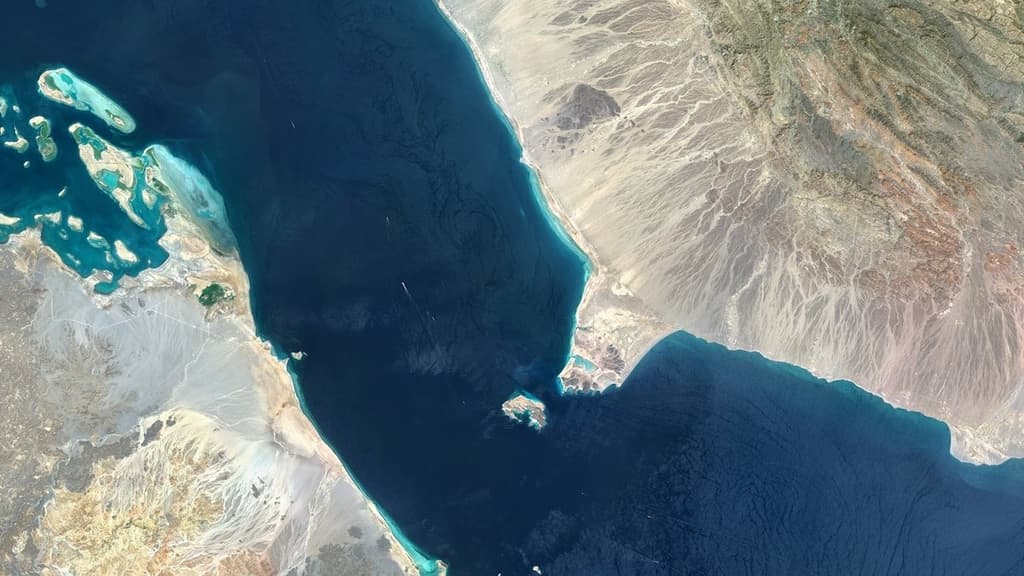
**Trader consensus heavily favors 180-199 transits through the Bab el-Mandeb Strait for the week of August 24, 2026, at 98.9% implied probability.** This positioning reflects stabilized weekly volumes amid persistent Red Sea risks, with MarineTraffic data showing roughly 269 total crossings (up modestly week-over-week) and AIS-visible commercial traffic hovering near 223 in the prior period. Key drivers include the Houthi naval blockade on Saudi-linked tonnage since mid-July, which has suppressed laden tanker flows and prompted more vessels to transit dark (AIS off) to mitigate attack risk, alongside selective carrier returns to Suez routing that have lifted aggregate counts modestly but kept them well below pre-crisis baselines. War-risk premiums remain elevated, and Saudi crude exports via Yanbu have declined sharply. Realistic challenges to the 180-199 band would require either a sharp escalation in attacks widening the high-risk zone or a rapid de-escalation allowing full commercial normalization and higher laden transits.
基於Polymarket數據的AI實驗性摘要。這不是交易建議,也不影響該市場的結算方式。 · 更新於180-199 100.0%
160-179 2.4%
220艘以上 2.1%
少於160 <1%
$20,280 交易量
$20,280 交易量
少於160
否
160-179
否
180-199
是
200-219
否
220艘以上
否
180-199 100.0%
160-179 2.4%
220艘以上 2.1%
少於160 <1%
$20,280 交易量
$20,280 交易量
少於160
否
160-179
否
180-199
是
200-219
否
220艘以上
否
Transit calls include container, dry bulk, roll-on/roll-off, general cargo, and tanker ships. Ships not reported by IMF Portwatch will not be considered.
This market will resolve as soon as all relevant data has been published. If the relevant data is not published within 14 calendar days of the specified date, this market will resolve based on the most recent data published up to that point.
In case of obvious data integrity issues (i.e., erroneous data), the market may remain open until the end of the third calendar day (ET) after the date on which such data is first released to allow for corrections. Data integrity issues refer only to clerical or other similar errors in the underlying data, and do not include cases where IMF Portwatch differs from alternative sources.
Only revisions to previously published data points made before all relevant data has been published will be considered.
The resolution source for this market will be IMF PortWatch, specifically the “Arrivals of Ships” data published for the Bab el-Mandeb Strait at https://portwatch.imf.org/pages/6b1814d64903461b98144a6cc25eb79c.
市場開放時間: Aug 21, 2026, 3:08 PM ET
已提議結果: 否
無爭議
最終結果: 否
Transit calls include container, dry bulk, roll-on/roll-off, general cargo, and tanker ships. Ships not reported by IMF Portwatch will not be considered.
This market will resolve as soon as all relevant data has been published. If the relevant data is not published within 14 calendar days of the specified date, this market will resolve based on the most recent data published up to that point.
In case of obvious data integrity issues (i.e., erroneous data), the market may remain open until the end of the third calendar day (ET) after the date on which such data is first released to allow for corrections. Data integrity issues refer only to clerical or other similar errors in the underlying data, and do not include cases where IMF Portwatch differs from alternative sources.
Only revisions to previously published data points made before all relevant data has been published will be considered.
The resolution source for this market will be IMF PortWatch, specifically the “Arrivals of Ships” data published for the Bab el-Mandeb Strait at https://portwatch.imf.org/pages/6b1814d64903461b98144a6cc25eb79c.
已提議結果: 否
無爭議
最終結果: 否
**Trader consensus heavily favors 180-199 transits through the Bab el-Mandeb Strait for the week of August 24, 2026, at 98.9% implied probability.** This positioning reflects stabilized weekly volumes amid persistent Red Sea risks, with MarineTraffic data showing roughly 269 total crossings (up modestly week-over-week) and AIS-visible commercial traffic hovering near 223 in the prior period. Key drivers include the Houthi naval blockade on Saudi-linked tonnage since mid-July, which has suppressed laden tanker flows and prompted more vessels to transit dark (AIS off) to mitigate attack risk, alongside selective carrier returns to Suez routing that have lifted aggregate counts modestly but kept them well below pre-crisis baselines. War-risk premiums remain elevated, and Saudi crude exports via Yanbu have declined sharply. Realistic challenges to the 180-199 band would require either a sharp escalation in attacks widening the high-risk zone or a rapid de-escalation allowing full commercial normalization and higher laden transits.
基於Polymarket數據的AI實驗性摘要。這不是交易建議,也不影響該市場的結算方式。 · 更新於
警惕外部連結哦。
警惕外部連結哦。
Frequently Asked Questions