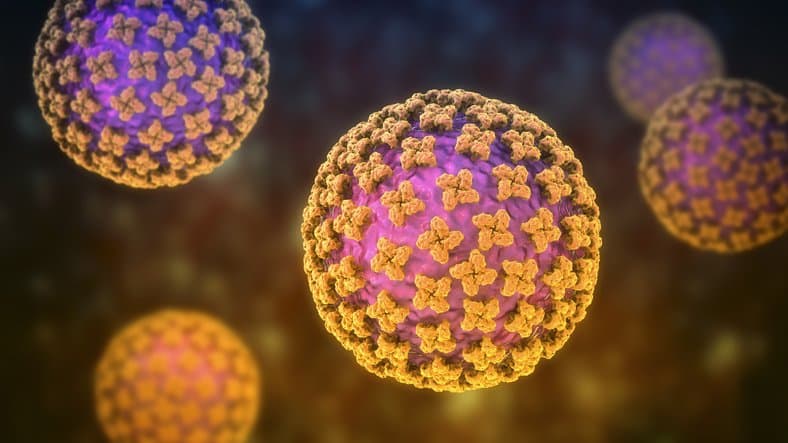
Hantavirus lacks the person-to-person transmission efficiency needed for pandemic spread, with CDC and WHO data showing primarily rodent-to-human spillover via aerosolized excreta and only rare, limited clusters from specific strains such as Andes virus. Current epidemiological surveillance through August 2026 reports no sustained chains or exponential case growth that would meet pandemic thresholds, supporting the 96.3% market-implied probability of "No." Trader consensus reflects this biological barrier alongside historical incidence patterns of sporadic, geographically contained infections. A realistic scenario that could shift odds involves an unexpected viral mutation enabling efficient human transmission, though surveillance data indicate such changes remain low-probability within the remaining months of 2026.
Polymarketデータを参照したAI生成の実験的な要約。これは取引アドバイスではなく、このマーケットの解決方法には一切関係ありません。 · 更新日2026年のハンタウイルスのパンデミック?
2026年のハンタウイルスのパンデミック?
はい
$17,820,627 Vol.
$17,820,627 Vol.
はい
$17,820,627 Vol.
$17,820,627 Vol.
An explicit characterization includes official WHO statements, reports, press briefings, or publications that clearly describe the outbreak as a "pandemic." A Public Health Emergency of International Concern (PHEIC) alone will not qualify unless it is also described as a pandemic.
The primary resolution source for this market will be official WHO communications. A consensus of credible reporting may also be used.
マーケット開始日: May 4, 2026, 10:26 AM ET
Resolver
0x65070BE91...An explicit characterization includes official WHO statements, reports, press briefings, or publications that clearly describe the outbreak as a "pandemic." A Public Health Emergency of International Concern (PHEIC) alone will not qualify unless it is also described as a pandemic.
The primary resolution source for this market will be official WHO communications. A consensus of credible reporting may also be used.
Resolver
0x65070BE91...Hantavirus lacks the person-to-person transmission efficiency needed for pandemic spread, with CDC and WHO data showing primarily rodent-to-human spillover via aerosolized excreta and only rare, limited clusters from specific strains such as Andes virus. Current epidemiological surveillance through August 2026 reports no sustained chains or exponential case growth that would meet pandemic thresholds, supporting the 96.3% market-implied probability of "No." Trader consensus reflects this biological barrier alongside historical incidence patterns of sporadic, geographically contained infections. A realistic scenario that could shift odds involves an unexpected viral mutation enabling efficient human transmission, though surveillance data indicate such changes remain low-probability within the remaining months of 2026.
Polymarketデータを参照したAI生成の実験的な要約。これは取引アドバイスではなく、このマーケットの解決方法には一切関係ありません。 · 更新日


外部リンクに注意してください。
外部リンクに注意してください。
よくある質問