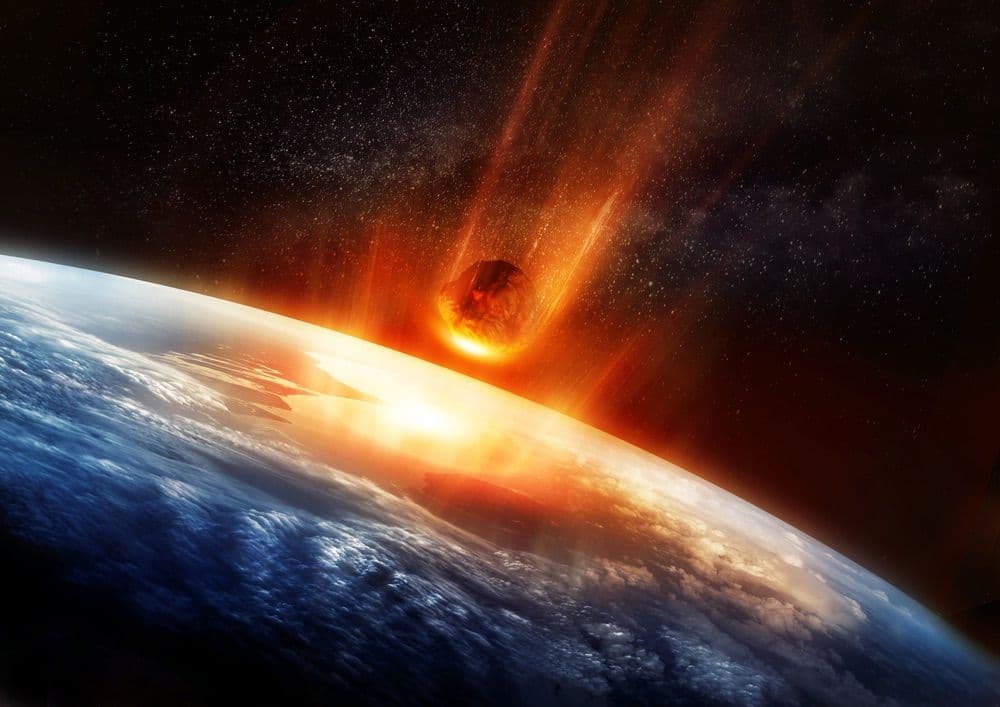
Trader consensus favoring "No" at 73.5% stems primarily from historical base rates of bolide events tracked by NASA’s CNEOS fireball database and CTBTO infrasound networks, which show 5 kt TNT-equivalent airbursts occurring roughly once per year on average yet with high year-to-year variability and many years recording none above threshold. No known near-Earth objects large enough to deliver this energy are on collision courses for 2026, per current Sentry risk assessments and orbital monitoring. Small, undetected impactors dominate the hazard, but the absence of any confirmed 5 kt-scale events through mid-2026 and stable model projections reinforce the market-implied odds. Continuous updates from global sensor networks through year-end remain the key variables that could shift probabilities.
สรุปจาก AI ทดลองที่อ้างอิงข้อมูลจาก Polymarket ไม่ใช่คำแนะนำในการเทรดและไม่มีผลต่อการตัดสินตลาดนี้ · อัปเดตแล้ว5kt meteor strike in 2026?
5kt meteor strike in 2026?
$312,416 ปริมาณ
$312,416 ปริมาณ
$312,416 ปริมาณ
$312,416 ปริมาณ
The object must be classified as a natural meteoroid; events involving artificial objects or reentry vehicles do not qualify.
The primary resolution source will be the NASA JPL Fireball and Bolide Data repository: https://cneos.jpl.nasa.gov/fireballs/. The relevant field for determining impact energy is the “Impact Energy (kt)” column. If this dataset has not been updated to include all relevant dates by February 28, 2027, or if the NASA JPL Fireball and Bolide Data repository becomes permanently unavailable, this market may resolve based on a consensus of credible sources including the European Space Agency (ESA), the International Asteroid Warning Network (IAWN), the U.S. Department of Defense, or credible reporting of a scientific consensus, such as a NASA press release.
ตลาดเปิดเมื่อ: Dec 31, 2025, 12:04 PM ET
Resolver
0x65070BE91...The object must be classified as a natural meteoroid; events involving artificial objects or reentry vehicles do not qualify.
The primary resolution source will be the NASA JPL Fireball and Bolide Data repository: https://cneos.jpl.nasa.gov/fireballs/. The relevant field for determining impact energy is the “Impact Energy (kt)” column. If this dataset has not been updated to include all relevant dates by February 28, 2027, or if the NASA JPL Fireball and Bolide Data repository becomes permanently unavailable, this market may resolve based on a consensus of credible sources including the European Space Agency (ESA), the International Asteroid Warning Network (IAWN), the U.S. Department of Defense, or credible reporting of a scientific consensus, such as a NASA press release.
Resolver
0x65070BE91...Trader consensus favoring "No" at 73.5% stems primarily from historical base rates of bolide events tracked by NASA’s CNEOS fireball database and CTBTO infrasound networks, which show 5 kt TNT-equivalent airbursts occurring roughly once per year on average yet with high year-to-year variability and many years recording none above threshold. No known near-Earth objects large enough to deliver this energy are on collision courses for 2026, per current Sentry risk assessments and orbital monitoring. Small, undetected impactors dominate the hazard, but the absence of any confirmed 5 kt-scale events through mid-2026 and stable model projections reinforce the market-implied odds. Continuous updates from global sensor networks through year-end remain the key variables that could shift probabilities.
สรุปจาก AI ทดลองที่อ้างอิงข้อมูลจาก Polymarket ไม่ใช่คำแนะนำในการเทรดและไม่มีผลต่อการตัดสินตลาดนี้ · อัปเดตแล้ว
ระวังลิงก์ภายนอก
ระวังลิงก์ภายนอก
คำถามที่พบบ่อย