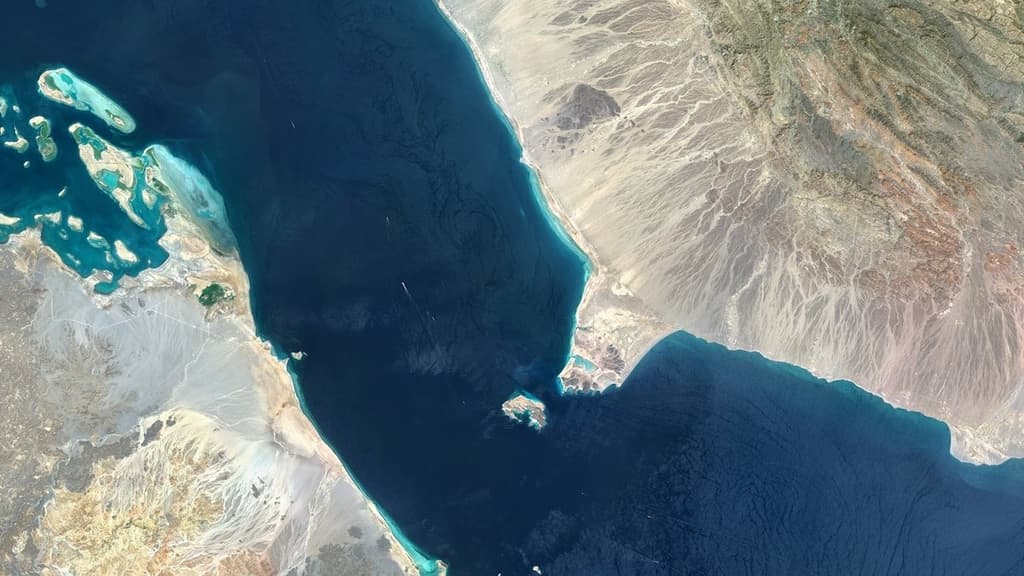
**Geopolitical risks from renewed Houthi activity have driven Bab el-Mandeb transits sharply lower since mid-July, producing closely matched Polymarket probabilities across the four buckets.** After the Houthis declared a Saudi maritime blockade in late July amid the broader 2026 Iran-related tensions, weekly vessel counts fell roughly 24% from 354 to the 266–269 range, then stabilized near 226 crossings for 3–9 August per Lloyd’s List Intelligence and MarineTraffic data. This reflects shipowners rerouting around the Cape of Good Hope, elevated war-risk insurance premiums, and selective avoidance of Saudi-linked cargoes, partially offset by a multinational naval coalition and Houthi denials of new transit fees. **The narrow spread between the 180–199 (34.5%) and 220+ (33.0%) outcomes captures residual uncertainty over modest week-to-week volatility.** Daily crossings have fluctuated between the low 20s and low 40s, with some rebound to 40 on 11 August amid hopes of de-escalation in the U.S.–Iran conflict. Key swing factors include the pace of any security incidents, the share of tankers and container ships electing to transit versus divert, and the effectiveness of “safe passage” assurances. Markets are pricing in continued depressed but not collapsed volumes relative to pre-July levels, consistent with the strait’s role as a critical chokepoint for roughly 10% of seaborne oil and a significant share of Europe–Asia trade.
Tóm tắt AI thử nghiệm tham chiếu dữ liệu Polymarket. Đây không phải tư vấn giao dịch và không ảnh hưởng đến cách thị trường này được giải quyết. · Cập nhậtHow many ships transit Bab el-Mandeb Strait week of August 10?
How many ships transit Bab el-Mandeb Strait week of August 10?
180-199 35%
220+ 17%
200-219 13.8%
<180 0
$12,247 KL.
$12,247 KL.
<180
44%
180-199
35%
200-219
26%
220+
32%
180-199 35%
220+ 17%
200-219 13.8%
<180 0
$12,247 KL.
$12,247 KL.
<180
44%
180-199
35%
200-219
26%
220+
32%
Transit calls include container, dry bulk, roll-on/roll-off, general cargo, and tanker ships. Ships not reported by IMF Portwatch will not be considered.
This market will resolve as soon as all relevant data has been published. If the relevant data is not published within 14 calendar days of the specified date, this market will resolve based on the most recent data published up to that point.
In case of obvious data integrity issues (i.e., erroneous data), the market may remain open until the end of the third calendar day (ET) after the date on which such data is first released to allow for corrections. Data integrity issues refer only to clerical or other similar errors in the underlying data, and do not include cases where IMF Portwatch differs from alternative sources.
Only revisions to previously published data points made before all relevant data has been published will be considered.
The resolution source for this market will be IMF PortWatch, specifically the “Arrivals of Ships” data published for the Bab el-Mandeb Strait at https://portwatch.imf.org/pages/6b1814d64903461b98144a6cc25eb79c.
Thị trường mở: Aug 8, 2026, 12:07 PM ET
Resolver
0x69c47De9D...Transit calls include container, dry bulk, roll-on/roll-off, general cargo, and tanker ships. Ships not reported by IMF Portwatch will not be considered.
This market will resolve as soon as all relevant data has been published. If the relevant data is not published within 14 calendar days of the specified date, this market will resolve based on the most recent data published up to that point.
In case of obvious data integrity issues (i.e., erroneous data), the market may remain open until the end of the third calendar day (ET) after the date on which such data is first released to allow for corrections. Data integrity issues refer only to clerical or other similar errors in the underlying data, and do not include cases where IMF Portwatch differs from alternative sources.
Only revisions to previously published data points made before all relevant data has been published will be considered.
The resolution source for this market will be IMF PortWatch, specifically the “Arrivals of Ships” data published for the Bab el-Mandeb Strait at https://portwatch.imf.org/pages/6b1814d64903461b98144a6cc25eb79c.
Resolver
0x69c47De9D...**Geopolitical risks from renewed Houthi activity have driven Bab el-Mandeb transits sharply lower since mid-July, producing closely matched Polymarket probabilities across the four buckets.** After the Houthis declared a Saudi maritime blockade in late July amid the broader 2026 Iran-related tensions, weekly vessel counts fell roughly 24% from 354 to the 266–269 range, then stabilized near 226 crossings for 3–9 August per Lloyd’s List Intelligence and MarineTraffic data. This reflects shipowners rerouting around the Cape of Good Hope, elevated war-risk insurance premiums, and selective avoidance of Saudi-linked cargoes, partially offset by a multinational naval coalition and Houthi denials of new transit fees. **The narrow spread between the 180–199 (34.5%) and 220+ (33.0%) outcomes captures residual uncertainty over modest week-to-week volatility.** Daily crossings have fluctuated between the low 20s and low 40s, with some rebound to 40 on 11 August amid hopes of de-escalation in the U.S.–Iran conflict. Key swing factors include the pace of any security incidents, the share of tankers and container ships electing to transit versus divert, and the effectiveness of “safe passage” assurances. Markets are pricing in continued depressed but not collapsed volumes relative to pre-July levels, consistent with the strait’s role as a critical chokepoint for roughly 10% of seaborne oil and a significant share of Europe–Asia trade.
Tóm tắt AI thử nghiệm tham chiếu dữ liệu Polymarket. Đây không phải tư vấn giao dịch và không ảnh hưởng đến cách thị trường này được giải quyết. · Cập nhật
Cẩn thận với liên kết bên ngoài.
Cẩn thận với liên kết bên ngoài.
Câu hỏi thường gặp