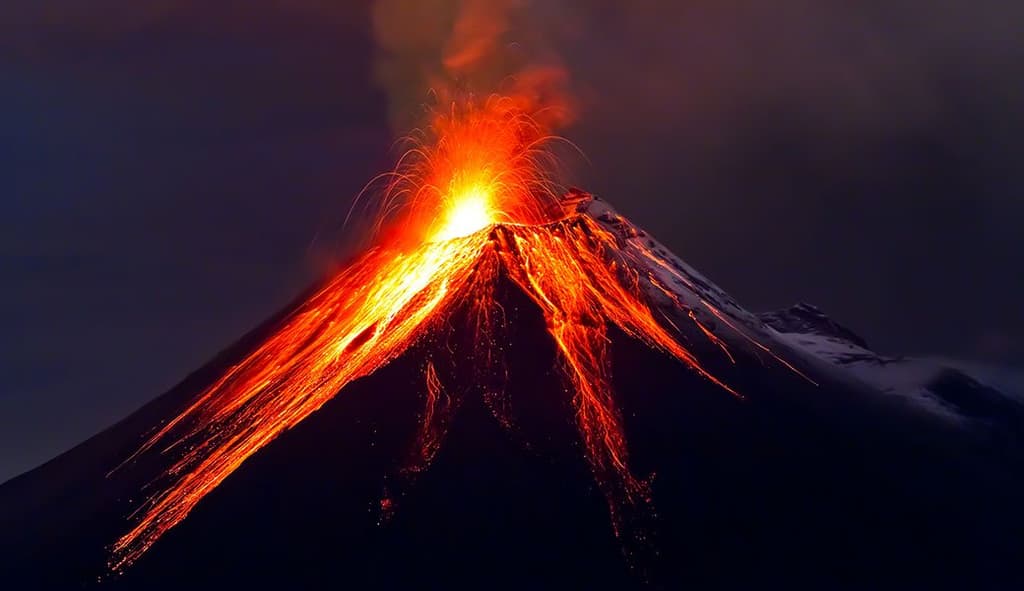
Major VEI ≥6 eruptions occur infrequently on geological timescales, with only a handful documented in the past two centuries, the most recent being Mount Pinatubo in 1991. As of mid-August 2026, global monitoring networks including USGS and Smithsonian Institution reports show no volcanoes exhibiting the sustained precursory activity—such as rapid magma chamber inflation, extreme seismicity swarms, or deformation rates—necessary for a Plinian-style event capable of reaching VEI 6 thresholds. This lack of signals, alongside the low annual baseline rate of roughly 0.1–0.5 such eruptions worldwide, underpins the 93.6% market-implied probability for no occurrence this year. While sudden unrest at caldera systems like Yellowstone or Campi Flegrei could theoretically escalate, current deformation and gas emission data indicate no near-term trajectory toward that scale.
基於Polymarket數據的AI實驗性摘要。這不是交易建議,也不影響該市場的結算方式。 · 更新於是
$127,900 交易量
$127,900 交易量
是
$127,900 交易量
$127,900 交易量
The primary resolution source will be the Smithsonian Institution Global Volcanism Program (GVP: https://volcano.si.edu/), specifically the ‘VEI 6’ figure for 2026 released on the page currently titled "Eruptions Avg 2000-2024 (N/T)" (https://volcano.si.edu/faq/index.cfm?question=eruptionsbyyear) as of March 31, 2027, 12 PM ET. Any prior updates will not be considered finalized.
If this dataset has not been updated to include all relevant events by March 31, 2027, or if the Smithsonian GVP becomes permanently unavailable, this market may resolve based on a consensus of credible scientific sources, including the U.S. Geological Survey (USGS), national or regional volcanic observatories, or credible reporting of a scientific consensus.
Note: Smithsonian Institution Global Volcanism Program databases, which include eruptions that reached the relevant threshold prior to this market’s timeframe (e.g., https://volcano.si.edu/faq/index.cfm?question=eruptionsbyyear&checkyear=2025), will not be considered.
市場開放時間: Dec 29, 2025, 6:24 PM ET
Resolver
0x65070BE91...The primary resolution source will be the Smithsonian Institution Global Volcanism Program (GVP: https://volcano.si.edu/), specifically the ‘VEI 6’ figure for 2026 released on the page currently titled "Eruptions Avg 2000-2024 (N/T)" (https://volcano.si.edu/faq/index.cfm?question=eruptionsbyyear) as of March 31, 2027, 12 PM ET. Any prior updates will not be considered finalized.
If this dataset has not been updated to include all relevant events by March 31, 2027, or if the Smithsonian GVP becomes permanently unavailable, this market may resolve based on a consensus of credible scientific sources, including the U.S. Geological Survey (USGS), national or regional volcanic observatories, or credible reporting of a scientific consensus.
Note: Smithsonian Institution Global Volcanism Program databases, which include eruptions that reached the relevant threshold prior to this market’s timeframe (e.g., https://volcano.si.edu/faq/index.cfm?question=eruptionsbyyear&checkyear=2025), will not be considered.
Resolver
0x65070BE91...Major VEI ≥6 eruptions occur infrequently on geological timescales, with only a handful documented in the past two centuries, the most recent being Mount Pinatubo in 1991. As of mid-August 2026, global monitoring networks including USGS and Smithsonian Institution reports show no volcanoes exhibiting the sustained precursory activity—such as rapid magma chamber inflation, extreme seismicity swarms, or deformation rates—necessary for a Plinian-style event capable of reaching VEI 6 thresholds. This lack of signals, alongside the low annual baseline rate of roughly 0.1–0.5 such eruptions worldwide, underpins the 93.6% market-implied probability for no occurrence this year. While sudden unrest at caldera systems like Yellowstone or Campi Flegrei could theoretically escalate, current deformation and gas emission data indicate no near-term trajectory toward that scale.
基於Polymarket數據的AI實驗性摘要。這不是交易建議,也不影響該市場的結算方式。 · 更新於

警惕外部連結哦。
警惕外部連結哦。
Frequently Asked Questions