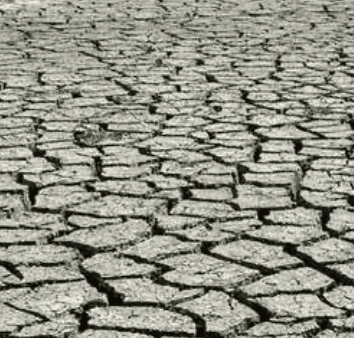
**Recent U.S. Drought Monitor data (released August 20, 2026, valid through August 18) show persistent D4 exceptional drought pockets concentrated in the Intermountain West, High Plains, and Southern Plains, with trader odds clustered tightly around 3–6 affected states for the August 25 week because short-term rainfall variability and model spread create high uncertainty in state-level counts.** Core D4 areas currently include portions of Colorado, Nebraska, Idaho, Oregon, Oklahoma, Texas, and Arkansas, driven by record July heat, a weak monsoon that failed to deliver widespread relief, and ongoing dryness that has kept soil moisture, streamflow, and vegetation indices at exceptional levels in these zones. Recent scattered rains produced localized two-category improvements in parts of eastern Colorado, Wyoming, and Nebraska, trimming some D4 extent, while degradations occurred in the southern Plains and North Dakota from continued warm, dry conditions. The next map—covering conditions through roughly August 25—will hinge on whether additional precipitation arrives in the core western and plains drought regions or if heat and dry weather allow D4 to expand or persist across state lines. NOAA outlooks indicate above-normal rainfall chances mainly east of the Appalachians, leaving western and central areas more dependent on variable convective activity. With D4 already covering only about 1.1% of the contiguous U.S. but concentrated in a handful of states, even modest shifts in boundaries or intensity can move the count across the closely priced 1–2, 3–4, 5–6, or 7–9 state thresholds. Historical late-August patterns show D4 is typically stable once established but can contract quickly with organized rainfall.
基于Polymarket数据的AI实验性摘要。这不是交易建议,也不影响该市场的结算方式。 · 更新于How many states will be in D4 (Exceptional Drought) — week of August 25, 2026?
How many states will be in D4 (Exceptional Drought) — week of August 25, 2026?
5-6 states 51%
1-2 states 48%
7-9 states 47%
3-4 states 46%
0 states
46%
1-2 states
48%
3-4 states
46%
5-6 states
51%
7-9 states
47%
10 or more states
46%
5-6 states 51%
1-2 states 48%
7-9 states 47%
3-4 states 46%
0 states
46%
1-2 states
48%
3-4 states
46%
5-6 states
51%
7-9 states
47%
10 or more states
46%
Brackets: 0 / 1-2 / 3-4 / 5-6 / 7-9 / 10+. Exactly one bracket resolves "Yes".
The count ranges over all 48 coterminous states — the 48 states excluding Alaska and Hawaii. The District of Columbia and U.S. territories are not considered.
Each USDM release covers the seven-day period ending Tuesday at 8:00 AM ET and is published the following Thursday.
Resolution is based on the first published US Drought Monitor release for the listed week. Subsequent revisions will not be considered; the first published release is final.
The resolution source for this market is the US Drought Monitor at droughtmonitor.unl.edu.
市场开放时间: Aug 20, 2026, 9:00 AM ET
Brackets: 0 / 1-2 / 3-4 / 5-6 / 7-9 / 10+. Exactly one bracket resolves "Yes".
The count ranges over all 48 coterminous states — the 48 states excluding Alaska and Hawaii. The District of Columbia and U.S. territories are not considered.
Each USDM release covers the seven-day period ending Tuesday at 8:00 AM ET and is published the following Thursday.
Resolution is based on the first published US Drought Monitor release for the listed week. Subsequent revisions will not be considered; the first published release is final.
The resolution source for this market is the US Drought Monitor at droughtmonitor.unl.edu.
**Recent U.S. Drought Monitor data (released August 20, 2026, valid through August 18) show persistent D4 exceptional drought pockets concentrated in the Intermountain West, High Plains, and Southern Plains, with trader odds clustered tightly around 3–6 affected states for the August 25 week because short-term rainfall variability and model spread create high uncertainty in state-level counts.** Core D4 areas currently include portions of Colorado, Nebraska, Idaho, Oregon, Oklahoma, Texas, and Arkansas, driven by record July heat, a weak monsoon that failed to deliver widespread relief, and ongoing dryness that has kept soil moisture, streamflow, and vegetation indices at exceptional levels in these zones. Recent scattered rains produced localized two-category improvements in parts of eastern Colorado, Wyoming, and Nebraska, trimming some D4 extent, while degradations occurred in the southern Plains and North Dakota from continued warm, dry conditions. The next map—covering conditions through roughly August 25—will hinge on whether additional precipitation arrives in the core western and plains drought regions or if heat and dry weather allow D4 to expand or persist across state lines. NOAA outlooks indicate above-normal rainfall chances mainly east of the Appalachians, leaving western and central areas more dependent on variable convective activity. With D4 already covering only about 1.1% of the contiguous U.S. but concentrated in a handful of states, even modest shifts in boundaries or intensity can move the count across the closely priced 1–2, 3–4, 5–6, or 7–9 state thresholds. Historical late-August patterns show D4 is typically stable once established but can contract quickly with organized rainfall.
基于Polymarket数据的AI实验性摘要。这不是交易建议,也不影响该市场的结算方式。 · 更新于
警惕外部链接哦。
警惕外部链接哦。
常见问题