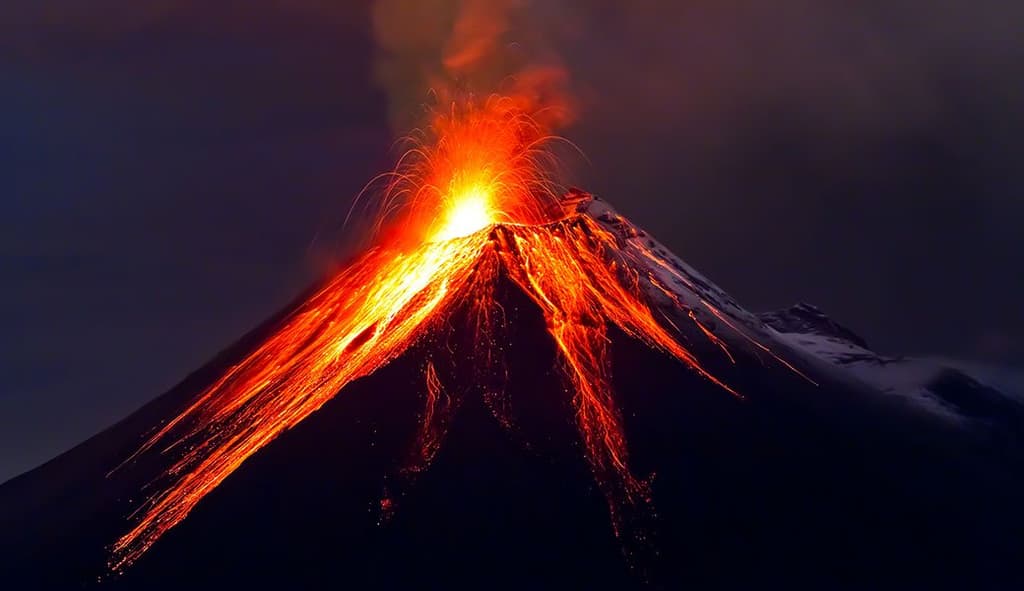
Current monitoring by the USGS and Smithsonian Global Volcanism Program shows no signs of unrest at large caldera systems capable of VEI ≥6 eruptions, with activity limited to typical lower-intensity events such as those at Kīlauea and Etna through mid-2026. These colossal eruptions, which eject roughly 10 km³ or more of material on the Volcanic Explosivity Index scale, occur on average every 50–100 years based on the Holocene record, with the most recent being Pinatubo in 1991. Trader consensus at 93.7% for “No” reflects this low base rate and the absence of precursors that would allow rapid escalation in the remaining months. A sudden, undetected surge in magma chamber pressure at a high-threat volcano could still alter the outcome before year-end.
Resumen experimental generado por IA con datos de Polymarket. Esto no es asesoramiento de trading y no influye en cómo se resuelve este mercado. · Actualizado¿Erupción volcánica mayor (VEI ≥6) en 2026?
¿Erupción volcánica mayor (VEI ≥6) en 2026?
Sí
$127,916 Vol.
$127,916 Vol.
Sí
$127,916 Vol.
$127,916 Vol.
The primary resolution source will be the Smithsonian Institution Global Volcanism Program (GVP: https://volcano.si.edu/), specifically the ‘VEI 6’ figure for 2026 released on the page currently titled "Eruptions Avg 2000-2024 (N/T)" (https://volcano.si.edu/faq/index.cfm?question=eruptionsbyyear) as of March 31, 2027, 12 PM ET. Any prior updates will not be considered finalized.
If this dataset has not been updated to include all relevant events by March 31, 2027, or if the Smithsonian GVP becomes permanently unavailable, this market may resolve based on a consensus of credible scientific sources, including the U.S. Geological Survey (USGS), national or regional volcanic observatories, or credible reporting of a scientific consensus.
Note: Smithsonian Institution Global Volcanism Program databases, which include eruptions that reached the relevant threshold prior to this market’s timeframe (e.g., https://volcano.si.edu/faq/index.cfm?question=eruptionsbyyear&checkyear=2025), will not be considered.
Mercado abierto: Dec 29, 2025, 6:24 PM ET
Resolver
0x65070BE91...The primary resolution source will be the Smithsonian Institution Global Volcanism Program (GVP: https://volcano.si.edu/), specifically the ‘VEI 6’ figure for 2026 released on the page currently titled "Eruptions Avg 2000-2024 (N/T)" (https://volcano.si.edu/faq/index.cfm?question=eruptionsbyyear) as of March 31, 2027, 12 PM ET. Any prior updates will not be considered finalized.
If this dataset has not been updated to include all relevant events by March 31, 2027, or if the Smithsonian GVP becomes permanently unavailable, this market may resolve based on a consensus of credible scientific sources, including the U.S. Geological Survey (USGS), national or regional volcanic observatories, or credible reporting of a scientific consensus.
Note: Smithsonian Institution Global Volcanism Program databases, which include eruptions that reached the relevant threshold prior to this market’s timeframe (e.g., https://volcano.si.edu/faq/index.cfm?question=eruptionsbyyear&checkyear=2025), will not be considered.
Resolver
0x65070BE91...Current monitoring by the USGS and Smithsonian Global Volcanism Program shows no signs of unrest at large caldera systems capable of VEI ≥6 eruptions, with activity limited to typical lower-intensity events such as those at Kīlauea and Etna through mid-2026. These colossal eruptions, which eject roughly 10 km³ or more of material on the Volcanic Explosivity Index scale, occur on average every 50–100 years based on the Holocene record, with the most recent being Pinatubo in 1991. Trader consensus at 93.7% for “No” reflects this low base rate and the absence of precursors that would allow rapid escalation in the remaining months. A sudden, undetected surge in magma chamber pressure at a high-threat volcano could still alter the outcome before year-end.
Resumen experimental generado por IA con datos de Polymarket. Esto no es asesoramiento de trading y no influye en cómo se resuelve este mercado. · Actualizado

Cuidado con los enlaces externos.
Cuidado con los enlaces externos.
Preguntas frecuentes