
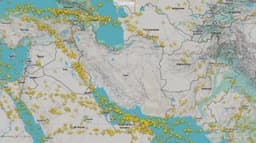
US sanctions targeting Iranian airlines, set to restrict fuel, landing services, and ticketing from September 23, 2026, represent the primary near-term catalyst for trader focus on a potential full Iranian airspace closure. These measures build on earlier designations and follow seven months of US-Israel-Iran hostilities that began with strikes on February 28, 2026, prompting multiple rounds of temporary or partial closures, NOTAMs, and EASA advisories against operations in the Tehran FIR. Iranian authorities have previously imposed broad restrictions during escalations, while the current fragile post-ceasefire environment features renewed strikes, Strait of Hormuz tensions, and limited international overflights. Upcoming sanction enforcement and any associated military or diplomatic responses could directly influence decisions on comprehensive airspace management.
Experimental AI-generated summary referencing Polymarket data. This is not trading advice and plays no role in how this market resolves. · UpdatedIran full airspace closure by...?
Iran full airspace closure by...?
$9,703,001 Vol.
September 30
3%
October 31
12%
December 31
26%
$9,703,001 Vol.
September 30
3%
October 31
12%
December 31
26%
A “general closure” refers to a cancellation or suspension of aviation which is generally applicable to all commercial flights transiting Iranian airspace (“Tehran FIR”). A qualifying closure must apply generally to all of Iran or the Tehran FIR; limited cancellations, delays, or partial closures will not qualify. A closure which applies generally to commercial aviation across Iranian airspace, with limited exceptions for certain categories of flights, however, will qualify (e.g. exceptions for certain flights pre-approved by the Iranian Civil Aviation Authority may be permitted).
Qualifying previous examples include the February 28, 2026 total closure of Iranian airspace (https://www.iranintl.com/en/202602289115) and the January 2026 total closure of Iranian airspace except to international flights with express governmental permission (https://www.reuters.com/world/middle-east/iran-shuts-airspace-most-flights-flightradar24-says-2026-01-14/). Non-qualifying examples include the January 27, 2026 partial closure of Iranian airspace around the Strait of Hormuz (https://www.aa.com.tr/en/middle-east/iran-issues-airspace-notice-for-military-drills-near-strait-of-hormuz/3812508), the April 2024 closure of Iran’s western airspace (https://www.reuters.com/world/middle-east/iranian-airports-cancel-flights-until-monday-morning-2024-04-14/), and the January 25 - April 25, 2026 VFR (Visual Flight Rules) flights suspension which did not broadly close commercial aviation in Iran (https://www.intellinews.com/iran-suspends-general-aviation-and-vfr-flights-in-new-airspace-directive-421997/).
Warnings, No-Fly-Zones, or other flight restrictions imposed by airlines or countries other than Iran will not be sufficient for a “Yes” resolution.
Airspace closures which occur solely due to weather conditions, earthquakes, or volcanic eruptions, will not qualify.
The primary resolution sources for this market will be official information from Iranian aviation authorities and a consensus of credible reporting.
Market Opened: Jun 25, 2026, 7:21 PM ET
Resolver
0x65070BE91...Outcome proposed: No
No dispute
Final outcome: No
A “general closure” refers to a cancellation or suspension of aviation which is generally applicable to all commercial flights transiting Iranian airspace (“Tehran FIR”). A qualifying closure must apply generally to all of Iran or the Tehran FIR; limited cancellations, delays, or partial closures will not qualify. A closure which applies generally to commercial aviation across Iranian airspace, with limited exceptions for certain categories of flights, however, will qualify (e.g. exceptions for certain flights pre-approved by the Iranian Civil Aviation Authority may be permitted).
Qualifying previous examples include the February 28, 2026 total closure of Iranian airspace (https://www.iranintl.com/en/202602289115) and the January 2026 total closure of Iranian airspace except to international flights with express governmental permission (https://www.reuters.com/world/middle-east/iran-shuts-airspace-most-flights-flightradar24-says-2026-01-14/). Non-qualifying examples include the January 27, 2026 partial closure of Iranian airspace around the Strait of Hormuz (https://www.aa.com.tr/en/middle-east/iran-issues-airspace-notice-for-military-drills-near-strait-of-hormuz/3812508), the April 2024 closure of Iran’s western airspace (https://www.reuters.com/world/middle-east/iranian-airports-cancel-flights-until-monday-morning-2024-04-14/), and the January 25 - April 25, 2026 VFR (Visual Flight Rules) flights suspension which did not broadly close commercial aviation in Iran (https://www.intellinews.com/iran-suspends-general-aviation-and-vfr-flights-in-new-airspace-directive-421997/).
Warnings, No-Fly-Zones, or other flight restrictions imposed by airlines or countries other than Iran will not be sufficient for a “Yes” resolution.
Airspace closures which occur solely due to weather conditions, earthquakes, or volcanic eruptions, will not qualify.
The primary resolution sources for this market will be official information from Iranian aviation authorities and a consensus of credible reporting.
Resolver
0x65070BE91...Outcome proposed: No
No dispute
Final outcome: No
US sanctions targeting Iranian airlines, set to restrict fuel, landing services, and ticketing from September 23, 2026, represent the primary near-term catalyst for trader focus on a potential full Iranian airspace closure. These measures build on earlier designations and follow seven months of US-Israel-Iran hostilities that began with strikes on February 28, 2026, prompting multiple rounds of temporary or partial closures, NOTAMs, and EASA advisories against operations in the Tehran FIR. Iranian authorities have previously imposed broad restrictions during escalations, while the current fragile post-ceasefire environment features renewed strikes, Strait of Hormuz tensions, and limited international overflights. Upcoming sanction enforcement and any associated military or diplomatic responses could directly influence decisions on comprehensive airspace management.
Experimental AI-generated summary referencing Polymarket data. This is not trading advice and plays no role in how this market resolves. · Updated

Beware of external links.
Beware of external links.
Frequently Asked Questions