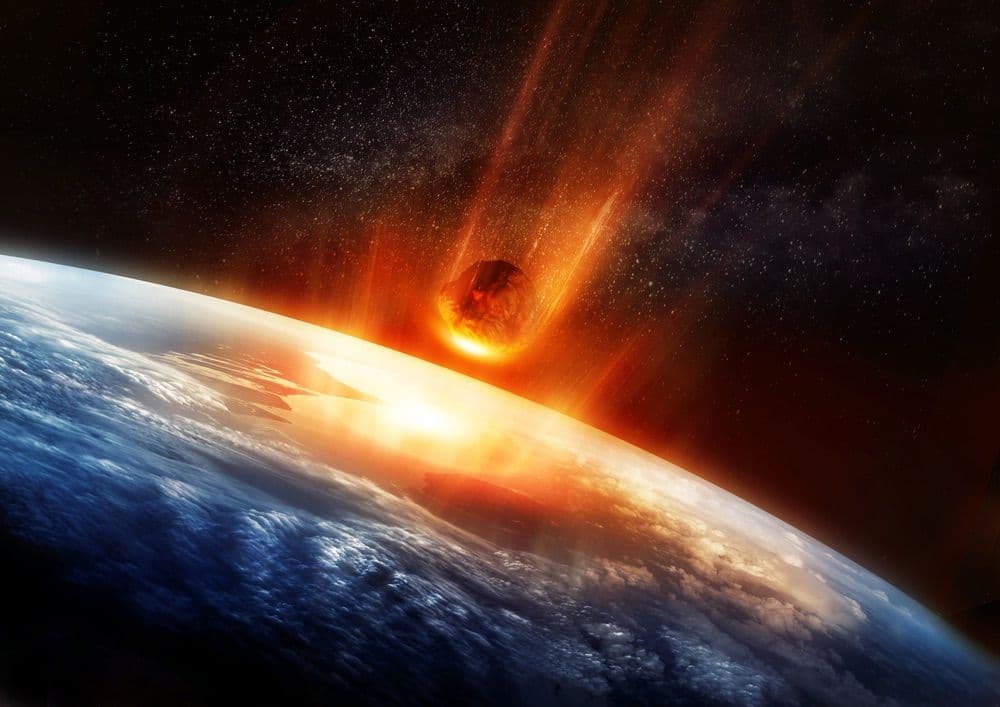
No known near-Earth objects large enough for a 5 kt or greater airburst are on collision trajectories for 2026, according to NASA CNEOS and ESA monitoring, keeping the market-implied probability of “Yes” near 26%. Historical bolide records indicate such events from meter-scale impactors occur on roughly annual timescales, though catalogued NEOs show zero significant risk this year and recent fireballs, including those over Cleveland and Massachusetts, have remained well below the 5 kt threshold. Ongoing surveys could still detect previously unknown small objects, but current orbital data and the absence of elevated activity sustain trader consensus toward resolution as “No.”
Polymarket 데이터를 참조하는 실험적 AI 생성 요약입니다. 이것은 거래 조언이 아니며 이 마켓의 정산에 영향을 미치지 않습니다. · 업데이트5kt meteor strike in 2026?
5kt meteor strike in 2026?
$309,242 거래량
$309,242 거래량
2026.12.31
$309,242 거래량
$309,242 거래량
2026.12.31
This market will resolve to "Yes" if a natural meteoroid (bolide) explodes in Earth's atmosphere with a total impact energy greater than or equal to 5 kilotons of TNT equivalent between January 1 and December 31, 2026, 11:59 PM ET. Otherwise, this market will resolve to “No”.
The object must be classified as a natural meteoroid; events involving artificial objects or reentry vehicles do not qualify.
The primary resolution source will be the NASA JPL Fireball and Bolide Data repository: https://cneos.jpl.nasa.gov/fireballs/. The relevant field for determining impact energy is the “Impact Energy (kt)” column. If this dataset has not been updated to include all relevant dates by February 28, 2027, or if the NASA JPL Fireball and Bolide Data repository becomes permanently unavailable, this market may resolve based on a consensus of credible sources including the European Space Agency (ESA), the International Asteroid Warning Network (IAWN), the U.S. Department of Defense, or credible reporting of a scientific consensus, such as a NASA press release.No known near-Earth objects large enough for a 5 kt or greater airburst are on collision trajectories for 2026, according to NASA CNEOS and ESA monitoring, keeping the market-implied probability of “Yes” near 26%. Historical bolide records indicate such events from meter-scale impactors occur on roughly annual timescales, though catalogued NEOs show zero significant risk this year and recent fireballs, including those over Cleveland and Massachusetts, have remained well below the 5 kt threshold. Ongoing surveys could still detect previously unknown small objects, but current orbital data and the absence of elevated activity sustain trader consensus toward resolution as “No.”
This market will resolve to "Yes" if a natural meteoroid (bolide) explodes in Earth's atmosphere with a total impact energy greater than or equal to 5 kilotons of TNT equivalent between January 1 and December 31, 2026, 11:59 PM ET. Otherwise, this market will resolve to “No”.
The object must be classified as a natural meteoroid; events involving artificial objects or reentry vehicles do not qualify.
The primary resolution source will be the NASA JPL Fireball and Bolide Data repository: https://cneos.jpl.nasa.gov/fireballs/. The relevant field for determining impact energy is the “Impact Energy (kt)” column. If this dataset has not been updated to include all relevant dates by February 28, 2027, or if the NASA JPL Fireball and Bolide Data repository becomes permanently unavailable, this market may resolve based on a consensus of credible sources including the European Space Agency (ESA), the International Asteroid Warning Network (IAWN), the U.S. Department of Defense, or credible reporting of a scientific consensus, such as a NASA press release.
The object must be classified as a natural meteoroid; events involving artificial objects or reentry vehicles do not qualify.
The primary resolution source will be the NASA JPL Fireball and Bolide Data repository: https://cneos.jpl.nasa.gov/fireballs/. The relevant field for determining impact energy is the “Impact Energy (kt)” column. If this dataset has not been updated to include all relevant dates by February 28, 2027, or if the NASA JPL Fireball and Bolide Data repository becomes permanently unavailable, this market may resolve based on a consensus of credible sources including the European Space Agency (ESA), the International Asteroid Warning Network (IAWN), the U.S. Department of Defense, or credible reporting of a scientific consensus, such as a NASA press release.
마켓 개설일: Dec 31, 2025, 12:04 PM ET
거래량
$309,242종료일
2026.12.31마켓 개설일
Dec 31, 2025, 12:04 PM ETResolver
0x65070BE91...This market will resolve to "Yes" if a natural meteoroid (bolide) explodes in Earth's atmosphere with a total impact energy greater than or equal to 5 kilotons of TNT equivalent between January 1 and December 31, 2026, 11:59 PM ET. Otherwise, this market will resolve to “No”.
The object must be classified as a natural meteoroid; events involving artificial objects or reentry vehicles do not qualify.
The primary resolution source will be the NASA JPL Fireball and Bolide Data repository: https://cneos.jpl.nasa.gov/fireballs/. The relevant field for determining impact energy is the “Impact Energy (kt)” column. If this dataset has not been updated to include all relevant dates by February 28, 2027, or if the NASA JPL Fireball and Bolide Data repository becomes permanently unavailable, this market may resolve based on a consensus of credible sources including the European Space Agency (ESA), the International Asteroid Warning Network (IAWN), the U.S. Department of Defense, or credible reporting of a scientific consensus, such as a NASA press release.No known near-Earth objects large enough for a 5 kt or greater airburst are on collision trajectories for 2026, according to NASA CNEOS and ESA monitoring, keeping the market-implied probability of “Yes” near 26%. Historical bolide records indicate such events from meter-scale impactors occur on roughly annual timescales, though catalogued NEOs show zero significant risk this year and recent fireballs, including those over Cleveland and Massachusetts, have remained well below the 5 kt threshold. Ongoing surveys could still detect previously unknown small objects, but current orbital data and the absence of elevated activity sustain trader consensus toward resolution as “No.”
This market will resolve to "Yes" if a natural meteoroid (bolide) explodes in Earth's atmosphere with a total impact energy greater than or equal to 5 kilotons of TNT equivalent between January 1 and December 31, 2026, 11:59 PM ET. Otherwise, this market will resolve to “No”.
The object must be classified as a natural meteoroid; events involving artificial objects or reentry vehicles do not qualify.
The primary resolution source will be the NASA JPL Fireball and Bolide Data repository: https://cneos.jpl.nasa.gov/fireballs/. The relevant field for determining impact energy is the “Impact Energy (kt)” column. If this dataset has not been updated to include all relevant dates by February 28, 2027, or if the NASA JPL Fireball and Bolide Data repository becomes permanently unavailable, this market may resolve based on a consensus of credible sources including the European Space Agency (ESA), the International Asteroid Warning Network (IAWN), the U.S. Department of Defense, or credible reporting of a scientific consensus, such as a NASA press release.
The object must be classified as a natural meteoroid; events involving artificial objects or reentry vehicles do not qualify.
The primary resolution source will be the NASA JPL Fireball and Bolide Data repository: https://cneos.jpl.nasa.gov/fireballs/. The relevant field for determining impact energy is the “Impact Energy (kt)” column. If this dataset has not been updated to include all relevant dates by February 28, 2027, or if the NASA JPL Fireball and Bolide Data repository becomes permanently unavailable, this market may resolve based on a consensus of credible sources including the European Space Agency (ESA), the International Asteroid Warning Network (IAWN), the U.S. Department of Defense, or credible reporting of a scientific consensus, such as a NASA press release.
거래량
$309,242종료일
2026.12.31마켓 개설일
Dec 31, 2025, 12:04 PM ETResolver
0x65070BE91...No known near-Earth objects large enough for a 5 kt or greater airburst are on collision trajectories for 2026, according to NASA CNEOS and ESA monitoring, keeping the market-implied probability of “Yes” near 26%. Historical bolide records indicate such events from meter-scale impactors occur on roughly annual timescales, though catalogued NEOs show zero significant risk this year and recent fireballs, including those over Cleveland and Massachusetts, have remained well below the 5 kt threshold. Ongoing surveys could still detect previously unknown small objects, but current orbital data and the absence of elevated activity sustain trader consensus toward resolution as “No.”
Polymarket 데이터를 참조하는 실험적 AI 생성 요약입니다. 이것은 거래 조언이 아니며 이 마켓의 정산에 영향을 미치지 않습니다. · 업데이트
외부 링크에 주의하세요.
외부 링크에 주의하세요.
자주 묻는 질문