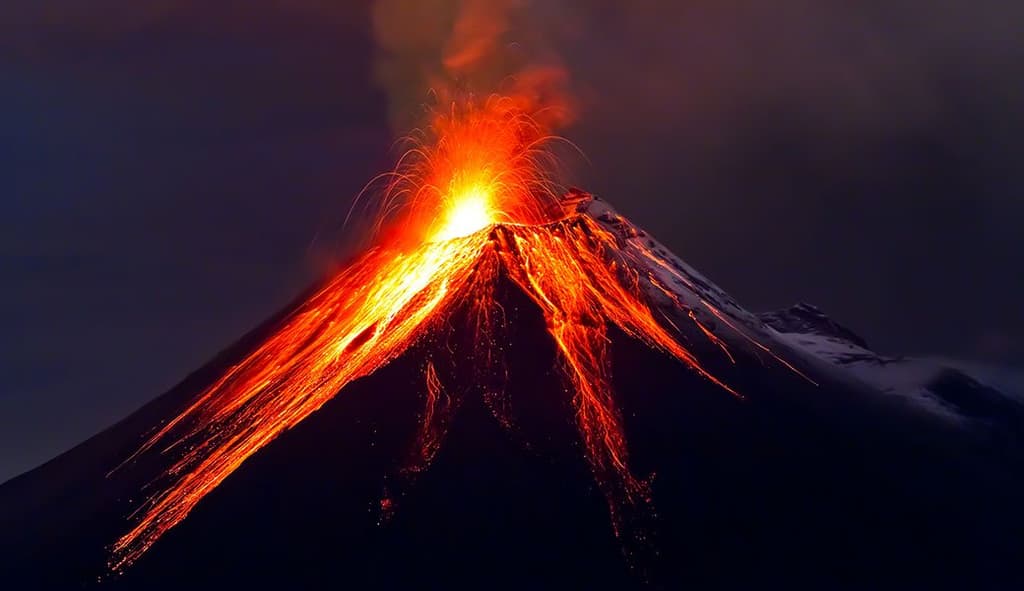
Trader sentiment for the number of VEI 4 or greater eruptions in 2026 is anchored in the low historical frequency of such events, with global records showing roughly one to three per year on average amid predominantly lower-intensity activity. As of mid-May 2026, official monitoring from the Smithsonian Institution and USGS Global Volcanism Program indicates dozens of ongoing eruptions, yet most involve phreatic or modest explosive phases below VEI 4 thresholds, with no confirmed large-magnitude events reported so far. Factors such as magma chamber pressurization rates, seismic unrest patterns, and atmospheric conditions influence escalation potential, while inherent uncertainties in volcanic forecasting—where models often diverge on timing and intensity—support the market's emphasis on zero or one total outcome. Continuous data from agencies like the USGS Volcano Hazards Program will provide updates on any shifts in alert levels or new unrest indicators through the remainder of the year.
Polymarket 데이터를 참조하는 실험적 AI 생성 요약입니다. 이것은 거래 조언이 아니며 이 마켓의 정산에 영향을 미치지 않습니다. · 업데이트0 61%
1 35%
2 4.0%
3 <1%
$1,079,004 거래량
$1,079,004 거래량
0
61%
1
35%
2
4%
3
1%
4
<1%
5회 이상
<1%
0 61%
1 35%
2 4.0%
3 <1%
$1,079,004 거래량
$1,079,004 거래량
0
61%
1
35%
2
4%
3
1%
4
<1%
5회 이상
<1%
The primary resolution source will be the Smithsonian Institution Global Volcanism Program (GVP: https://volcano.si.edu/), specifically the cumulative figures for 2026 for VEI 4, VEI 5, and VEI 6 released on the page currently titled "Eruptions Avg 2000-2024 (N/T)" (https://volcano.si.edu/faq/index.cfm?question=eruptionsbyyear) as of March 31, 2027, 12 PM ET. Any prior updates will not be considered finalized.
If this dataset has not been updated to include all relevant events by March 31, 2027, or if the Smithsonian GVP becomes permanently unavailable, this market may resolve based on a consensus of credible scientific sources, including the U.S. Geological Survey (USGS), national or regional volcanic observatories, or credible reporting of a scientific consensus.
Note: Smithsonian Institution Global Volcanism Program databases, which include eruptions that reached the relevant threshold prior to this market’s timeframe (e.g., https://volcano.si.edu/faq/index.cfm?question=eruptionsbyyear&checkyear=2025), will not be considered.
마켓 개설일: Jan 2, 2026, 1:48 PM ET
Resolver
0x2F5e3684c...The primary resolution source will be the Smithsonian Institution Global Volcanism Program (GVP: https://volcano.si.edu/), specifically the cumulative figures for 2026 for VEI 4, VEI 5, and VEI 6 released on the page currently titled "Eruptions Avg 2000-2024 (N/T)" (https://volcano.si.edu/faq/index.cfm?question=eruptionsbyyear) as of March 31, 2027, 12 PM ET. Any prior updates will not be considered finalized.
If this dataset has not been updated to include all relevant events by March 31, 2027, or if the Smithsonian GVP becomes permanently unavailable, this market may resolve based on a consensus of credible scientific sources, including the U.S. Geological Survey (USGS), national or regional volcanic observatories, or credible reporting of a scientific consensus.
Note: Smithsonian Institution Global Volcanism Program databases, which include eruptions that reached the relevant threshold prior to this market’s timeframe (e.g., https://volcano.si.edu/faq/index.cfm?question=eruptionsbyyear&checkyear=2025), will not be considered.
Resolver
0x2F5e3684c...Trader sentiment for the number of VEI 4 or greater eruptions in 2026 is anchored in the low historical frequency of such events, with global records showing roughly one to three per year on average amid predominantly lower-intensity activity. As of mid-May 2026, official monitoring from the Smithsonian Institution and USGS Global Volcanism Program indicates dozens of ongoing eruptions, yet most involve phreatic or modest explosive phases below VEI 4 thresholds, with no confirmed large-magnitude events reported so far. Factors such as magma chamber pressurization rates, seismic unrest patterns, and atmospheric conditions influence escalation potential, while inherent uncertainties in volcanic forecasting—where models often diverge on timing and intensity—support the market's emphasis on zero or one total outcome. Continuous data from agencies like the USGS Volcano Hazards Program will provide updates on any shifts in alert levels or new unrest indicators through the remainder of the year.
Polymarket 데이터를 참조하는 실험적 AI 생성 요약입니다. 이것은 거래 조언이 아니며 이 마켓의 정산에 영향을 미치지 않습니다. · 업데이트
외부 링크에 주의하세요.
외부 링크에 주의하세요.
자주 묻는 질문