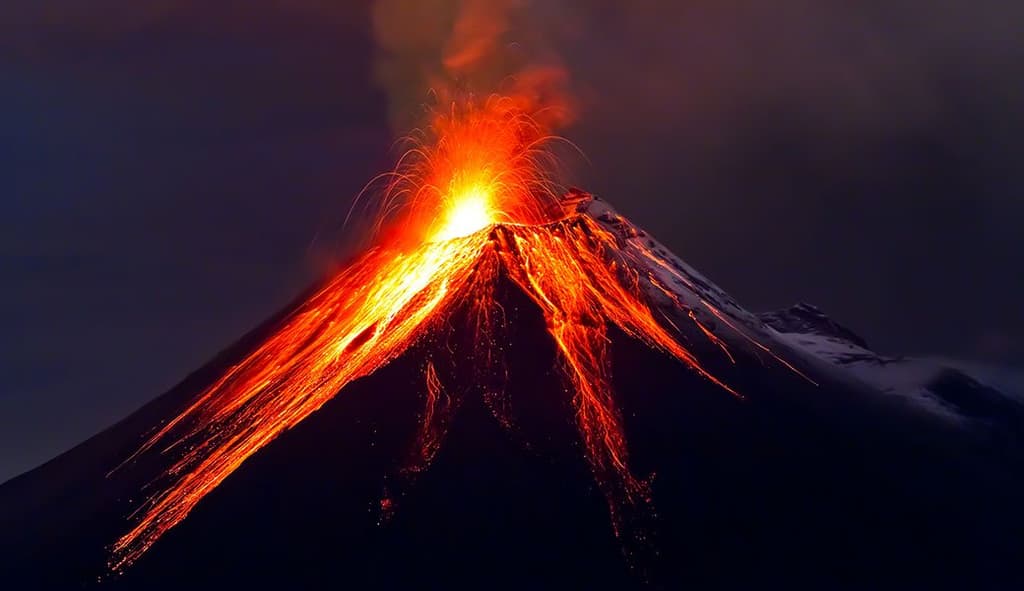
icon for ¿Cuántas erupciones volcánicas grandes (VEI ≥4) en 2026?

¿Cuántas erupciones volcánicas grandes (VEI ≥4) en 2026?

icon for ¿Cuántas erupciones volcánicas grandes (VEI ≥4) en 2026?

¿Cuántas erupciones volcánicas grandes (VEI ≥4) en 2026?

0 61%

1 35%

2 4.0%

3 <1%

Polymarket

$1,079,004 Vol.

0 61%

1 35%

2 4.0%

3 <1%

Polymarket

$1,079,004 Vol.

0

$477,398 Vol.

61%

1

$260,191 Vol.

35%

2

$32,241 Vol.

4%

3

$26,240 Vol.

1%

4

$24,441 Vol.

<1%

5+

$258,493 Vol.

<1%

This market will resolve according to the number of natural volcanic eruptions with a Volcanic Explosivity Index (VEI) of 4 or higher between January 1 and December 31, 2026, 11:59 PM ET. The primary resolution source will be the Smithsonian Institution Global Volcanism Program (GVP: https://volcano.si.edu/), specifically the cumulative figures for 2026 for VEI 4, VEI 5, and VEI 6 released on the page currently titled "Eruptions Avg 2000-2024 (N/T)" (https://volcano.si.edu/faq/index.cfm?question=eruptionsbyyear) as of March 31, 2027, 12 PM ET. Any prior updates will not be considered finalized. If this dataset has not been updated to include all relevant events by March 31, 2027, or if the Smithsonian GVP becomes permanently unavailable, this market may resolve based on a consensus of credible scientific sources, including the U.S. Geological Survey (USGS), national or regional volcanic observatories, or credible reporting of a scientific consensus. Note: Smithsonian Institution Global Volcanism Program databases, which include eruptions that reached the relevant threshold prior to this market’s timeframe (e.g., https://volcano.si.edu/faq/index.cfm?question=eruptionsbyyear&checkyear=2025), will not be considered.Trader consensus favors zero or one VEI ≥4 eruption in 2026 because such events remain rare on a global scale, with Smithsonian Institution and USGS Global Volcanism Program records showing a long-term average of roughly 0.6 per year. No qualifying eruption—defined as at least 0.1 km³ of tephra with plume heights exceeding 10 km—has occurred through mid-May despite 47 confirmed smaller eruptions worldwide. Ongoing activity at sites such as Semeru, Sheveluch, and Kīlauea has produced only sub-threshold ash plumes and effusive flows, with no recent model runs or monitoring data indicating imminent escalation. Key variables that could shift odds include new magmatic recharge signals or revised explosivity assessments from observatories before year-end.

This market will resolve according to the number of natural volcanic eruptions with a Volcanic Explosivity Index (VEI) of 4 or higher between January 1 and December 31, 2026, 11:59 PM ET.

The primary resolution source will be the Smithsonian Institution Global Volcanism Program (GVP: https://volcano.si.edu/), specifically the cumulative figures for 2026 for VEI 4, VEI 5, and VEI 6 released on the page currently titled "Eruptions Avg 2000-2024 (N/T)" (https://volcano.si.edu/faq/index.cfm?question=eruptionsbyyear) as of March 31, 2027, 12 PM ET. Any prior updates will not be considered finalized.

If this dataset has not been updated to include all relevant events by March 31, 2027, or if the Smithsonian GVP becomes permanently unavailable, this market may resolve based on a consensus of credible scientific sources, including the U.S. Geological Survey (USGS), national or regional volcanic observatories, or credible reporting of a scientific consensus.

Note: Smithsonian Institution Global Volcanism Program databases, which include eruptions that reached the relevant threshold prior to this market’s timeframe (e.g., https://volcano.si.edu/faq/index.cfm?question=eruptionsbyyear&checkyear=2025), will not be considered.
Volumen
$1,079,004
Fecha de finalización
31 mar 2027
Mercado abierto
Jan 2, 2026, 1:48 PM ET
This market will resolve according to the number of natural volcanic eruptions with a Volcanic Explosivity Index (VEI) of 4 or higher between January 1 and December 31, 2026, 11:59 PM ET. The primary resolution source will be the Smithsonian Institution Global Volcanism Program (GVP: https://volcano.si.edu/), specifically the cumulative figures for 2026 for VEI 4, VEI 5, and VEI 6 released on the page currently titled "Eruptions Avg 2000-2024 (N/T)" (https://volcano.si.edu/faq/index.cfm?question=eruptionsbyyear) as of March 31, 2027, 12 PM ET. Any prior updates will not be considered finalized. If this dataset has not been updated to include all relevant events by March 31, 2027, or if the Smithsonian GVP becomes permanently unavailable, this market may resolve based on a consensus of credible scientific sources, including the U.S. Geological Survey (USGS), national or regional volcanic observatories, or credible reporting of a scientific consensus. Note: Smithsonian Institution Global Volcanism Program databases, which include eruptions that reached the relevant threshold prior to this market’s timeframe (e.g., https://volcano.si.edu/faq/index.cfm?question=eruptionsbyyear&checkyear=2025), will not be considered.
This market will resolve according to the number of natural volcanic eruptions with a Volcanic Explosivity Index (VEI) of 4 or higher between January 1 and December 31, 2026, 11:59 PM ET. The primary resolution source will be the Smithsonian Institution Global Volcanism Program (GVP: https://volcano.si.edu/), specifically the cumulative figures for 2026 for VEI 4, VEI 5, and VEI 6 released on the page currently titled "Eruptions Avg 2000-2024 (N/T)" (https://volcano.si.edu/faq/index.cfm?question=eruptionsbyyear) as of March 31, 2027, 12 PM ET. Any prior updates will not be considered finalized. If this dataset has not been updated to include all relevant events by March 31, 2027, or if the Smithsonian GVP becomes permanently unavailable, this market may resolve based on a consensus of credible scientific sources, including the U.S. Geological Survey (USGS), national or regional volcanic observatories, or credible reporting of a scientific consensus. Note: Smithsonian Institution Global Volcanism Program databases, which include eruptions that reached the relevant threshold prior to this market’s timeframe (e.g., https://volcano.si.edu/faq/index.cfm?question=eruptionsbyyear&checkyear=2025), will not be considered.Trader consensus favors zero or one VEI ≥4 eruption in 2026 because such events remain rare on a global scale, with Smithsonian Institution and USGS Global Volcanism Program records showing a long-term average of roughly 0.6 per year. No qualifying eruption—defined as at least 0.1 km³ of tephra with plume heights exceeding 10 km—has occurred through mid-May despite 47 confirmed smaller eruptions worldwide. Ongoing activity at sites such as Semeru, Sheveluch, and Kīlauea has produced only sub-threshold ash plumes and effusive flows, with no recent model runs or monitoring data indicating imminent escalation. Key variables that could shift odds include new magmatic recharge signals or revised explosivity assessments from observatories before year-end.

This market will resolve according to the number of natural volcanic eruptions with a Volcanic Explosivity Index (VEI) of 4 or higher between January 1 and December 31, 2026, 11:59 PM ET.

The primary resolution source will be the Smithsonian Institution Global Volcanism Program (GVP: https://volcano.si.edu/), specifically the cumulative figures for 2026 for VEI 4, VEI 5, and VEI 6 released on the page currently titled "Eruptions Avg 2000-2024 (N/T)" (https://volcano.si.edu/faq/index.cfm?question=eruptionsbyyear) as of March 31, 2027, 12 PM ET. Any prior updates will not be considered finalized.

If this dataset has not been updated to include all relevant events by March 31, 2027, or if the Smithsonian GVP becomes permanently unavailable, this market may resolve based on a consensus of credible scientific sources, including the U.S. Geological Survey (USGS), national or regional volcanic observatories, or credible reporting of a scientific consensus.

Note: Smithsonian Institution Global Volcanism Program databases, which include eruptions that reached the relevant threshold prior to this market’s timeframe (e.g., https://volcano.si.edu/faq/index.cfm?question=eruptionsbyyear&checkyear=2025), will not be considered.
Volumen
$1,079,004
Fecha de finalización
31 mar 2027
Mercado abierto
Jan 2, 2026, 1:48 PM ET
This market will resolve according to the number of natural volcanic eruptions with a Volcanic Explosivity Index (VEI) of 4 or higher between January 1 and December 31, 2026, 11:59 PM ET. The primary resolution source will be the Smithsonian Institution Global Volcanism Program (GVP: https://volcano.si.edu/), specifically the cumulative figures for 2026 for VEI 4, VEI 5, and VEI 6 released on the page currently titled "Eruptions Avg 2000-2024 (N/T)" (https://volcano.si.edu/faq/index.cfm?question=eruptionsbyyear) as of March 31, 2027, 12 PM ET. Any prior updates will not be considered finalized. If this dataset has not been updated to include all relevant events by March 31, 2027, or if the Smithsonian GVP becomes permanently unavailable, this market may resolve based on a consensus of credible scientific sources, including the U.S. Geological Survey (USGS), national or regional volcanic observatories, or credible reporting of a scientific consensus. Note: Smithsonian Institution Global Volcanism Program databases, which include eruptions that reached the relevant threshold prior to this market’s timeframe (e.g., https://volcano.si.edu/faq/index.cfm?question=eruptionsbyyear&checkyear=2025), will not be considered.

Cuidado con los enlaces externos.

Preguntas frecuentes

"¿Cuántas erupciones volcánicas grandes (VEI ≥4) en 2026?" es un mercado de predicción en Polymarket con 6 resultados posibles donde los operadores compran y venden acciones según lo que creen que sucederá. El resultado líder actual es "0" con 61%, seguido de "1" con 35%. Los precios reflejan probabilidades en tiempo real de la comunidad. Por ejemplo, una acción cotizada a 61¢ implica que el mercado colectivamente asigna una probabilidad de 61% a ese resultado. Estas probabilidades cambian continuamente a medida que los operadores reaccionan a nuevos desarrollos. Las acciones del resultado correcto son canjeables por $1 cada una tras la resolución del mercado.

A día de hoy, "¿Cuántas erupciones volcánicas grandes (VEI ≥4) en 2026?" ha generado $1.1 million en volumen total de trading desde que el mercado se lanzó el Jan 2, 2026. Este nivel de actividad refleja un fuerte compromiso de la comunidad de Polymarket y ayuda a garantizar que las probabilidades actuales estén respaldadas por un amplio grupo de participantes del mercado. Puedes seguir los movimientos de precios en vivo y operar en cualquier resultado directamente en esta página.

Para operar en "¿Cuántas erupciones volcánicas grandes (VEI ≥4) en 2026?", explora los 6 resultados disponibles en esta página. Cada resultado muestra un precio actual que representa la probabilidad implícita del mercado. Para tomar una posición, selecciona el resultado que consideres más probable, elige "Sí" para operar a favor o "No" para operar en contra, introduce tu cantidad y haz clic en "Operar". Si tu resultado elegido es correcto cuando el mercado se resuelve, tus acciones de "Sí" pagan $1 cada una. Si es incorrecto, pagan $0. También puedes vender tus acciones en cualquier momento antes de la resolución.

El favorito actual para "¿Cuántas erupciones volcánicas grandes (VEI ≥4) en 2026?" es "0" con 61%, lo que significa que el mercado asigna una probabilidad de 61% a ese resultado. El siguiente resultado más cercano es "1" con 35%. Estas probabilidades se actualizan en tiempo real a medida que los operadores compran y venden acciones. Vuelve con frecuencia o guarda esta página en marcadores.

Las reglas de resolución para "¿Cuántas erupciones volcánicas grandes (VEI ≥4) en 2026?" definen exactamente qué debe ocurrir para que cada resultado sea declarado ganador, incluyendo las fuentes de datos oficiales utilizadas para determinar el resultado. Puedes revisar los criterios de resolución completos en la sección "Reglas" en esta página sobre los comentarios. Recomendamos leer las reglas cuidadosamente antes de operar, ya que especifican las condiciones exactas, casos especiales y fuentes.