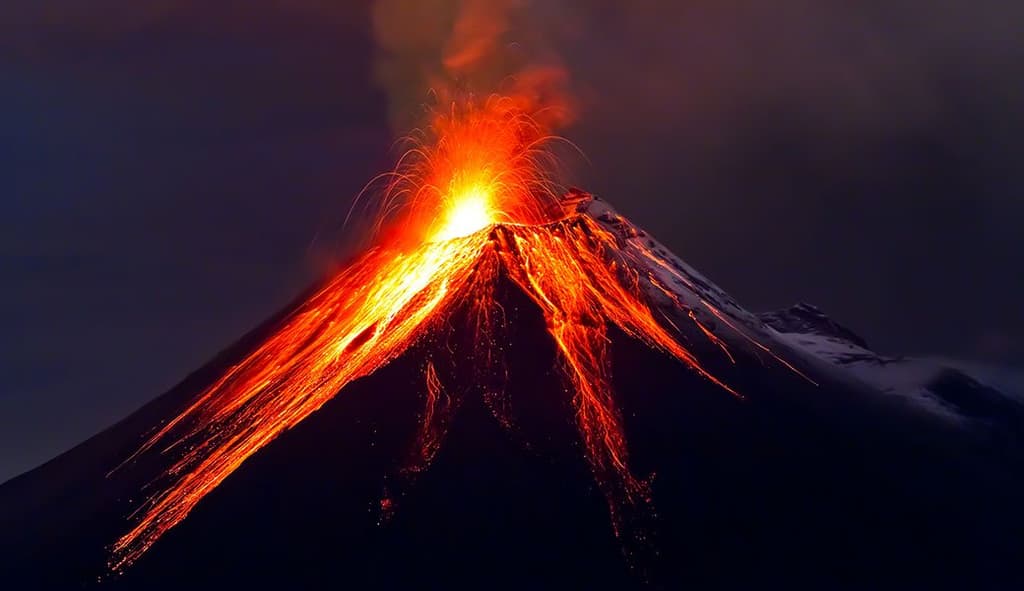
Traders assign a 60.5% implied probability to zero VEI ≥4 eruptions in 2026 and 34.5% to exactly one, reflecting the low historical frequency of such events documented by the Smithsonian Global Volcanism Program. VEI 4 requires at least 0.1 km³ of ejecta and a plume exceeding 10 km, criteria met only sporadically even among the dozens of ongoing eruptions tracked worldwide this year. Current activity remains dominated by smaller explosive or effusive events at volcanoes such as Kīlauea, Piton de la Fournaise, and Semeru, with no confirmed VEI ≥4 episodes through mid-May. This quiet baseline aligns with the long-term average of fewer than one large explosive eruption per year, though new seismic or gas data from monitoring networks could still shift odds if a major stratovolcano enters a climactic phase before year-end.
Eksperymentalne podsumowanie AI odwołujące się do danych Polymarket. To nie jest porada handlowa i nie ma wpływu na rozstrzyganie tego rynku. · ZaktualizowanoIle dużych erupcji wulkanów (VEI ≥4) w 2026 roku?
Ile dużych erupcji wulkanów (VEI ≥4) w 2026 roku?
0 61%
1 35%
2 3.9%
3 <1%
$1,079,004 Wol.
$1,079,004 Wol.
0
61%
1
35%
2
4%
3
1%
4
<1%
5+
<1%
0 61%
1 35%
2 3.9%
3 <1%
$1,079,004 Wol.
$1,079,004 Wol.
0
61%
1
35%
2
4%
3
1%
4
<1%
5+
<1%
The primary resolution source will be the Smithsonian Institution Global Volcanism Program (GVP: https://volcano.si.edu/), specifically the cumulative figures for 2026 for VEI 4, VEI 5, and VEI 6 released on the page currently titled "Eruptions Avg 2000-2024 (N/T)" (https://volcano.si.edu/faq/index.cfm?question=eruptionsbyyear) as of March 31, 2027, 12 PM ET. Any prior updates will not be considered finalized.
If this dataset has not been updated to include all relevant events by March 31, 2027, or if the Smithsonian GVP becomes permanently unavailable, this market may resolve based on a consensus of credible scientific sources, including the U.S. Geological Survey (USGS), national or regional volcanic observatories, or credible reporting of a scientific consensus.
Note: Smithsonian Institution Global Volcanism Program databases, which include eruptions that reached the relevant threshold prior to this market’s timeframe (e.g., https://volcano.si.edu/faq/index.cfm?question=eruptionsbyyear&checkyear=2025), will not be considered.
Rynek otwarty: Jan 2, 2026, 1:48 PM ET
Resolver
0x2F5e3684c...The primary resolution source will be the Smithsonian Institution Global Volcanism Program (GVP: https://volcano.si.edu/), specifically the cumulative figures for 2026 for VEI 4, VEI 5, and VEI 6 released on the page currently titled "Eruptions Avg 2000-2024 (N/T)" (https://volcano.si.edu/faq/index.cfm?question=eruptionsbyyear) as of March 31, 2027, 12 PM ET. Any prior updates will not be considered finalized.
If this dataset has not been updated to include all relevant events by March 31, 2027, or if the Smithsonian GVP becomes permanently unavailable, this market may resolve based on a consensus of credible scientific sources, including the U.S. Geological Survey (USGS), national or regional volcanic observatories, or credible reporting of a scientific consensus.
Note: Smithsonian Institution Global Volcanism Program databases, which include eruptions that reached the relevant threshold prior to this market’s timeframe (e.g., https://volcano.si.edu/faq/index.cfm?question=eruptionsbyyear&checkyear=2025), will not be considered.
Resolver
0x2F5e3684c...Traders assign a 60.5% implied probability to zero VEI ≥4 eruptions in 2026 and 34.5% to exactly one, reflecting the low historical frequency of such events documented by the Smithsonian Global Volcanism Program. VEI 4 requires at least 0.1 km³ of ejecta and a plume exceeding 10 km, criteria met only sporadically even among the dozens of ongoing eruptions tracked worldwide this year. Current activity remains dominated by smaller explosive or effusive events at volcanoes such as Kīlauea, Piton de la Fournaise, and Semeru, with no confirmed VEI ≥4 episodes through mid-May. This quiet baseline aligns with the long-term average of fewer than one large explosive eruption per year, though new seismic or gas data from monitoring networks could still shift odds if a major stratovolcano enters a climactic phase before year-end.
Eksperymentalne podsumowanie AI odwołujące się do danych Polymarket. To nie jest porada handlowa i nie ma wpływu na rozstrzyganie tego rynku. · Zaktualizowano
Uważaj na linki zewnętrzne.
Uważaj na linki zewnętrzne.
Często zadawane pytania