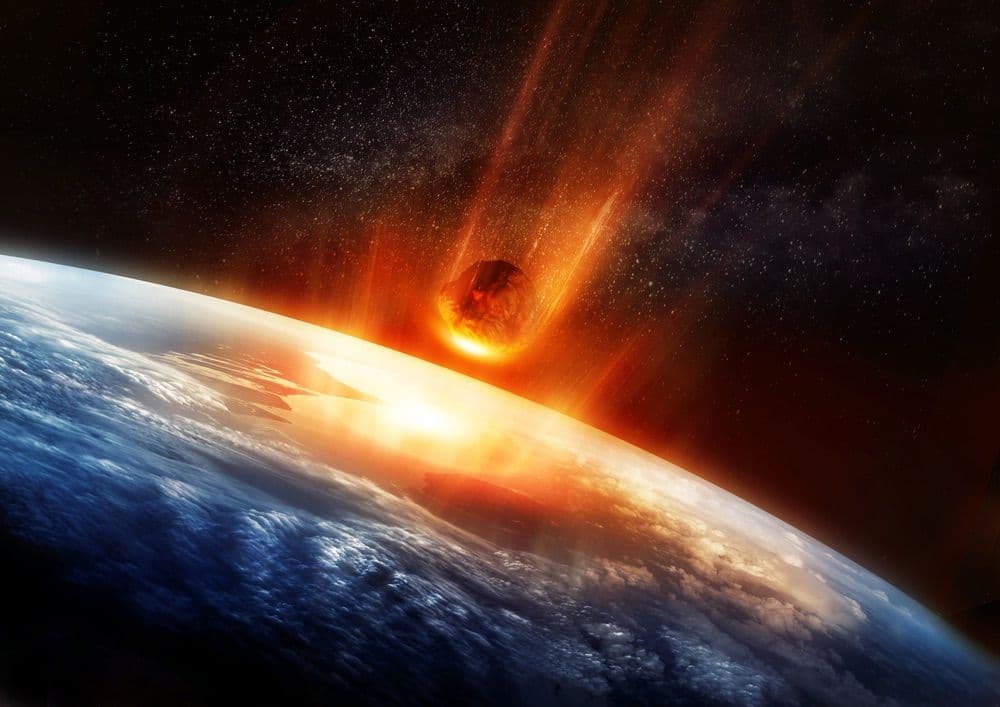
No leads at 73.5% because NASA CNEOS and ESA monitoring show no catalogued near-Earth objects on collision courses capable of producing a 5 kt or greater airburst in 2026, while historical bolide records from the JPL Fireball database and CTBTO infrasound networks indicate such events occur only once every few years on average. Meter-scale impactors reach multi-kiloton energies sporadically, but recent fireballs, including those over Ohio and the East Coast, have fallen well below the threshold, and refined orbits continue to confirm safe approaches only. Traders weigh this low base rate against the absence of new threats or model shifts that would elevate the annual probability.
Експериментальне резюме, згенероване ШІ з посиланням на дані Polymarket. Це не торгова порада і не впливає на вирішення цього ринку. · Оновлено5kt meteor strike in 2026?
5kt meteor strike in 2026?
27% шанс
$312,416 Обс.
$312,416 Обс.
Dec 30, 2026
27% шанс
$312,416 Обс.
$312,416 Обс.
Dec 30, 2026
This market will resolve to "Yes" if a natural meteoroid (bolide) explodes in Earth's atmosphere with a total impact energy greater than or equal to 5 kilotons of TNT equivalent between January 1 and December 31, 2026, 11:59 PM ET. Otherwise, this market will resolve to “No”.
The object must be classified as a natural meteoroid; events involving artificial objects or reentry vehicles do not qualify.
The primary resolution source will be the NASA JPL Fireball and Bolide Data repository: https://cneos.jpl.nasa.gov/fireballs/. The relevant field for determining impact energy is the “Impact Energy (kt)” column. If this dataset has not been updated to include all relevant dates by February 28, 2027, or if the NASA JPL Fireball and Bolide Data repository becomes permanently unavailable, this market may resolve based on a consensus of credible sources including the European Space Agency (ESA), the International Asteroid Warning Network (IAWN), the U.S. Department of Defense, or credible reporting of a scientific consensus, such as a NASA press release.No leads at 73.5% because NASA CNEOS and ESA monitoring show no catalogued near-Earth objects on collision courses capable of producing a 5 kt or greater airburst in 2026, while historical bolide records from the JPL Fireball database and CTBTO infrasound networks indicate such events occur only once every few years on average. Meter-scale impactors reach multi-kiloton energies sporadically, but recent fireballs, including those over Ohio and the East Coast, have fallen well below the threshold, and refined orbits continue to confirm safe approaches only. Traders weigh this low base rate against the absence of new threats or model shifts that would elevate the annual probability.
This market will resolve to "Yes" if a natural meteoroid (bolide) explodes in Earth's atmosphere with a total impact energy greater than or equal to 5 kilotons of TNT equivalent between January 1 and December 31, 2026, 11:59 PM ET. Otherwise, this market will resolve to “No”.
The object must be classified as a natural meteoroid; events involving artificial objects or reentry vehicles do not qualify.
The primary resolution source will be the NASA JPL Fireball and Bolide Data repository: https://cneos.jpl.nasa.gov/fireballs/. The relevant field for determining impact energy is the “Impact Energy (kt)” column. If this dataset has not been updated to include all relevant dates by February 28, 2027, or if the NASA JPL Fireball and Bolide Data repository becomes permanently unavailable, this market may resolve based on a consensus of credible sources including the European Space Agency (ESA), the International Asteroid Warning Network (IAWN), the U.S. Department of Defense, or credible reporting of a scientific consensus, such as a NASA press release.
The object must be classified as a natural meteoroid; events involving artificial objects or reentry vehicles do not qualify.
The primary resolution source will be the NASA JPL Fireball and Bolide Data repository: https://cneos.jpl.nasa.gov/fireballs/. The relevant field for determining impact energy is the “Impact Energy (kt)” column. If this dataset has not been updated to include all relevant dates by February 28, 2027, or if the NASA JPL Fireball and Bolide Data repository becomes permanently unavailable, this market may resolve based on a consensus of credible sources including the European Space Agency (ESA), the International Asteroid Warning Network (IAWN), the U.S. Department of Defense, or credible reporting of a scientific consensus, such as a NASA press release.
Ринок відкрито: Dec 31, 2025, 12:04 PM ET
Обсяг
$312,416Дата завершення
Dec 31, 2026Ринок відкрито
Dec 31, 2025, 12:04 PM ETResolver
0x65070BE91...This market will resolve to "Yes" if a natural meteoroid (bolide) explodes in Earth's atmosphere with a total impact energy greater than or equal to 5 kilotons of TNT equivalent between January 1 and December 31, 2026, 11:59 PM ET. Otherwise, this market will resolve to “No”.
The object must be classified as a natural meteoroid; events involving artificial objects or reentry vehicles do not qualify.
The primary resolution source will be the NASA JPL Fireball and Bolide Data repository: https://cneos.jpl.nasa.gov/fireballs/. The relevant field for determining impact energy is the “Impact Energy (kt)” column. If this dataset has not been updated to include all relevant dates by February 28, 2027, or if the NASA JPL Fireball and Bolide Data repository becomes permanently unavailable, this market may resolve based on a consensus of credible sources including the European Space Agency (ESA), the International Asteroid Warning Network (IAWN), the U.S. Department of Defense, or credible reporting of a scientific consensus, such as a NASA press release.No leads at 73.5% because NASA CNEOS and ESA monitoring show no catalogued near-Earth objects on collision courses capable of producing a 5 kt or greater airburst in 2026, while historical bolide records from the JPL Fireball database and CTBTO infrasound networks indicate such events occur only once every few years on average. Meter-scale impactors reach multi-kiloton energies sporadically, but recent fireballs, including those over Ohio and the East Coast, have fallen well below the threshold, and refined orbits continue to confirm safe approaches only. Traders weigh this low base rate against the absence of new threats or model shifts that would elevate the annual probability.
This market will resolve to "Yes" if a natural meteoroid (bolide) explodes in Earth's atmosphere with a total impact energy greater than or equal to 5 kilotons of TNT equivalent between January 1 and December 31, 2026, 11:59 PM ET. Otherwise, this market will resolve to “No”.
The object must be classified as a natural meteoroid; events involving artificial objects or reentry vehicles do not qualify.
The primary resolution source will be the NASA JPL Fireball and Bolide Data repository: https://cneos.jpl.nasa.gov/fireballs/. The relevant field for determining impact energy is the “Impact Energy (kt)” column. If this dataset has not been updated to include all relevant dates by February 28, 2027, or if the NASA JPL Fireball and Bolide Data repository becomes permanently unavailable, this market may resolve based on a consensus of credible sources including the European Space Agency (ESA), the International Asteroid Warning Network (IAWN), the U.S. Department of Defense, or credible reporting of a scientific consensus, such as a NASA press release.
The object must be classified as a natural meteoroid; events involving artificial objects or reentry vehicles do not qualify.
The primary resolution source will be the NASA JPL Fireball and Bolide Data repository: https://cneos.jpl.nasa.gov/fireballs/. The relevant field for determining impact energy is the “Impact Energy (kt)” column. If this dataset has not been updated to include all relevant dates by February 28, 2027, or if the NASA JPL Fireball and Bolide Data repository becomes permanently unavailable, this market may resolve based on a consensus of credible sources including the European Space Agency (ESA), the International Asteroid Warning Network (IAWN), the U.S. Department of Defense, or credible reporting of a scientific consensus, such as a NASA press release.
Обсяг
$312,416Дата завершення
Dec 31, 2026Ринок відкрито
Dec 31, 2025, 12:04 PM ETResolver
0x65070BE91...No leads at 73.5% because NASA CNEOS and ESA monitoring show no catalogued near-Earth objects on collision courses capable of producing a 5 kt or greater airburst in 2026, while historical bolide records from the JPL Fireball database and CTBTO infrasound networks indicate such events occur only once every few years on average. Meter-scale impactors reach multi-kiloton energies sporadically, but recent fireballs, including those over Ohio and the East Coast, have fallen well below the threshold, and refined orbits continue to confirm safe approaches only. Traders weigh this low base rate against the absence of new threats or model shifts that would elevate the annual probability.
Експериментальне резюме, згенероване ШІ з посиланням на дані Polymarket. Це не торгова порада і не впливає на вирішення цього ринку. · Оновлено
Обережно з зовнішніми посиланнями.
Обережно з зовнішніми посиланнями.
Часті запитання