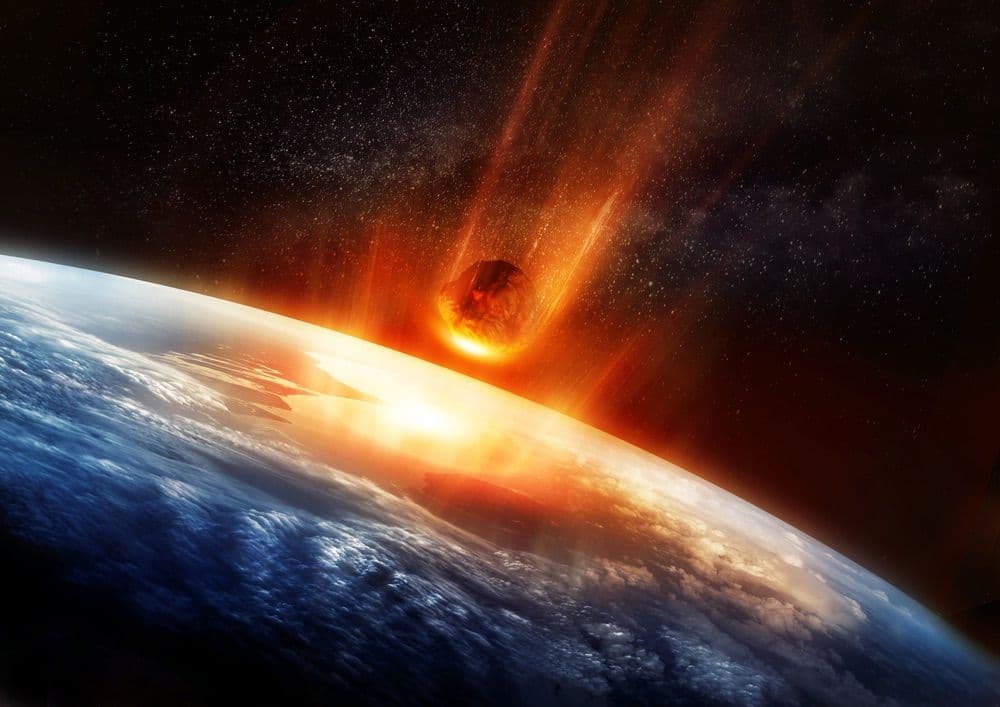
NASA's Center for Near-Earth Object Studies (CNEOS) reports no tracked near-Earth objects (NEOs) on a collision course with Earth in 2026, per the Sentry impact monitoring system and ESA's risk list, where all potential events carry zero probability on the Torino scale—bolstering the 67.5% market-implied odds for "No" on a 5-kiloton TNT-equivalent meteor airburst. Trader consensus reflects this lack of confirmed threats amid historical rarity: bolides exceeding 5kt occur roughly every 2–5 years globally, often evading pre-detection due to small size (5–10 meters). An uptick in smaller fireballs during Q1 2026, including a 0.026kt event over Houston, has not altered forecasts, as none approached market thresholds. Ongoing surveys by the Vera C. Rubin Observatory continue identifying undiscovered risks, with resolution hinging on verified energy from seismic, infrasound, and satellite data.
Експериментальне резюме, згенероване ШІ з посиланням на дані Polymarket. Це не торгова порада і не впливає на вирішення цього ринку. · Оновлено5kt meteor strike in 2026?
5kt meteor strike in 2026?
$299,951 Обс.
$299,951 Обс.
$299,951 Обс.
$299,951 Обс.
The object must be classified as a natural meteoroid; events involving artificial objects or reentry vehicles do not qualify.
The primary resolution source will be the NASA JPL Fireball and Bolide Data repository: https://cneos.jpl.nasa.gov/fireballs/. The relevant field for determining impact energy is the “Impact Energy (kt)” column. If this dataset has not been updated to include all relevant dates by February 28, 2027, or if the NASA JPL Fireball and Bolide Data repository becomes permanently unavailable, this market may resolve based on a consensus of credible sources including the European Space Agency (ESA), the International Asteroid Warning Network (IAWN), the U.S. Department of Defense, or credible reporting of a scientific consensus, such as a NASA press release.
Ринок відкрито: Dec 31, 2025, 12:04 PM ET
Resolver
0x65070BE91...The object must be classified as a natural meteoroid; events involving artificial objects or reentry vehicles do not qualify.
The primary resolution source will be the NASA JPL Fireball and Bolide Data repository: https://cneos.jpl.nasa.gov/fireballs/. The relevant field for determining impact energy is the “Impact Energy (kt)” column. If this dataset has not been updated to include all relevant dates by February 28, 2027, or if the NASA JPL Fireball and Bolide Data repository becomes permanently unavailable, this market may resolve based on a consensus of credible sources including the European Space Agency (ESA), the International Asteroid Warning Network (IAWN), the U.S. Department of Defense, or credible reporting of a scientific consensus, such as a NASA press release.
Resolver
0x65070BE91...NASA's Center for Near-Earth Object Studies (CNEOS) reports no tracked near-Earth objects (NEOs) on a collision course with Earth in 2026, per the Sentry impact monitoring system and ESA's risk list, where all potential events carry zero probability on the Torino scale—bolstering the 67.5% market-implied odds for "No" on a 5-kiloton TNT-equivalent meteor airburst. Trader consensus reflects this lack of confirmed threats amid historical rarity: bolides exceeding 5kt occur roughly every 2–5 years globally, often evading pre-detection due to small size (5–10 meters). An uptick in smaller fireballs during Q1 2026, including a 0.026kt event over Houston, has not altered forecasts, as none approached market thresholds. Ongoing surveys by the Vera C. Rubin Observatory continue identifying undiscovered risks, with resolution hinging on verified energy from seismic, infrasound, and satellite data.
Експериментальне резюме, згенероване ШІ з посиланням на дані Polymarket. Це не торгова порада і не впливає на вирішення цього ринку. · Оновлено
Обережно з зовнішніми посиланнями.
Часті запитання