
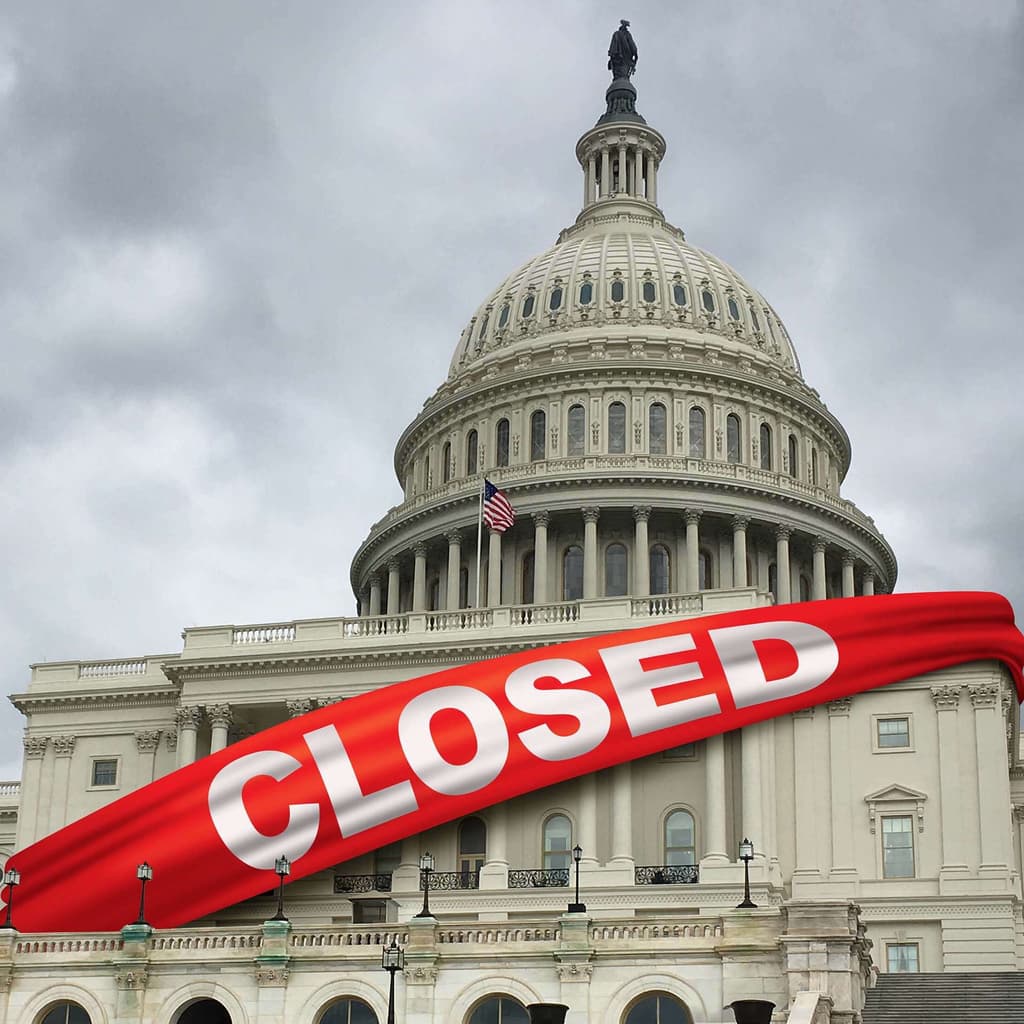
Congress passed and President Trump signed a continuing resolution on September 2 that extends current federal funding levels through December 11, removing any risk of a lapse on October 1. The measure cleared the Senate 90-6 in August and the House 370-48 on September 1 with bipartisan support, as lawmakers prioritized avoiding a pre-midterm shutdown amid ongoing disputes over full-year appropriations and policy riders. This outcome aligns with the strong trader consensus reflected in the 99.2% implied probability for no shutdown. A last-minute reversal remains theoretically possible only through extraordinary congressional action to repeal the enacted law before the deadline, though no such effort has surfaced.
Resumen experimental generado por IA con datos de Polymarket. Esto no es asesoramiento de trading y no influye en cómo se resuelve este mercado. · ActualizadoSí
<1% probabilidad
$15,557 Vol.
$15,557 Vol.
1 oct 2026
Sí
<1% probabilidad
$15,557 Vol.
$15,557 Vol.
1 oct 2026
This market will resolve to "Yes" if the United States federal government enters a shutdown due to a lapse in appropriations by the specified date, 11:59 PM ET. Otherwise, this market will resolve to "No".
A U.S. federal government shutdown is considered to have gone into effect when there is a lapse in appropriations that results in federal government agencies suspending non-excepted operations, typically including the furlough of non-excepted federal employees.
A lapse in appropriations occurs when Congress fails to enact, or the President fails to sign into law, legislation providing funding authority for federal government operations by an applicable deadline, resulting in a funding lapse. A lapse in appropriations where no federal agencies cease or suspend non-excepted operations will not qualify as a shutdown.
Partial shutdowns qualify. A shutdown affecting one or more, but not all, federal agencies constitutes a shutdown.
The following will qualify as a shutdown:
- An official directive from the Office of Management and Budget (OMB) ordering heads of affected agencies to execute shutdown plans (e.g., an instruction to "execute plans for an orderly shutdown") that is in effect by the specified date and time
- An official operating status published by the U.S. Office of Personnel Management (OPM) indicating that, due to a lapse in appropriations, federal government operations are suspended, reduced, or vary by agency (e.g., a notice that "due to a partial lapse in appropriations, Federal Government operations vary by agency")
The following will not qualify as a shutdown:
- A technical lapse in appropriations where OMB or other authorized authority directs agencies to continue normal or substantially normal operations
- Government closures or operating status changes resulting solely from Federal holidays, inclement weather, natural disasters, or other emergencies, unless such closures coincide with a qualifying shutdown caused by a lapse in appropriations
The primary resolution source for this market will be official information from the United States government, including the U.S. Office of Personnel Management (OPM); however, a consensus of credible reporting may also be used.Congress passed and President Trump signed a continuing resolution on September 2 that extends current federal funding levels through December 11, removing any risk of a lapse on October 1. The measure cleared the Senate 90-6 in August and the House 370-48 on September 1 with bipartisan support, as lawmakers prioritized avoiding a pre-midterm shutdown amid ongoing disputes over full-year appropriations and policy riders. This outcome aligns with the strong trader consensus reflected in the 99.2% implied probability for no shutdown. A last-minute reversal remains theoretically possible only through extraordinary congressional action to repeal the enacted law before the deadline, though no such effort has surfaced.
This market will resolve to "Yes" if the United States federal government enters a shutdown due to a lapse in appropriations by the specified date, 11:59 PM ET. Otherwise, this market will resolve to "No".
A U.S. federal government shutdown is considered to have gone into effect when there is a lapse in appropriations that results in federal government agencies suspending non-excepted operations, typically including the furlough of non-excepted federal employees.
A lapse in appropriations occurs when Congress fails to enact, or the President fails to sign into law, legislation providing funding authority for federal government operations by an applicable deadline, resulting in a funding lapse. A lapse in appropriations where no federal agencies cease or suspend non-excepted operations will not qualify as a shutdown.
Partial shutdowns qualify. A shutdown affecting one or more, but not all, federal agencies constitutes a shutdown.
The following will qualify as a shutdown:
- An official directive from the Office of Management and Budget (OMB) ordering heads of affected agencies to execute shutdown plans (e.g., an instruction to "execute plans for an orderly shutdown") that is in effect by the specified date and time
- An official operating status published by the U.S. Office of Personnel Management (OPM) indicating that, due to a lapse in appropriations, federal government operations are suspended, reduced, or vary by agency (e.g., a notice that "due to a partial lapse in appropriations, Federal Government operations vary by agency")
The following will not qualify as a shutdown:
- A technical lapse in appropriations where OMB or other authorized authority directs agencies to continue normal or substantially normal operations
- Government closures or operating status changes resulting solely from Federal holidays, inclement weather, natural disasters, or other emergencies, unless such closures coincide with a qualifying shutdown caused by a lapse in appropriations
The primary resolution source for this market will be official information from the United States government, including the U.S. Office of Personnel Management (OPM); however, a consensus of credible reporting may also be used.
A U.S. federal government shutdown is considered to have gone into effect when there is a lapse in appropriations that results in federal government agencies suspending non-excepted operations, typically including the furlough of non-excepted federal employees.
A lapse in appropriations occurs when Congress fails to enact, or the President fails to sign into law, legislation providing funding authority for federal government operations by an applicable deadline, resulting in a funding lapse. A lapse in appropriations where no federal agencies cease or suspend non-excepted operations will not qualify as a shutdown.
Partial shutdowns qualify. A shutdown affecting one or more, but not all, federal agencies constitutes a shutdown.
The following will qualify as a shutdown:
- An official directive from the Office of Management and Budget (OMB) ordering heads of affected agencies to execute shutdown plans (e.g., an instruction to "execute plans for an orderly shutdown") that is in effect by the specified date and time
- An official operating status published by the U.S. Office of Personnel Management (OPM) indicating that, due to a lapse in appropriations, federal government operations are suspended, reduced, or vary by agency (e.g., a notice that "due to a partial lapse in appropriations, Federal Government operations vary by agency")
The following will not qualify as a shutdown:
- A technical lapse in appropriations where OMB or other authorized authority directs agencies to continue normal or substantially normal operations
- Government closures or operating status changes resulting solely from Federal holidays, inclement weather, natural disasters, or other emergencies, unless such closures coincide with a qualifying shutdown caused by a lapse in appropriations
The primary resolution source for this market will be official information from the United States government, including the U.S. Office of Personnel Management (OPM); however, a consensus of credible reporting may also be used.
Mercado abierto: Jun 10, 2026, 12:27 PM ET
Volumen
$15,557Fecha de finalización
2 oct 2026Mercado abierto
Jun 10, 2026, 12:27 PM ETResolver
0x65070BE91...This market will resolve to "Yes" if the United States federal government enters a shutdown due to a lapse in appropriations by the specified date, 11:59 PM ET. Otherwise, this market will resolve to "No".
A U.S. federal government shutdown is considered to have gone into effect when there is a lapse in appropriations that results in federal government agencies suspending non-excepted operations, typically including the furlough of non-excepted federal employees.
A lapse in appropriations occurs when Congress fails to enact, or the President fails to sign into law, legislation providing funding authority for federal government operations by an applicable deadline, resulting in a funding lapse. A lapse in appropriations where no federal agencies cease or suspend non-excepted operations will not qualify as a shutdown.
Partial shutdowns qualify. A shutdown affecting one or more, but not all, federal agencies constitutes a shutdown.
The following will qualify as a shutdown:
- An official directive from the Office of Management and Budget (OMB) ordering heads of affected agencies to execute shutdown plans (e.g., an instruction to "execute plans for an orderly shutdown") that is in effect by the specified date and time
- An official operating status published by the U.S. Office of Personnel Management (OPM) indicating that, due to a lapse in appropriations, federal government operations are suspended, reduced, or vary by agency (e.g., a notice that "due to a partial lapse in appropriations, Federal Government operations vary by agency")
The following will not qualify as a shutdown:
- A technical lapse in appropriations where OMB or other authorized authority directs agencies to continue normal or substantially normal operations
- Government closures or operating status changes resulting solely from Federal holidays, inclement weather, natural disasters, or other emergencies, unless such closures coincide with a qualifying shutdown caused by a lapse in appropriations
The primary resolution source for this market will be official information from the United States government, including the U.S. Office of Personnel Management (OPM); however, a consensus of credible reporting may also be used.Congress passed and President Trump signed a continuing resolution on September 2 that extends current federal funding levels through December 11, removing any risk of a lapse on October 1. The measure cleared the Senate 90-6 in August and the House 370-48 on September 1 with bipartisan support, as lawmakers prioritized avoiding a pre-midterm shutdown amid ongoing disputes over full-year appropriations and policy riders. This outcome aligns with the strong trader consensus reflected in the 99.2% implied probability for no shutdown. A last-minute reversal remains theoretically possible only through extraordinary congressional action to repeal the enacted law before the deadline, though no such effort has surfaced.
This market will resolve to "Yes" if the United States federal government enters a shutdown due to a lapse in appropriations by the specified date, 11:59 PM ET. Otherwise, this market will resolve to "No".
A U.S. federal government shutdown is considered to have gone into effect when there is a lapse in appropriations that results in federal government agencies suspending non-excepted operations, typically including the furlough of non-excepted federal employees.
A lapse in appropriations occurs when Congress fails to enact, or the President fails to sign into law, legislation providing funding authority for federal government operations by an applicable deadline, resulting in a funding lapse. A lapse in appropriations where no federal agencies cease or suspend non-excepted operations will not qualify as a shutdown.
Partial shutdowns qualify. A shutdown affecting one or more, but not all, federal agencies constitutes a shutdown.
The following will qualify as a shutdown:
- An official directive from the Office of Management and Budget (OMB) ordering heads of affected agencies to execute shutdown plans (e.g., an instruction to "execute plans for an orderly shutdown") that is in effect by the specified date and time
- An official operating status published by the U.S. Office of Personnel Management (OPM) indicating that, due to a lapse in appropriations, federal government operations are suspended, reduced, or vary by agency (e.g., a notice that "due to a partial lapse in appropriations, Federal Government operations vary by agency")
The following will not qualify as a shutdown:
- A technical lapse in appropriations where OMB or other authorized authority directs agencies to continue normal or substantially normal operations
- Government closures or operating status changes resulting solely from Federal holidays, inclement weather, natural disasters, or other emergencies, unless such closures coincide with a qualifying shutdown caused by a lapse in appropriations
The primary resolution source for this market will be official information from the United States government, including the U.S. Office of Personnel Management (OPM); however, a consensus of credible reporting may also be used.
A U.S. federal government shutdown is considered to have gone into effect when there is a lapse in appropriations that results in federal government agencies suspending non-excepted operations, typically including the furlough of non-excepted federal employees.
A lapse in appropriations occurs when Congress fails to enact, or the President fails to sign into law, legislation providing funding authority for federal government operations by an applicable deadline, resulting in a funding lapse. A lapse in appropriations where no federal agencies cease or suspend non-excepted operations will not qualify as a shutdown.
Partial shutdowns qualify. A shutdown affecting one or more, but not all, federal agencies constitutes a shutdown.
The following will qualify as a shutdown:
- An official directive from the Office of Management and Budget (OMB) ordering heads of affected agencies to execute shutdown plans (e.g., an instruction to "execute plans for an orderly shutdown") that is in effect by the specified date and time
- An official operating status published by the U.S. Office of Personnel Management (OPM) indicating that, due to a lapse in appropriations, federal government operations are suspended, reduced, or vary by agency (e.g., a notice that "due to a partial lapse in appropriations, Federal Government operations vary by agency")
The following will not qualify as a shutdown:
- A technical lapse in appropriations where OMB or other authorized authority directs agencies to continue normal or substantially normal operations
- Government closures or operating status changes resulting solely from Federal holidays, inclement weather, natural disasters, or other emergencies, unless such closures coincide with a qualifying shutdown caused by a lapse in appropriations
The primary resolution source for this market will be official information from the United States government, including the U.S. Office of Personnel Management (OPM); however, a consensus of credible reporting may also be used.
Volumen
$15,557Fecha de finalización
2 oct 2026Mercado abierto
Jun 10, 2026, 12:27 PM ETResolver
0x65070BE91...Congress passed and President Trump signed a continuing resolution on September 2 that extends current federal funding levels through December 11, removing any risk of a lapse on October 1. The measure cleared the Senate 90-6 in August and the House 370-48 on September 1 with bipartisan support, as lawmakers prioritized avoiding a pre-midterm shutdown amid ongoing disputes over full-year appropriations and policy riders. This outcome aligns with the strong trader consensus reflected in the 99.2% implied probability for no shutdown. A last-minute reversal remains theoretically possible only through extraordinary congressional action to repeal the enacted law before the deadline, though no such effort has surfaced.
Resumen experimental generado por IA con datos de Polymarket. Esto no es asesoramiento de trading y no influye en cómo se resuelve este mercado. · Actualizado

Cuidado con los enlaces externos.
Cuidado con los enlaces externos.
Preguntas frecuentes