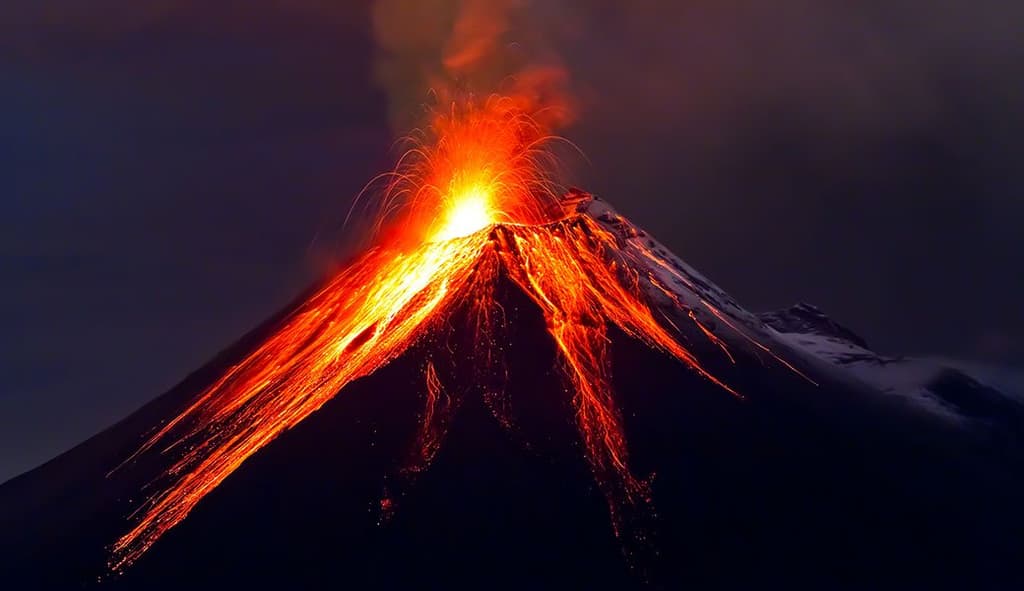
No confirmed VEI 4 or higher eruptions have occurred through mid-May 2026 despite ongoing activity at roughly 40–50 volcanoes worldwide. Historical records from the Smithsonian Global Volcanism Program show VEI ≥4 events occur with an average frequency of about one to two per year, though annual totals vary widely due to the stochastic nature of magmatic systems and the challenges of precise VEI assignment based on tephra volume and plume height. Current low implied probability for multiple events reflects this baseline rate plus the absence of new unrest at high-risk systems monitored by the USGS and national observatories. Traders are watching for updated weekly activity reports that could signal intensification capable of reaching the VEI 4 threshold before year-end.
Polymarketデータを参照したAI生成の実験的な要約。これは取引アドバイスではなく、このマーケットの解決方法には一切関係ありません。 · 更新日0 61%
1 35%
2 4.0%
3 <1%
$1,079,166 Vol.
$1,079,166 Vol.
0
61%
1
35%
2
4%
3
1%
4
<1%
5+
<1%
0 61%
1 35%
2 4.0%
3 <1%
$1,079,166 Vol.
$1,079,166 Vol.
0
61%
1
35%
2
4%
3
1%
4
<1%
5+
<1%
The primary resolution source will be the Smithsonian Institution Global Volcanism Program (GVP: https://volcano.si.edu/), specifically the cumulative figures for 2026 for VEI 4, VEI 5, and VEI 6 released on the page currently titled "Eruptions Avg 2000-2024 (N/T)" (https://volcano.si.edu/faq/index.cfm?question=eruptionsbyyear) as of March 31, 2027, 12 PM ET. Any prior updates will not be considered finalized.
If this dataset has not been updated to include all relevant events by March 31, 2027, or if the Smithsonian GVP becomes permanently unavailable, this market may resolve based on a consensus of credible scientific sources, including the U.S. Geological Survey (USGS), national or regional volcanic observatories, or credible reporting of a scientific consensus.
Note: Smithsonian Institution Global Volcanism Program databases, which include eruptions that reached the relevant threshold prior to this market’s timeframe (e.g., https://volcano.si.edu/faq/index.cfm?question=eruptionsbyyear&checkyear=2025), will not be considered.
マーケット開始日: Jan 2, 2026, 1:48 PM ET
Resolver
0x2F5e3684c...The primary resolution source will be the Smithsonian Institution Global Volcanism Program (GVP: https://volcano.si.edu/), specifically the cumulative figures for 2026 for VEI 4, VEI 5, and VEI 6 released on the page currently titled "Eruptions Avg 2000-2024 (N/T)" (https://volcano.si.edu/faq/index.cfm?question=eruptionsbyyear) as of March 31, 2027, 12 PM ET. Any prior updates will not be considered finalized.
If this dataset has not been updated to include all relevant events by March 31, 2027, or if the Smithsonian GVP becomes permanently unavailable, this market may resolve based on a consensus of credible scientific sources, including the U.S. Geological Survey (USGS), national or regional volcanic observatories, or credible reporting of a scientific consensus.
Note: Smithsonian Institution Global Volcanism Program databases, which include eruptions that reached the relevant threshold prior to this market’s timeframe (e.g., https://volcano.si.edu/faq/index.cfm?question=eruptionsbyyear&checkyear=2025), will not be considered.
Resolver
0x2F5e3684c...No confirmed VEI 4 or higher eruptions have occurred through mid-May 2026 despite ongoing activity at roughly 40–50 volcanoes worldwide. Historical records from the Smithsonian Global Volcanism Program show VEI ≥4 events occur with an average frequency of about one to two per year, though annual totals vary widely due to the stochastic nature of magmatic systems and the challenges of precise VEI assignment based on tephra volume and plume height. Current low implied probability for multiple events reflects this baseline rate plus the absence of new unrest at high-risk systems monitored by the USGS and national observatories. Traders are watching for updated weekly activity reports that could signal intensification capable of reaching the VEI 4 threshold before year-end.
Polymarketデータを参照したAI生成の実験的な要約。これは取引アドバイスではなく、このマーケットの解決方法には一切関係ありません。 · 更新日
外部リンクに注意してください。
外部リンクに注意してください。
よくある質問