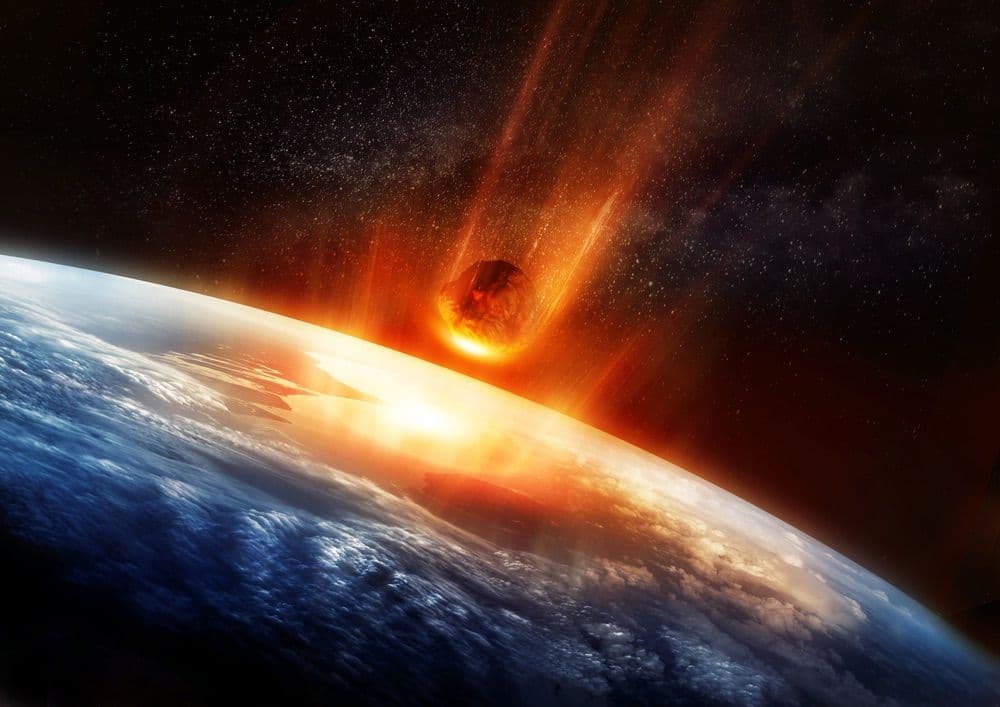
**No at 75% reflects the low base rate of 5 kt-scale bolides and the absence of any identified threats.** NASA’s CNEOS fireball database and Sentry monitoring, along with ESA risk lists, show no catalogued near-Earth objects on trajectories that could deliver ≥5 kt TNT equivalent in the remaining months of 2026. Historical records indicate such airbursts occur globally only once every several years on average, placing any single calendar year well below a one-in-three chance. Recent close approaches, including 2026 QQ1 and smaller objects, have passed safely at lunar distances, and refined orbits have eliminated residual uncertainties without revealing new risks. With four months left and continuous surveillance updates expected, the market-implied odds align with the scientific consensus that an undetected 5 kt event remains improbable before December 31.
Tóm tắt AI thử nghiệm tham chiếu dữ liệu Polymarket. Đây không phải tư vấn giao dịch và không ảnh hưởng đến cách thị trường này được giải quyết. · Cập nhật5kt meteor strike in 2026?
5kt meteor strike in 2026?
$312,629 KL.
$312,629 KL.
$312,629 KL.
$312,629 KL.
The object must be classified as a natural meteoroid; events involving artificial objects or reentry vehicles do not qualify.
The primary resolution source will be the NASA JPL Fireball and Bolide Data repository: https://cneos.jpl.nasa.gov/fireballs/. The relevant field for determining impact energy is the “Impact Energy (kt)” column. If this dataset has not been updated to include all relevant dates by February 28, 2027, or if the NASA JPL Fireball and Bolide Data repository becomes permanently unavailable, this market may resolve based on a consensus of credible sources including the European Space Agency (ESA), the International Asteroid Warning Network (IAWN), the U.S. Department of Defense, or credible reporting of a scientific consensus, such as a NASA press release.
Thị trường mở: Dec 31, 2025, 12:04 PM ET
Người giải quyết
0x65070BE91...The object must be classified as a natural meteoroid; events involving artificial objects or reentry vehicles do not qualify.
The primary resolution source will be the NASA JPL Fireball and Bolide Data repository: https://cneos.jpl.nasa.gov/fireballs/. The relevant field for determining impact energy is the “Impact Energy (kt)” column. If this dataset has not been updated to include all relevant dates by February 28, 2027, or if the NASA JPL Fireball and Bolide Data repository becomes permanently unavailable, this market may resolve based on a consensus of credible sources including the European Space Agency (ESA), the International Asteroid Warning Network (IAWN), the U.S. Department of Defense, or credible reporting of a scientific consensus, such as a NASA press release.
Người giải quyết
0x65070BE91...**No at 75% reflects the low base rate of 5 kt-scale bolides and the absence of any identified threats.** NASA’s CNEOS fireball database and Sentry monitoring, along with ESA risk lists, show no catalogued near-Earth objects on trajectories that could deliver ≥5 kt TNT equivalent in the remaining months of 2026. Historical records indicate such airbursts occur globally only once every several years on average, placing any single calendar year well below a one-in-three chance. Recent close approaches, including 2026 QQ1 and smaller objects, have passed safely at lunar distances, and refined orbits have eliminated residual uncertainties without revealing new risks. With four months left and continuous surveillance updates expected, the market-implied odds align with the scientific consensus that an undetected 5 kt event remains improbable before December 31.
Tóm tắt AI thử nghiệm tham chiếu dữ liệu Polymarket. Đây không phải tư vấn giao dịch và không ảnh hưởng đến cách thị trường này được giải quyết. · Cập nhật
Cẩn thận với liên kết bên ngoài.
Cẩn thận với liên kết bên ngoài.
Câu hỏi thường gặp