
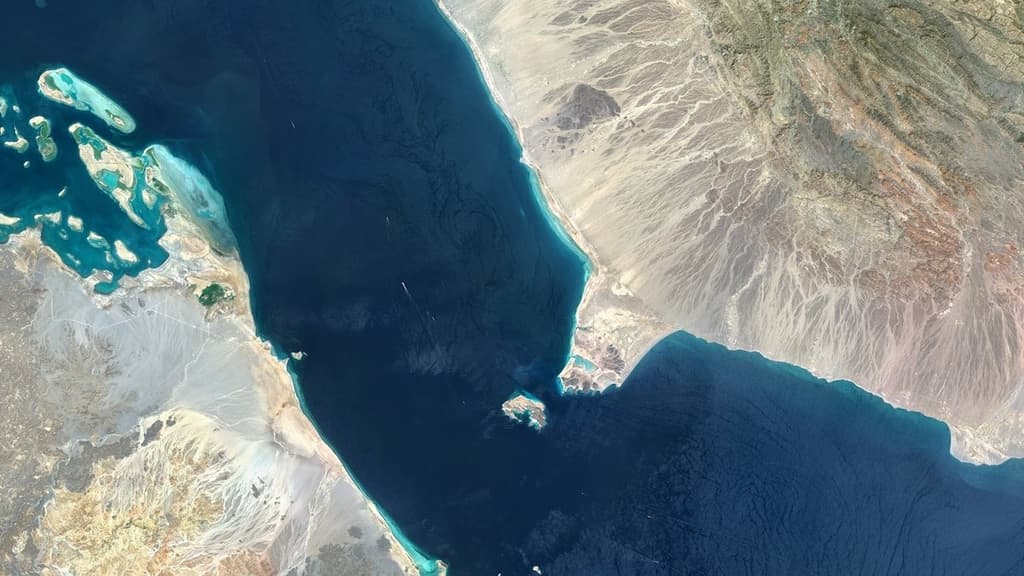
**Recent Houthi territorial gains along Yemen’s Red Sea coast, including the early-September 2026 seizures of Perim Island, Mokha port, and surrounding areas, have tightened control over Bab el-Mandeb approaches and elevated attack risk on commercial traffic.** Daily transits have fallen to roughly 20–25 vessels on recent days—down sharply from pre-2024 levels near 50—with tankers and select bulk carriers continuing while many container operators divert via the Cape of Good Hope, adding 10–14 days and $0.9–1 million per voyage. War-risk premiums remain elevated at 0.7–1.0% of hull value, supporting higher spot freight rates on Asia–Europe routes and contributing to supply-chain cost pressures. Partial Suez recoveries by carriers such as Maersk, MSC, and COSCO reflect selective risk tolerance, yet ongoing Houthi–Saudi tensions, pipeline disruptions, and potential naval escorts introduce volatility. The market’s tight clustering around 170–189 and sub-170 weekly totals (implying low-20s daily averages) captures this uncertainty, with traders weighing sustained suppression against any near-term de-escalation signals ahead of the September 28 resolution window.
Experimental AI-generated summary referencing Polymarket data. This is not trading advice and plays no role in how this market resolves. · UpdatedHow many ships transit Bab el-Mandeb Strait week of September 28?
How many ships transit Bab el-Mandeb Strait week of September 28?
170-189 24%
<170 21%
190-209 14%
210-229 14%
<170
21%
170-189
24%
190-209
14%
210-229
14%
230+
14%
170-189 24%
<170 21%
190-209 14%
210-229 14%
<170
21%
170-189
24%
190-209
14%
210-229
14%
230+
14%
Transit calls include container, dry bulk, roll-on/roll-off, general cargo, and tanker ships. Ships not reported by IMF Portwatch will not be considered.
This market will resolve as soon as all relevant data has been published. If the relevant data is not published within 14 calendar days of the specified date, this market will resolve based on the most recent data published up to that point.
In case of obvious data integrity issues (i.e., erroneous data), the market may remain open until the end of the third calendar day (ET) after the date on which such data is first released to allow for corrections. Data integrity issues refer only to clerical or other similar errors in the underlying data, and do not include cases where IMF Portwatch differs from alternative sources.
Only revisions to previously published data points made before all relevant data has been published will be considered.
The resolution source for this market will be IMF PortWatch, specifically the “Arrivals of Ships” data published for the Bab el-Mandeb Strait at https://portwatch.imf.org/pages/6b1814d64903461b98144a6cc25eb79c.
Market Opened: Sep 22, 2026, 2:25 PM ET
Resolution Source
https://portwatch.imf.org/pages/6b1814d64903461b98144a6cc25eb79cResolver
0x69c47De9D...Transit calls include container, dry bulk, roll-on/roll-off, general cargo, and tanker ships. Ships not reported by IMF Portwatch will not be considered.
This market will resolve as soon as all relevant data has been published. If the relevant data is not published within 14 calendar days of the specified date, this market will resolve based on the most recent data published up to that point.
In case of obvious data integrity issues (i.e., erroneous data), the market may remain open until the end of the third calendar day (ET) after the date on which such data is first released to allow for corrections. Data integrity issues refer only to clerical or other similar errors in the underlying data, and do not include cases where IMF Portwatch differs from alternative sources.
Only revisions to previously published data points made before all relevant data has been published will be considered.
The resolution source for this market will be IMF PortWatch, specifically the “Arrivals of Ships” data published for the Bab el-Mandeb Strait at https://portwatch.imf.org/pages/6b1814d64903461b98144a6cc25eb79c.
Resolution Source
https://portwatch.imf.org/pages/6b1814d64903461b98144a6cc25eb79cResolver
0x69c47De9D...**Recent Houthi territorial gains along Yemen’s Red Sea coast, including the early-September 2026 seizures of Perim Island, Mokha port, and surrounding areas, have tightened control over Bab el-Mandeb approaches and elevated attack risk on commercial traffic.** Daily transits have fallen to roughly 20–25 vessels on recent days—down sharply from pre-2024 levels near 50—with tankers and select bulk carriers continuing while many container operators divert via the Cape of Good Hope, adding 10–14 days and $0.9–1 million per voyage. War-risk premiums remain elevated at 0.7–1.0% of hull value, supporting higher spot freight rates on Asia–Europe routes and contributing to supply-chain cost pressures. Partial Suez recoveries by carriers such as Maersk, MSC, and COSCO reflect selective risk tolerance, yet ongoing Houthi–Saudi tensions, pipeline disruptions, and potential naval escorts introduce volatility. The market’s tight clustering around 170–189 and sub-170 weekly totals (implying low-20s daily averages) captures this uncertainty, with traders weighing sustained suppression against any near-term de-escalation signals ahead of the September 28 resolution window.
Experimental AI-generated summary referencing Polymarket data. This is not trading advice and plays no role in how this market resolves. · Updated
Beware of external links.
Beware of external links.
Frequently Asked Questions