icon for Will SCOTUS let Trump build the White House ballroom by September 30?

Will SCOTUS let Trump build the White House ballroom by September 30?

icon for Will SCOTUS let Trump build the White House ballroom by September 30?

Will SCOTUS let Trump build the White House ballroom by September 30?

56% chance
Polymarket
NEW
56% chance
Polymarket
NEW
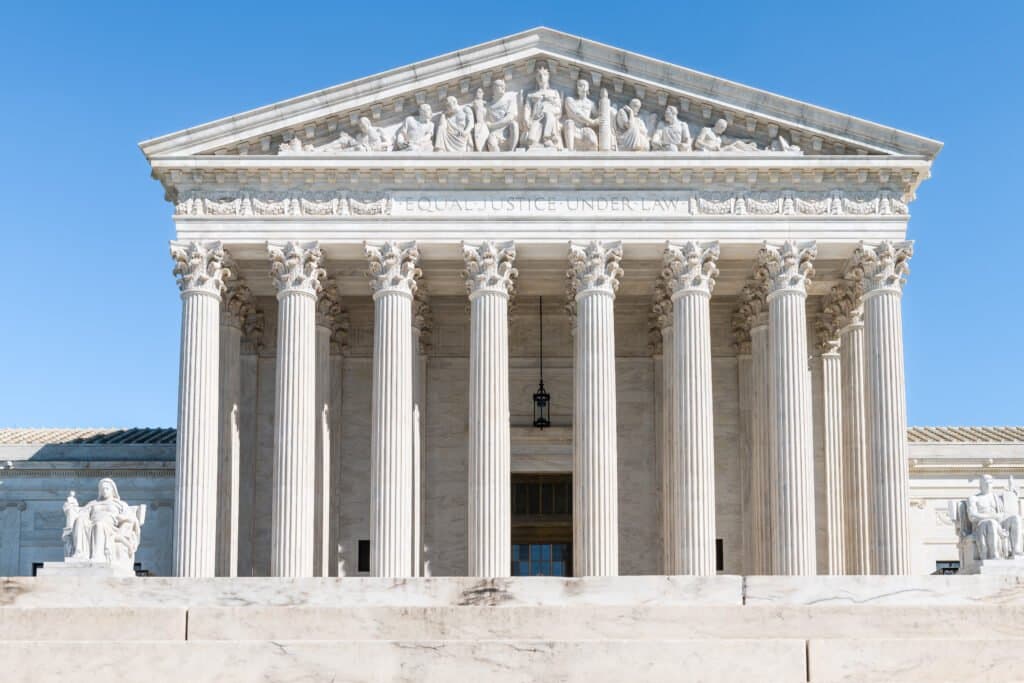
The Supreme Court of the United States is expected to be asked to review lower-court rulings blocking construction of a new White House ballroom on the former site of the East Wing offices. As of market creation, a preliminary injunction affirmed by the D.C. Circuit blocks above-ground construction while permitting below-ground work. This market will resolve to "Yes" if, by September 30, 2026, 11:59 PM ET, the Supreme Court of the United States issues any ruling or order that has the effect of permitting construction to resume on any above-ground portion of the ballroom project. Otherwise, this market will resolve to "No." A qualifying ruling or order includes a merits decision, a stay of a lower-court injunction, or any other form of interim or permanent relief, so long as its effect is that above-ground construction is legally permitted to proceed. A ruling or order affecting only below-ground work will not qualify. Once a qualifying ruling or order has been issued, this market will resolve to "Yes" regardless of whether the ruling or order is later vacated, reversed, or superseded, and regardless of whether construction actually resumes. This market will resolve to "No" if no qualifying ruling or order is issued by the deadline, including if the Supreme Court declines to hear the case, dismisses it, or resolves it on grounds that leave the block on above-ground construction in place. Above-ground construction becoming permitted through any mechanism other than a Supreme Court ruling or order — including congressional authorization, settlement, or dismissal of the underlying lawsuit — will not qualify. The primary resolution source for this market will be official information from the Supreme Court of the United States (including orders published at supremecourt.gov); however, a consensus of credible reporting may also be used.Recent appeals court rulings have required congressional approval for the $400 million White House ballroom project after halting above-ground construction on the former East Wing site, prompting an immediate Trump administration appeal to the Supreme Court. The D.C. Circuit panel stayed its order for 14 days through mid-August, preserving ongoing below-ground security work while the high court considers emergency relief. Traders see a narrow edge for SCOTUS intervention by September 30 amid debates over executive authority versus legislative oversight, with the administration framing the project as a national security priority. This closely contested implied probability reflects uncertainty over whether the justices will grant a stay or broader relief before the deadline amid ongoing litigation.

The Supreme Court of the United States is expected to be asked to review lower-court rulings blocking construction of a new White House ballroom on the former site of the East Wing offices. As of market creation, a preliminary injunction affirmed by the D.C. Circuit blocks above-ground construction while permitting below-ground work.

This market will resolve to "Yes" if, by September 30, 2026, 11:59 PM ET, the Supreme Court of the United States issues any ruling or order that has the effect of permitting construction to resume on any above-ground portion of the ballroom project. Otherwise, this market will resolve to "No."

A qualifying ruling or order includes a merits decision, a stay of a lower-court injunction, or any other form of interim or permanent relief, so long as its effect is that above-ground construction is legally permitted to proceed. A ruling or order affecting only below-ground work will not qualify.

Once a qualifying ruling or order has been issued, this market will resolve to "Yes" regardless of whether the ruling or order is later vacated, reversed, or superseded, and regardless of whether construction actually resumes.

This market will resolve to "No" if no qualifying ruling or order is issued by the deadline, including if the Supreme Court declines to hear the case, dismisses it, or resolves it on grounds that leave the block on above-ground construction in place. Above-ground construction becoming permitted through any mechanism other than a Supreme Court ruling or order — including congressional authorization, settlement, or dismissal of the underlying lawsuit — will not qualify.

The primary resolution source for this market will be official information from the Supreme Court of the United States (including orders published at supremecourt.gov); however, a consensus of credible reporting may also be used.
Volume
$2,002
End Date
Sep 30, 2026
Market Opened
Aug 7, 2026, 4:54 PM ET
The Supreme Court of the United States is expected to be asked to review lower-court rulings blocking construction of a new White House ballroom on the former site of the East Wing offices. As of market creation, a preliminary injunction affirmed by the D.C. Circuit blocks above-ground construction while permitting below-ground work. This market will resolve to "Yes" if, by September 30, 2026, 11:59 PM ET, the Supreme Court of the United States issues any ruling or order that has the effect of permitting construction to resume on any above-ground portion of the ballroom project. Otherwise, this market will resolve to "No." A qualifying ruling or order includes a merits decision, a stay of a lower-court injunction, or any other form of interim or permanent relief, so long as its effect is that above-ground construction is legally permitted to proceed. A ruling or order affecting only below-ground work will not qualify. Once a qualifying ruling or order has been issued, this market will resolve to "Yes" regardless of whether the ruling or order is later vacated, reversed, or superseded, and regardless of whether construction actually resumes. This market will resolve to "No" if no qualifying ruling or order is issued by the deadline, including if the Supreme Court declines to hear the case, dismisses it, or resolves it on grounds that leave the block on above-ground construction in place. Above-ground construction becoming permitted through any mechanism other than a Supreme Court ruling or order — including congressional authorization, settlement, or dismissal of the underlying lawsuit — will not qualify. The primary resolution source for this market will be official information from the Supreme Court of the United States (including orders published at supremecourt.gov); however, a consensus of credible reporting may also be used.
The Supreme Court of the United States is expected to be asked to review lower-court rulings blocking construction of a new White House ballroom on the former site of the East Wing offices. As of market creation, a preliminary injunction affirmed by the D.C. Circuit blocks above-ground construction while permitting below-ground work. This market will resolve to "Yes" if, by September 30, 2026, 11:59 PM ET, the Supreme Court of the United States issues any ruling or order that has the effect of permitting construction to resume on any above-ground portion of the ballroom project. Otherwise, this market will resolve to "No." A qualifying ruling or order includes a merits decision, a stay of a lower-court injunction, or any other form of interim or permanent relief, so long as its effect is that above-ground construction is legally permitted to proceed. A ruling or order affecting only below-ground work will not qualify. Once a qualifying ruling or order has been issued, this market will resolve to "Yes" regardless of whether the ruling or order is later vacated, reversed, or superseded, and regardless of whether construction actually resumes. This market will resolve to "No" if no qualifying ruling or order is issued by the deadline, including if the Supreme Court declines to hear the case, dismisses it, or resolves it on grounds that leave the block on above-ground construction in place. Above-ground construction becoming permitted through any mechanism other than a Supreme Court ruling or order — including congressional authorization, settlement, or dismissal of the underlying lawsuit — will not qualify. The primary resolution source for this market will be official information from the Supreme Court of the United States (including orders published at supremecourt.gov); however, a consensus of credible reporting may also be used.Recent appeals court rulings have required congressional approval for the $400 million White House ballroom project after halting above-ground construction on the former East Wing site, prompting an immediate Trump administration appeal to the Supreme Court. The D.C. Circuit panel stayed its order for 14 days through mid-August, preserving ongoing below-ground security work while the high court considers emergency relief. Traders see a narrow edge for SCOTUS intervention by September 30 amid debates over executive authority versus legislative oversight, with the administration framing the project as a national security priority. This closely contested implied probability reflects uncertainty over whether the justices will grant a stay or broader relief before the deadline amid ongoing litigation.

The Supreme Court of the United States is expected to be asked to review lower-court rulings blocking construction of a new White House ballroom on the former site of the East Wing offices. As of market creation, a preliminary injunction affirmed by the D.C. Circuit blocks above-ground construction while permitting below-ground work.

This market will resolve to "Yes" if, by September 30, 2026, 11:59 PM ET, the Supreme Court of the United States issues any ruling or order that has the effect of permitting construction to resume on any above-ground portion of the ballroom project. Otherwise, this market will resolve to "No."

A qualifying ruling or order includes a merits decision, a stay of a lower-court injunction, or any other form of interim or permanent relief, so long as its effect is that above-ground construction is legally permitted to proceed. A ruling or order affecting only below-ground work will not qualify.

Once a qualifying ruling or order has been issued, this market will resolve to "Yes" regardless of whether the ruling or order is later vacated, reversed, or superseded, and regardless of whether construction actually resumes.

This market will resolve to "No" if no qualifying ruling or order is issued by the deadline, including if the Supreme Court declines to hear the case, dismisses it, or resolves it on grounds that leave the block on above-ground construction in place. Above-ground construction becoming permitted through any mechanism other than a Supreme Court ruling or order — including congressional authorization, settlement, or dismissal of the underlying lawsuit — will not qualify.

The primary resolution source for this market will be official information from the Supreme Court of the United States (including orders published at supremecourt.gov); however, a consensus of credible reporting may also be used.
Volume
$2,002
End Date
Sep 30, 2026
Market Opened
Aug 7, 2026, 4:54 PM ET
The Supreme Court of the United States is expected to be asked to review lower-court rulings blocking construction of a new White House ballroom on the former site of the East Wing offices. As of market creation, a preliminary injunction affirmed by the D.C. Circuit blocks above-ground construction while permitting below-ground work. This market will resolve to "Yes" if, by September 30, 2026, 11:59 PM ET, the Supreme Court of the United States issues any ruling or order that has the effect of permitting construction to resume on any above-ground portion of the ballroom project. Otherwise, this market will resolve to "No." A qualifying ruling or order includes a merits decision, a stay of a lower-court injunction, or any other form of interim or permanent relief, so long as its effect is that above-ground construction is legally permitted to proceed. A ruling or order affecting only below-ground work will not qualify. Once a qualifying ruling or order has been issued, this market will resolve to "Yes" regardless of whether the ruling or order is later vacated, reversed, or superseded, and regardless of whether construction actually resumes. This market will resolve to "No" if no qualifying ruling or order is issued by the deadline, including if the Supreme Court declines to hear the case, dismisses it, or resolves it on grounds that leave the block on above-ground construction in place. Above-ground construction becoming permitted through any mechanism other than a Supreme Court ruling or order — including congressional authorization, settlement, or dismissal of the underlying lawsuit — will not qualify. The primary resolution source for this market will be official information from the Supreme Court of the United States (including orders published at supremecourt.gov); however, a consensus of credible reporting may also be used.

Beware of external links.

Frequently Asked Questions

"Will SCOTUS let Trump build the White House ballroom by September 30?" is a prediction market on Polymarket where traders buy and sell "Yes" or "No" shares based on whether they believe this event will happen. The current crowd-sourced probability is 56% for "Yes." For example, if "Yes" is priced at 56¢, the market collectively assigns a 56% chance that this event will occur. These odds shift continuously as traders react to new developments and information. Shares in the correct outcome are redeemable for $1 each upon market resolution.

"Will SCOTUS let Trump build the White House ballroom by September 30?" is a newly created market on Polymarket, launched on Aug 7, 2026. As an early market, this is your opportunity to be among the first traders to set the odds and establish the market's initial price signals. You can also bookmark this page to track volume and trading activity as the market gains traction over time.

To trade on "Will SCOTUS let Trump build the White House ballroom by September 30?," simply choose whether you believe the answer is "Yes" or "No." Each side has a current price that reflects the market's implied probability. Enter your amount and click "Trade." If you buy "Yes" shares and the outcome resolves as "Yes," each share pays out $1. If it resolves as "No," your "Yes" shares pay $0. You can also sell your shares at any time before resolution if you want to lock in a profit or cut a loss.

The current probability for "Will SCOTUS let Trump build the White House ballroom by September 30?" is 56% for "Yes." This means the Polymarket crowd currently believes there is a 56% chance that this event will occur. These odds update in real-time based on actual trades, providing a continuously updated signal of what the market expects to happen.

The resolution rules for "Will SCOTUS let Trump build the White House ballroom by September 30?" define exactly what needs to happen for each outcome to be declared a winner — including the official data sources used to determine the result. You can review the complete resolution criteria in the "Rules" section on this page above the comments. We recommend reading the rules carefully before trading, as they specify the precise conditions, edge cases, and sources that govern how this market is settled.