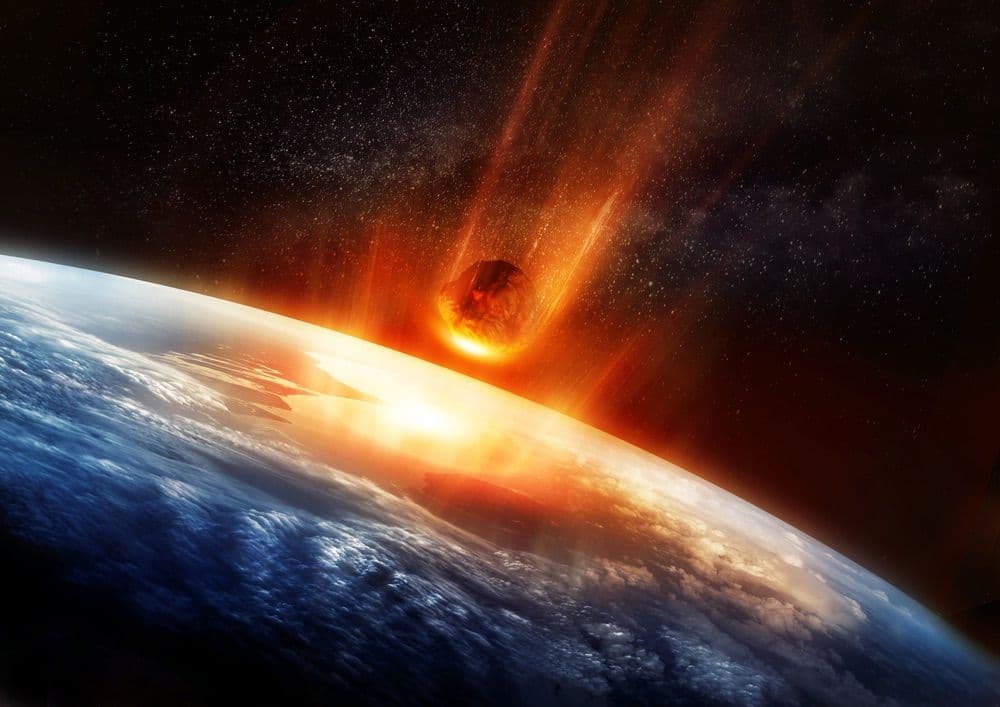
No catalogued near-Earth objects pose a 5 kt or greater impact risk for the remainder of 2026, according to NASA CNEOS and ESA monitoring, which underpins the market's 75% "No" odds. Meter-scale impactors produce roughly one ~5 kt airburst annually on average, per satellite and infrasound records, yet events follow a power-law distribution with high year-to-year variance and most occur undetected over oceans. No recent fireball data or orbital updates have altered baseline flux estimates, and all tracked close approaches through year-end fall well below the energy threshold. Traders weigh this steady scientific consensus against the possibility of an unforecasted small body.
Eksperimental na AI-generated summary na nire-reference ang Polymarket data. Hindi ito trading advice at wala itong papel sa kung paano nire-resolve ang market na ito. · Na-update5kt meteor strike in 2026?
5kt meteor strike in 2026?
25% tsansa
$312,629 Vol.
$312,629 Vol.
Dec 31, 2026
25% tsansa
$312,629 Vol.
$312,629 Vol.
Dec 31, 2026
This market will resolve to "Yes" if a natural meteoroid (bolide) explodes in Earth's atmosphere with a total impact energy greater than or equal to 5 kilotons of TNT equivalent between January 1 and December 31, 2026, 11:59 PM ET. Otherwise, this market will resolve to “No”.
The object must be classified as a natural meteoroid; events involving artificial objects or reentry vehicles do not qualify.
The primary resolution source will be the NASA JPL Fireball and Bolide Data repository: https://cneos.jpl.nasa.gov/fireballs/. The relevant field for determining impact energy is the “Impact Energy (kt)” column. If this dataset has not been updated to include all relevant dates by February 28, 2027, or if the NASA JPL Fireball and Bolide Data repository becomes permanently unavailable, this market may resolve based on a consensus of credible sources including the European Space Agency (ESA), the International Asteroid Warning Network (IAWN), the U.S. Department of Defense, or credible reporting of a scientific consensus, such as a NASA press release.No catalogued near-Earth objects pose a 5 kt or greater impact risk for the remainder of 2026, according to NASA CNEOS and ESA monitoring, which underpins the market's 75% "No" odds. Meter-scale impactors produce roughly one ~5 kt airburst annually on average, per satellite and infrasound records, yet events follow a power-law distribution with high year-to-year variance and most occur undetected over oceans. No recent fireball data or orbital updates have altered baseline flux estimates, and all tracked close approaches through year-end fall well below the energy threshold. Traders weigh this steady scientific consensus against the possibility of an unforecasted small body.
This market will resolve to "Yes" if a natural meteoroid (bolide) explodes in Earth's atmosphere with a total impact energy greater than or equal to 5 kilotons of TNT equivalent between January 1 and December 31, 2026, 11:59 PM ET. Otherwise, this market will resolve to “No”.
The object must be classified as a natural meteoroid; events involving artificial objects or reentry vehicles do not qualify.
The primary resolution source will be the NASA JPL Fireball and Bolide Data repository: https://cneos.jpl.nasa.gov/fireballs/. The relevant field for determining impact energy is the “Impact Energy (kt)” column. If this dataset has not been updated to include all relevant dates by February 28, 2027, or if the NASA JPL Fireball and Bolide Data repository becomes permanently unavailable, this market may resolve based on a consensus of credible sources including the European Space Agency (ESA), the International Asteroid Warning Network (IAWN), the U.S. Department of Defense, or credible reporting of a scientific consensus, such as a NASA press release.
The object must be classified as a natural meteoroid; events involving artificial objects or reentry vehicles do not qualify.
The primary resolution source will be the NASA JPL Fireball and Bolide Data repository: https://cneos.jpl.nasa.gov/fireballs/. The relevant field for determining impact energy is the “Impact Energy (kt)” column. If this dataset has not been updated to include all relevant dates by February 28, 2027, or if the NASA JPL Fireball and Bolide Data repository becomes permanently unavailable, this market may resolve based on a consensus of credible sources including the European Space Agency (ESA), the International Asteroid Warning Network (IAWN), the U.S. Department of Defense, or credible reporting of a scientific consensus, such as a NASA press release.
Binuksan ang Market: Dec 31, 2025, 12:04 PM ET
Volume
$312,629Petsa ng Pagtatapos
Jan 1, 2027Binuksan ang Market
Dec 31, 2025, 12:04 PM ETResolver
0x65070BE91...This market will resolve to "Yes" if a natural meteoroid (bolide) explodes in Earth's atmosphere with a total impact energy greater than or equal to 5 kilotons of TNT equivalent between January 1 and December 31, 2026, 11:59 PM ET. Otherwise, this market will resolve to “No”.
The object must be classified as a natural meteoroid; events involving artificial objects or reentry vehicles do not qualify.
The primary resolution source will be the NASA JPL Fireball and Bolide Data repository: https://cneos.jpl.nasa.gov/fireballs/. The relevant field for determining impact energy is the “Impact Energy (kt)” column. If this dataset has not been updated to include all relevant dates by February 28, 2027, or if the NASA JPL Fireball and Bolide Data repository becomes permanently unavailable, this market may resolve based on a consensus of credible sources including the European Space Agency (ESA), the International Asteroid Warning Network (IAWN), the U.S. Department of Defense, or credible reporting of a scientific consensus, such as a NASA press release.No catalogued near-Earth objects pose a 5 kt or greater impact risk for the remainder of 2026, according to NASA CNEOS and ESA monitoring, which underpins the market's 75% "No" odds. Meter-scale impactors produce roughly one ~5 kt airburst annually on average, per satellite and infrasound records, yet events follow a power-law distribution with high year-to-year variance and most occur undetected over oceans. No recent fireball data or orbital updates have altered baseline flux estimates, and all tracked close approaches through year-end fall well below the energy threshold. Traders weigh this steady scientific consensus against the possibility of an unforecasted small body.
This market will resolve to "Yes" if a natural meteoroid (bolide) explodes in Earth's atmosphere with a total impact energy greater than or equal to 5 kilotons of TNT equivalent between January 1 and December 31, 2026, 11:59 PM ET. Otherwise, this market will resolve to “No”.
The object must be classified as a natural meteoroid; events involving artificial objects or reentry vehicles do not qualify.
The primary resolution source will be the NASA JPL Fireball and Bolide Data repository: https://cneos.jpl.nasa.gov/fireballs/. The relevant field for determining impact energy is the “Impact Energy (kt)” column. If this dataset has not been updated to include all relevant dates by February 28, 2027, or if the NASA JPL Fireball and Bolide Data repository becomes permanently unavailable, this market may resolve based on a consensus of credible sources including the European Space Agency (ESA), the International Asteroid Warning Network (IAWN), the U.S. Department of Defense, or credible reporting of a scientific consensus, such as a NASA press release.
The object must be classified as a natural meteoroid; events involving artificial objects or reentry vehicles do not qualify.
The primary resolution source will be the NASA JPL Fireball and Bolide Data repository: https://cneos.jpl.nasa.gov/fireballs/. The relevant field for determining impact energy is the “Impact Energy (kt)” column. If this dataset has not been updated to include all relevant dates by February 28, 2027, or if the NASA JPL Fireball and Bolide Data repository becomes permanently unavailable, this market may resolve based on a consensus of credible sources including the European Space Agency (ESA), the International Asteroid Warning Network (IAWN), the U.S. Department of Defense, or credible reporting of a scientific consensus, such as a NASA press release.
Volume
$312,629Petsa ng Pagtatapos
Jan 1, 2027Binuksan ang Market
Dec 31, 2025, 12:04 PM ETResolver
0x65070BE91...No catalogued near-Earth objects pose a 5 kt or greater impact risk for the remainder of 2026, according to NASA CNEOS and ESA monitoring, which underpins the market's 75% "No" odds. Meter-scale impactors produce roughly one ~5 kt airburst annually on average, per satellite and infrasound records, yet events follow a power-law distribution with high year-to-year variance and most occur undetected over oceans. No recent fireball data or orbital updates have altered baseline flux estimates, and all tracked close approaches through year-end fall well below the energy threshold. Traders weigh this steady scientific consensus against the possibility of an unforecasted small body.
Eksperimental na AI-generated summary na nire-reference ang Polymarket data. Hindi ito trading advice at wala itong papel sa kung paano nire-resolve ang market na ito. · Na-update
Mag-ingat sa mga external link.
Mag-ingat sa mga external link.
Mga Madalas na Tanong