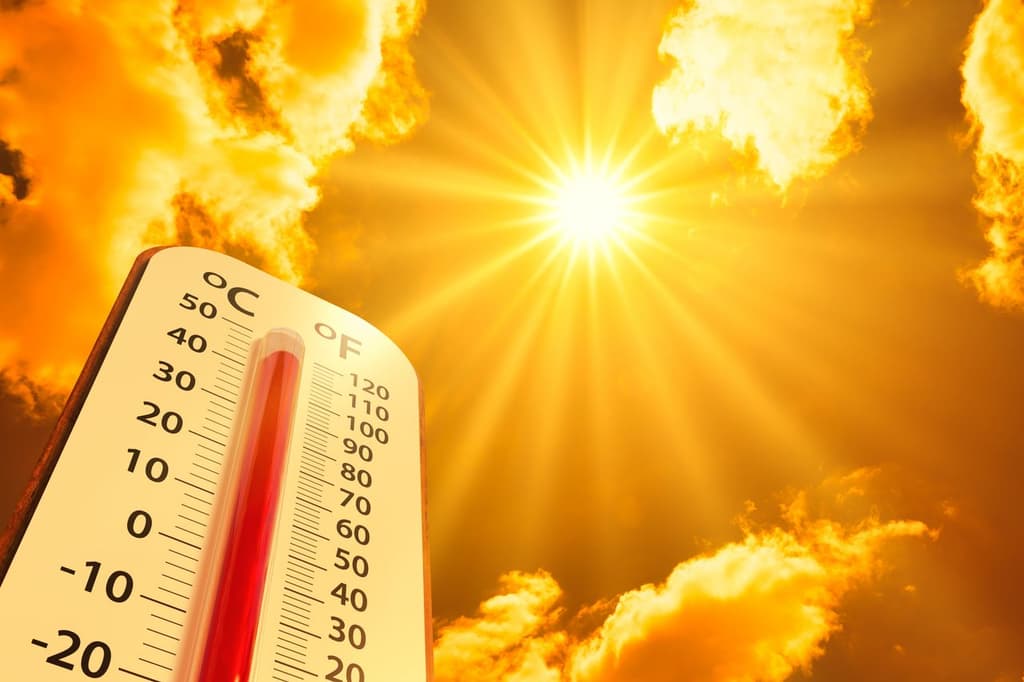
The recent transition toward El Niño conditions in the equatorial Pacific, with an 82% chance of emergence by May–July 2026 according to NOAA’s Climate Prediction Center, is the main factor supporting the 61% market-implied probability for a 1.10–1.14 °C global temperature anomaly in May. Long-term anthropogenic warming has already pushed the underlying baseline near 1.5 °C above pre-industrial levels, while ENSO-neutral conditions earlier in the year have limited additional short-term boosts. Model consensus from the North American Multi-Model Ensemble shows subsurface warming and westerly wind anomalies accelerating this shift, though spring predictability barriers introduce some uncertainty in peak intensity. Updated seasonal outlooks indicate continued above-average land and ocean temperatures through the month, with new forecast releases from agencies like the WMO expected to refine these ranges.
Résumé expérimental généré par IA à partir des données Polymarket. Ceci n'est pas un conseil de trading et ne joue aucun rôle dans la résolution de ce marché. · Mis à jourMay 2026 Temperature Increase (ºC)
May 2026 Temperature Increase (ºC)
1.10–1.14ºC 61%
<1.10ºC 17%
1.15–1.19ºC 15%
1.20–1.24ºC 7%
$58,562 Vol.
$58,562 Vol.
<1.10ºC
17%
1.10–1.14ºC
61%
1.15–1.19ºC
15%
1.20–1.24ºC
7%
1.25–1.29ºC
3%
>1.29ºC
1%
1.10–1.14ºC 61%
<1.10ºC 17%
1.15–1.19ºC 15%
1.20–1.24ºC 7%
$58,562 Vol.
$58,562 Vol.
<1.10ºC
17%
1.10–1.14ºC
61%
1.15–1.19ºC
15%
1.20–1.24ºC
7%
1.25–1.29ºC
3%
>1.29ºC
1%
An anomaly within a named bracket for May 2026 is necessary and sufficient to resolve this market immediately once the data becomes available, regardless of whether the figure for May 2026 is later revised.
The primary resolution source for this market will be the figure found in the table titled "GLOBAL Land-Ocean Temperature Index in 0.01 degrees Celsius" under the column "May" in the row "2026" (https://data.giss.nasa.gov/gistemp/tabledata_v4/GLB.Ts+dSST.txt).
If NASA’s “Global Temperature Index” is rendered permanently unavailable, other information from NASA may be used.
If no information for May 2026 is provided by NASA by July 1, 2026, 11:59 PM ET, this market will resolve to the lowest range bracket.
Marché ouvert : Apr 27, 2026, 4:35 PM ET
Resolver
0x69c47De9D...An anomaly within a named bracket for May 2026 is necessary and sufficient to resolve this market immediately once the data becomes available, regardless of whether the figure for May 2026 is later revised.
The primary resolution source for this market will be the figure found in the table titled "GLOBAL Land-Ocean Temperature Index in 0.01 degrees Celsius" under the column "May" in the row "2026" (https://data.giss.nasa.gov/gistemp/tabledata_v4/GLB.Ts+dSST.txt).
If NASA’s “Global Temperature Index” is rendered permanently unavailable, other information from NASA may be used.
If no information for May 2026 is provided by NASA by July 1, 2026, 11:59 PM ET, this market will resolve to the lowest range bracket.
Resolver
0x69c47De9D...The recent transition toward El Niño conditions in the equatorial Pacific, with an 82% chance of emergence by May–July 2026 according to NOAA’s Climate Prediction Center, is the main factor supporting the 61% market-implied probability for a 1.10–1.14 °C global temperature anomaly in May. Long-term anthropogenic warming has already pushed the underlying baseline near 1.5 °C above pre-industrial levels, while ENSO-neutral conditions earlier in the year have limited additional short-term boosts. Model consensus from the North American Multi-Model Ensemble shows subsurface warming and westerly wind anomalies accelerating this shift, though spring predictability barriers introduce some uncertainty in peak intensity. Updated seasonal outlooks indicate continued above-average land and ocean temperatures through the month, with new forecast releases from agencies like the WMO expected to refine these ranges.
Résumé expérimental généré par IA à partir des données Polymarket. Ceci n'est pas un conseil de trading et ne joue aucun rôle dans la résolution de ce marché. · Mis à jour
Méfiez-vous des liens externes.
Méfiez-vous des liens externes.
Questions fréquentes