
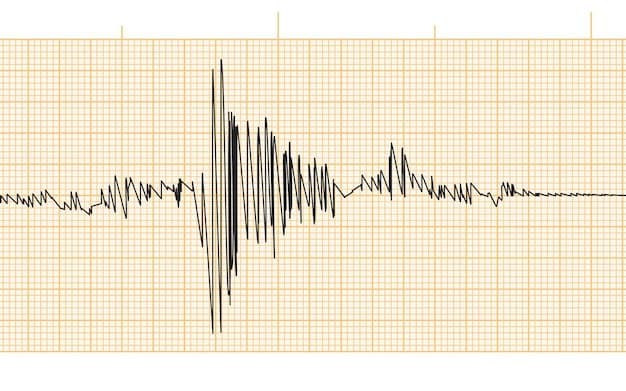
Global seismic activity follows plate boundary dynamics, with the USGS recording over 100 magnitude 6.0+ events annually on average, concentrated along subduction zones and transform faults in the Pacific Ring of Fire. A magnitude 6.4 quake struck Papua New Guinea on September 20 at approximately 64 km depth near the Australia-Pacific plate boundary, consistent with the region's history of frequent strong events. With only days remaining until September 30, trader focus centers on real-time USGS and international monitoring for any additional M6+ occurrences, as no reliable short-term forecasts exist beyond probabilistic hazard models. Ongoing aftershock sequences or new activity in high-strain areas like Indonesia, Japan, or Chile could influence outcomes, while quiet periods in major zones remain possible given natural variability in release rates.
Experimental AI-generated summary referencing Polymarket data. This is not trading advice and plays no role in how this market resolves. · UpdatedWhere will a 6.0+ magnitude earthquake occur by end of September?
Where will a 6.0+ magnitude earthquake occur by end of September?

Japan
28%

Chile
25%

Mexico
10%

Philippines
16%

Peru
27%
$4,737 Vol.
Japan
28%
Chile
25%
Mexico
10%
Philippines
16%
Peru
27%
A qualifying earthquake must be counted for a country's market only if USGS attributes its location to that country in the event's location description, lists the earthquake with a preferred magnitude of 6.0 or higher, and lists it as occurring within the specified timeframe. Earthquakes without a preferred magnitude classification will not qualify.
Revisions to a reported earthquake's underlying data, such as preferred magnitude and country attribution, will be considered until the end of the third calendar day after that earthquake's origin time (ET); revisions made after that time will not be considered. If a reported earthquake still qualifies at the end of its revision period, this market will resolve to "Yes" at that time, without remaining open until October 4, 2026, 12:00 AM ET. If it no longer qualifies at that time, this market will remain open until another qualifying earthquake is reported or the market's end date is reached, whichever comes first.
If an earthquake with an origin time within a market's window has not yet appeared on the resolution source by October 4, 2026, 12:00 AM ET, this market end date may be extended for up to one week after October 4, 2026 and will resolve based on the preferred magnitude, country attribution, and timestamp of the event as of the end of its revision period (per the revision rules above), provided that revision period falls within the extension window. If the revision period would extend beyond the extension window, this market will resolve based on the data available at the end of the extension period. If the relevant data is not released by the end of the extension period, this market will resolve based on the data released up until that point.
The resolution source for this event is the United States Geological Survey (USGS) Earthquake Hazards Program earthquake catalog (https://earthquake.usgs.gov/earthquakes/search/), and only data released by USGS will be considered, regardless of other sources.
If the resolution source becomes temporarily unavailable, the market will remain open until it resumes; if it remains unavailable through October 4, 2026, 12:00 AM ET, this market will resolve to "No".
Market Opened: Aug 31, 2026, 7:04 PM ET
Resolution Source
https://earthquake.usgs.gov/earthquakes/search/Resolver
0x65070BE91...A qualifying earthquake must be counted for a country's market only if USGS attributes its location to that country in the event's location description, lists the earthquake with a preferred magnitude of 6.0 or higher, and lists it as occurring within the specified timeframe. Earthquakes without a preferred magnitude classification will not qualify.
Revisions to a reported earthquake's underlying data, such as preferred magnitude and country attribution, will be considered until the end of the third calendar day after that earthquake's origin time (ET); revisions made after that time will not be considered. If a reported earthquake still qualifies at the end of its revision period, this market will resolve to "Yes" at that time, without remaining open until October 4, 2026, 12:00 AM ET. If it no longer qualifies at that time, this market will remain open until another qualifying earthquake is reported or the market's end date is reached, whichever comes first.
If an earthquake with an origin time within a market's window has not yet appeared on the resolution source by October 4, 2026, 12:00 AM ET, this market end date may be extended for up to one week after October 4, 2026 and will resolve based on the preferred magnitude, country attribution, and timestamp of the event as of the end of its revision period (per the revision rules above), provided that revision period falls within the extension window. If the revision period would extend beyond the extension window, this market will resolve based on the data available at the end of the extension period. If the relevant data is not released by the end of the extension period, this market will resolve based on the data released up until that point.
The resolution source for this event is the United States Geological Survey (USGS) Earthquake Hazards Program earthquake catalog (https://earthquake.usgs.gov/earthquakes/search/), and only data released by USGS will be considered, regardless of other sources.
If the resolution source becomes temporarily unavailable, the market will remain open until it resumes; if it remains unavailable through October 4, 2026, 12:00 AM ET, this market will resolve to "No".
Resolution Source
https://earthquake.usgs.gov/earthquakes/search/Resolver
0x65070BE91...Global seismic activity follows plate boundary dynamics, with the USGS recording over 100 magnitude 6.0+ events annually on average, concentrated along subduction zones and transform faults in the Pacific Ring of Fire. A magnitude 6.4 quake struck Papua New Guinea on September 20 at approximately 64 km depth near the Australia-Pacific plate boundary, consistent with the region's history of frequent strong events. With only days remaining until September 30, trader focus centers on real-time USGS and international monitoring for any additional M6+ occurrences, as no reliable short-term forecasts exist beyond probabilistic hazard models. Ongoing aftershock sequences or new activity in high-strain areas like Indonesia, Japan, or Chile could influence outcomes, while quiet periods in major zones remain possible given natural variability in release rates.
Experimental AI-generated summary referencing Polymarket data. This is not trading advice and plays no role in how this market resolves. · Updated
Beware of external links.
Beware of external links.
Frequently Asked Questions