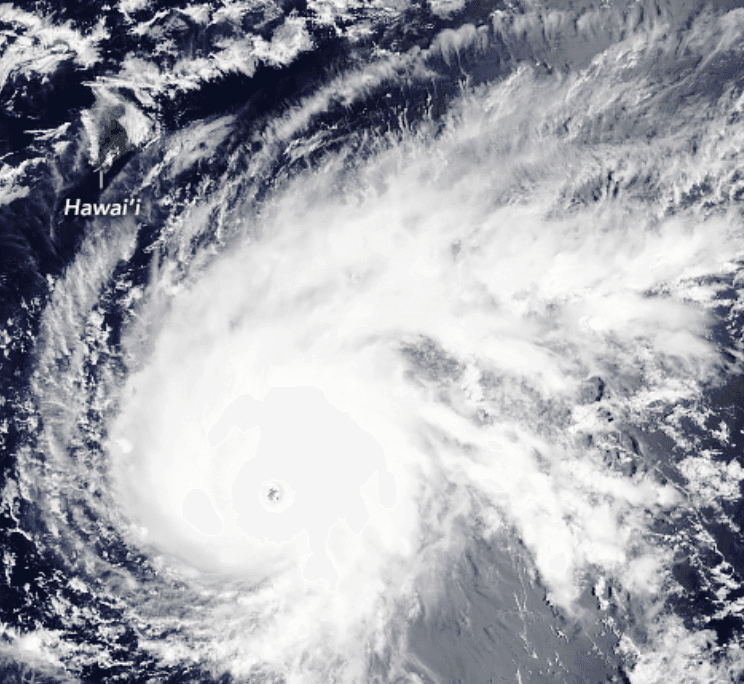
Hawaii's central Pacific location and typical steering patterns make direct hurricane landfalls exceptionally rare, with only two official events on record since 1950—Dot in 1959 and Iniki in 1992—both striking Kauai. Recent seasons reinforce this pattern, as storms like Hone in 2024 and Lala in August 2026 produced close brushes or impacts but fell short of sustained Category 1+ landfall per National Hurricane Center criteria. With the 2026 season nearing its end and just four months remaining before 2027, trader consensus at 91.5% for "No" reflects these climatological barriers and low historical frequency. An atypical late-forming system could still shift odds if it intensifies rapidly and tracks directly over the islands.
基於Polymarket數據的AI實驗性摘要。這不是交易建議,也不影響該市場的結算方式。 · 更新於颶風會在2027年之前登陸夏威夷嗎?
颶風會在2027年之前登陸夏威夷嗎?
是
9% 機率
$11,535 交易量
$11,535 交易量
2027-01-01
是
9% 機率
$11,535 交易量
$11,535 交易量
2027-01-01
This market will resolve to "Yes" if any storm makes landfall in the State of Hawaii at Category 1 strength or higher, as reported in official Central Pacific Hurricane Center advisories (https://www.nhc.noaa.gov/cphc/), between market creation and December 31, 2026, 11:59:59 PM ET. Otherwise, this market will resolve to "No". A landfall counts toward this determination only if it occurs within this window; the time of the physical landfall governs, not the time any confirming advisory is issued.
A hurricane is a tropical cyclone with maximum sustained winds of 74 mph or greater (Category 1 or higher on the Saffir-Simpson Hurricane Wind Scale), as described at https://www.nhc.noaa.gov/aboutsshws.php, and a hurricane landfall is said to occur when the hurricane's surface center intersects with the coastline, as described at https://www.nhc.noaa.gov/aboutgloss.shtml#LANDFALL. A storm must hold hurricane strength (Category 1 or higher on the Saffir-Simpson scale) at the moment its surface center intersects the coastline for that landfall to qualify.
"Hawaii" means the entire State of Hawaii as recognized under U.S. law, including the main Hawaiian Islands (Hawaiʻi, Maui, Oʻahu, Kauaʻi, Molokaʻi, Lānaʻi, Niʻihau, and Kahoʻolawe) and the Northwestern Hawaiian Islands (including Midway Atoll and the Papahānaumokuākea Marine National Monument).
The wind speed at the moment of landfall will be determined from the CPHC advisory or Special Advisory in effect at the time closest to the reported landfall time; where no advisory covers that exact moment, the most recent advisory issued prior to landfall governs.
This market may resolve based on the initial CPHC advisory reporting a qualifying landfall regardless of any later advisory, retraction, best-track revision, or reanalysis that revises that storm's intensity downward at the time of landfall. However, if a subsequent advisory or correction identifies a qualifying landfall that was not reflected in initial reporting, this market will resolve to "Yes" based on that correction.Hawaii's central Pacific location and typical steering patterns make direct hurricane landfalls exceptionally rare, with only two official events on record since 1950—Dot in 1959 and Iniki in 1992—both striking Kauai. Recent seasons reinforce this pattern, as storms like Hone in 2024 and Lala in August 2026 produced close brushes or impacts but fell short of sustained Category 1+ landfall per National Hurricane Center criteria. With the 2026 season nearing its end and just four months remaining before 2027, trader consensus at 91.5% for "No" reflects these climatological barriers and low historical frequency. An atypical late-forming system could still shift odds if it intensifies rapidly and tracks directly over the islands.
This market will resolve to "Yes" if any storm makes landfall in the State of Hawaii at Category 1 strength or higher, as reported in official Central Pacific Hurricane Center advisories (https://www.nhc.noaa.gov/cphc/), between market creation and December 31, 2026, 11:59:59 PM ET. Otherwise, this market will resolve to "No". A landfall counts toward this determination only if it occurs within this window; the time of the physical landfall governs, not the time any confirming advisory is issued.
A hurricane is a tropical cyclone with maximum sustained winds of 74 mph or greater (Category 1 or higher on the Saffir-Simpson Hurricane Wind Scale), as described at https://www.nhc.noaa.gov/aboutsshws.php, and a hurricane landfall is said to occur when the hurricane's surface center intersects with the coastline, as described at https://www.nhc.noaa.gov/aboutgloss.shtml#LANDFALL. A storm must hold hurricane strength (Category 1 or higher on the Saffir-Simpson scale) at the moment its surface center intersects the coastline for that landfall to qualify.
"Hawaii" means the entire State of Hawaii as recognized under U.S. law, including the main Hawaiian Islands (Hawaiʻi, Maui, Oʻahu, Kauaʻi, Molokaʻi, Lānaʻi, Niʻihau, and Kahoʻolawe) and the Northwestern Hawaiian Islands (including Midway Atoll and the Papahānaumokuākea Marine National Monument).
The wind speed at the moment of landfall will be determined from the CPHC advisory or Special Advisory in effect at the time closest to the reported landfall time; where no advisory covers that exact moment, the most recent advisory issued prior to landfall governs.
This market may resolve based on the initial CPHC advisory reporting a qualifying landfall regardless of any later advisory, retraction, best-track revision, or reanalysis that revises that storm's intensity downward at the time of landfall. However, if a subsequent advisory or correction identifies a qualifying landfall that was not reflected in initial reporting, this market will resolve to "Yes" based on that correction.
A hurricane is a tropical cyclone with maximum sustained winds of 74 mph or greater (Category 1 or higher on the Saffir-Simpson Hurricane Wind Scale), as described at https://www.nhc.noaa.gov/aboutsshws.php, and a hurricane landfall is said to occur when the hurricane's surface center intersects with the coastline, as described at https://www.nhc.noaa.gov/aboutgloss.shtml#LANDFALL. A storm must hold hurricane strength (Category 1 or higher on the Saffir-Simpson scale) at the moment its surface center intersects the coastline for that landfall to qualify.
"Hawaii" means the entire State of Hawaii as recognized under U.S. law, including the main Hawaiian Islands (Hawaiʻi, Maui, Oʻahu, Kauaʻi, Molokaʻi, Lānaʻi, Niʻihau, and Kahoʻolawe) and the Northwestern Hawaiian Islands (including Midway Atoll and the Papahānaumokuākea Marine National Monument).
The wind speed at the moment of landfall will be determined from the CPHC advisory or Special Advisory in effect at the time closest to the reported landfall time; where no advisory covers that exact moment, the most recent advisory issued prior to landfall governs.
This market may resolve based on the initial CPHC advisory reporting a qualifying landfall regardless of any later advisory, retraction, best-track revision, or reanalysis that revises that storm's intensity downward at the time of landfall. However, if a subsequent advisory or correction identifies a qualifying landfall that was not reflected in initial reporting, this market will resolve to "Yes" based on that correction.
市場開放時間: Jul 24, 2026, 11:28 AM ET
交易量
$11,535結束日期
2027-01-01市場開放時間
Jul 24, 2026, 11:28 AM ETResolver
0x65070BE91...This market will resolve to "Yes" if any storm makes landfall in the State of Hawaii at Category 1 strength or higher, as reported in official Central Pacific Hurricane Center advisories (https://www.nhc.noaa.gov/cphc/), between market creation and December 31, 2026, 11:59:59 PM ET. Otherwise, this market will resolve to "No". A landfall counts toward this determination only if it occurs within this window; the time of the physical landfall governs, not the time any confirming advisory is issued.
A hurricane is a tropical cyclone with maximum sustained winds of 74 mph or greater (Category 1 or higher on the Saffir-Simpson Hurricane Wind Scale), as described at https://www.nhc.noaa.gov/aboutsshws.php, and a hurricane landfall is said to occur when the hurricane's surface center intersects with the coastline, as described at https://www.nhc.noaa.gov/aboutgloss.shtml#LANDFALL. A storm must hold hurricane strength (Category 1 or higher on the Saffir-Simpson scale) at the moment its surface center intersects the coastline for that landfall to qualify.
"Hawaii" means the entire State of Hawaii as recognized under U.S. law, including the main Hawaiian Islands (Hawaiʻi, Maui, Oʻahu, Kauaʻi, Molokaʻi, Lānaʻi, Niʻihau, and Kahoʻolawe) and the Northwestern Hawaiian Islands (including Midway Atoll and the Papahānaumokuākea Marine National Monument).
The wind speed at the moment of landfall will be determined from the CPHC advisory or Special Advisory in effect at the time closest to the reported landfall time; where no advisory covers that exact moment, the most recent advisory issued prior to landfall governs.
This market may resolve based on the initial CPHC advisory reporting a qualifying landfall regardless of any later advisory, retraction, best-track revision, or reanalysis that revises that storm's intensity downward at the time of landfall. However, if a subsequent advisory or correction identifies a qualifying landfall that was not reflected in initial reporting, this market will resolve to "Yes" based on that correction.Hawaii's central Pacific location and typical steering patterns make direct hurricane landfalls exceptionally rare, with only two official events on record since 1950—Dot in 1959 and Iniki in 1992—both striking Kauai. Recent seasons reinforce this pattern, as storms like Hone in 2024 and Lala in August 2026 produced close brushes or impacts but fell short of sustained Category 1+ landfall per National Hurricane Center criteria. With the 2026 season nearing its end and just four months remaining before 2027, trader consensus at 91.5% for "No" reflects these climatological barriers and low historical frequency. An atypical late-forming system could still shift odds if it intensifies rapidly and tracks directly over the islands.
This market will resolve to "Yes" if any storm makes landfall in the State of Hawaii at Category 1 strength or higher, as reported in official Central Pacific Hurricane Center advisories (https://www.nhc.noaa.gov/cphc/), between market creation and December 31, 2026, 11:59:59 PM ET. Otherwise, this market will resolve to "No". A landfall counts toward this determination only if it occurs within this window; the time of the physical landfall governs, not the time any confirming advisory is issued.
A hurricane is a tropical cyclone with maximum sustained winds of 74 mph or greater (Category 1 or higher on the Saffir-Simpson Hurricane Wind Scale), as described at https://www.nhc.noaa.gov/aboutsshws.php, and a hurricane landfall is said to occur when the hurricane's surface center intersects with the coastline, as described at https://www.nhc.noaa.gov/aboutgloss.shtml#LANDFALL. A storm must hold hurricane strength (Category 1 or higher on the Saffir-Simpson scale) at the moment its surface center intersects the coastline for that landfall to qualify.
"Hawaii" means the entire State of Hawaii as recognized under U.S. law, including the main Hawaiian Islands (Hawaiʻi, Maui, Oʻahu, Kauaʻi, Molokaʻi, Lānaʻi, Niʻihau, and Kahoʻolawe) and the Northwestern Hawaiian Islands (including Midway Atoll and the Papahānaumokuākea Marine National Monument).
The wind speed at the moment of landfall will be determined from the CPHC advisory or Special Advisory in effect at the time closest to the reported landfall time; where no advisory covers that exact moment, the most recent advisory issued prior to landfall governs.
This market may resolve based on the initial CPHC advisory reporting a qualifying landfall regardless of any later advisory, retraction, best-track revision, or reanalysis that revises that storm's intensity downward at the time of landfall. However, if a subsequent advisory or correction identifies a qualifying landfall that was not reflected in initial reporting, this market will resolve to "Yes" based on that correction.
A hurricane is a tropical cyclone with maximum sustained winds of 74 mph or greater (Category 1 or higher on the Saffir-Simpson Hurricane Wind Scale), as described at https://www.nhc.noaa.gov/aboutsshws.php, and a hurricane landfall is said to occur when the hurricane's surface center intersects with the coastline, as described at https://www.nhc.noaa.gov/aboutgloss.shtml#LANDFALL. A storm must hold hurricane strength (Category 1 or higher on the Saffir-Simpson scale) at the moment its surface center intersects the coastline for that landfall to qualify.
"Hawaii" means the entire State of Hawaii as recognized under U.S. law, including the main Hawaiian Islands (Hawaiʻi, Maui, Oʻahu, Kauaʻi, Molokaʻi, Lānaʻi, Niʻihau, and Kahoʻolawe) and the Northwestern Hawaiian Islands (including Midway Atoll and the Papahānaumokuākea Marine National Monument).
The wind speed at the moment of landfall will be determined from the CPHC advisory or Special Advisory in effect at the time closest to the reported landfall time; where no advisory covers that exact moment, the most recent advisory issued prior to landfall governs.
This market may resolve based on the initial CPHC advisory reporting a qualifying landfall regardless of any later advisory, retraction, best-track revision, or reanalysis that revises that storm's intensity downward at the time of landfall. However, if a subsequent advisory or correction identifies a qualifying landfall that was not reflected in initial reporting, this market will resolve to "Yes" based on that correction.
交易量
$11,535結束日期
2027-01-01市場開放時間
Jul 24, 2026, 11:28 AM ETResolver
0x65070BE91...Hawaii's central Pacific location and typical steering patterns make direct hurricane landfalls exceptionally rare, with only two official events on record since 1950—Dot in 1959 and Iniki in 1992—both striking Kauai. Recent seasons reinforce this pattern, as storms like Hone in 2024 and Lala in August 2026 produced close brushes or impacts but fell short of sustained Category 1+ landfall per National Hurricane Center criteria. With the 2026 season nearing its end and just four months remaining before 2027, trader consensus at 91.5% for "No" reflects these climatological barriers and low historical frequency. An atypical late-forming system could still shift odds if it intensifies rapidly and tracks directly over the islands.
基於Polymarket數據的AI實驗性摘要。這不是交易建議,也不影響該市場的結算方式。 · 更新於

警惕外部連結哦。
警惕外部連結哦。
Frequently Asked Questions