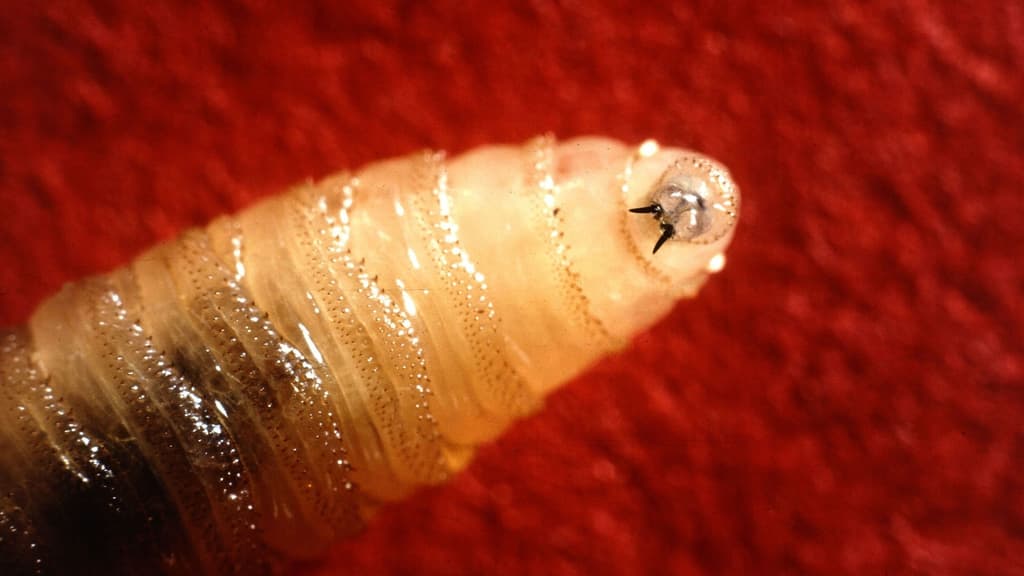
**Recent USDA-APHIS confirmations show New World screwworm (Cochliomyia hominivorax) spreading beyond initial South Texas detections.** The first U.S. case since the 1960s was a calf in Zavala County on June 3, 2026, followed by additional livestock cases (cattle, goats, sheep) across Texas counties including La Salle and Gillespie. By mid-June, confirmed animal cases reached about 12, including in Lea County, New Mexico, with larvae infesting wounds in warm-blooded hosts. Official surveillance via trapping, quarantines in 20 km zones, and sterile insect technique releases aims to contain northward movement from Mexico outbreaks. Key upcoming factors include APHIS dashboard updates on new detections, model consensus on dispersal risk, and any revised case thresholds or geographic criteria that could influence market resolution. Trader sentiment reflects the pace of verified spread versus containment efficacy under active federal response.
基于Polymarket数据的AI实验性摘要。这不是交易建议,也不影响该市场的结算方式。 · 更新于
8月30日
32%

10月31日
38%

12月31日
49%
$4,346 交易量
8月30日
32%
10月31日
38%
12月31日
49%
Any laboratory-confirmed screwworm infection identified within a U.S. state other than Texas will qualify, regardless of where exposure or symptom onset occurred.
The primary resolution source for this market will be official government information (e.g., the CDC or USDA); however, an overwhelming consensus of credible reporting will also suffice.
市场开放时间: Jun 9, 2026, 10:17 PM ET
Resolver
0x65070BE91...Any laboratory-confirmed screwworm infection identified within a U.S. state other than Texas will qualify, regardless of where exposure or symptom onset occurred.
The primary resolution source for this market will be official government information (e.g., the CDC or USDA); however, an overwhelming consensus of credible reporting will also suffice.
Resolver
0x65070BE91...**Recent USDA-APHIS confirmations show New World screwworm (Cochliomyia hominivorax) spreading beyond initial South Texas detections.** The first U.S. case since the 1960s was a calf in Zavala County on June 3, 2026, followed by additional livestock cases (cattle, goats, sheep) across Texas counties including La Salle and Gillespie. By mid-June, confirmed animal cases reached about 12, including in Lea County, New Mexico, with larvae infesting wounds in warm-blooded hosts. Official surveillance via trapping, quarantines in 20 km zones, and sterile insect technique releases aims to contain northward movement from Mexico outbreaks. Key upcoming factors include APHIS dashboard updates on new detections, model consensus on dispersal risk, and any revised case thresholds or geographic criteria that could influence market resolution. Trader sentiment reflects the pace of verified spread versus containment efficacy under active federal response.
基于Polymarket数据的AI实验性摘要。这不是交易建议,也不影响该市场的结算方式。 · 更新于


警惕外部链接哦。
警惕外部链接哦。
常见问题