
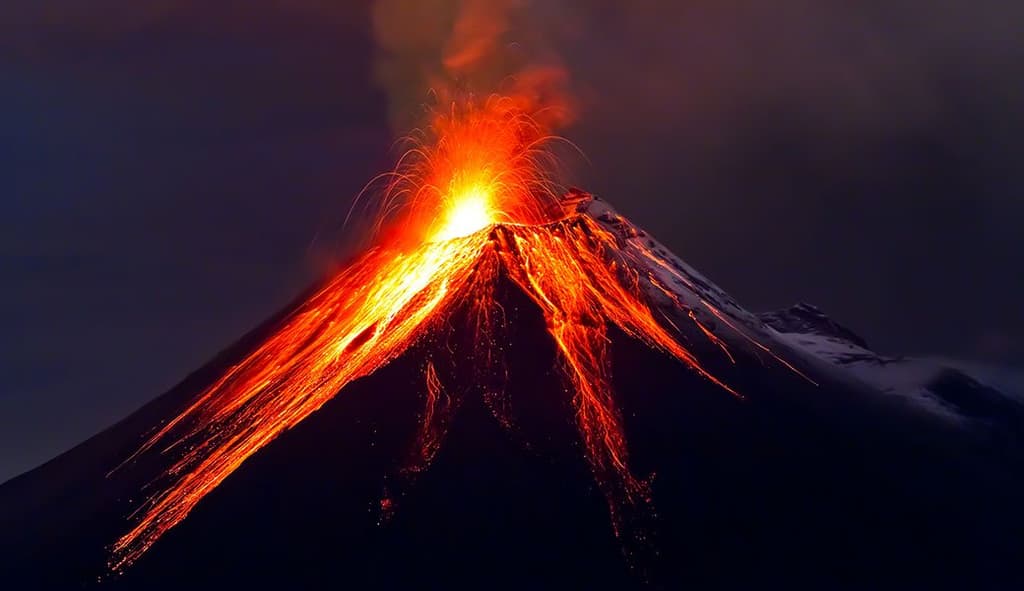
The strong market consensus favoring no VEI 6 or greater eruption in 2026 rests on the low historical frequency of such events, which occur on average once every several decades based on global volcanic records. Current monitoring by agencies like the USGS shows no large-scale magma chamber inflation or seismic swarms at known high-risk calderas that would signal rapid escalation to Plinian-scale activity. While volcanic systems can evolve quickly, the absence of precursory unrest and the statistical baseline of roughly 0.5–1 percent annual probability for a major explosive event reinforce trader positioning. A sudden shift could occur only if new geophysical data revealed accelerated unrest at sites like Yellowstone or Campi Flegrei.
Experimental AI-generated summary referencing Polymarket data. This is not trading advice and plays no role in how this market resolves. · UpdatedMajor volcano eruption (VEI ≥6) in 2026?
$80,401 Vol.
$80,401 Vol.
$80,401 Vol.
$80,401 Vol.
The primary resolution source will be the Smithsonian Institution Global Volcanism Program (GVP: https://volcano.si.edu/), specifically the ‘VEI 6’ figure for 2026 released on the page currently titled "Eruptions Avg 2000-2024 (N/T)" (https://volcano.si.edu/faq/index.cfm?question=eruptionsbyyear) as of March 31, 2027, 12 PM ET. Any prior updates will not be considered finalized.
If this dataset has not been updated to include all relevant events by March 31, 2027, or if the Smithsonian GVP becomes permanently unavailable, this market may resolve based on a consensus of credible scientific sources, including the U.S. Geological Survey (USGS), national or regional volcanic observatories, or credible reporting of a scientific consensus.
Note: Smithsonian Institution Global Volcanism Program databases, which include eruptions that reached the relevant threshold prior to this market’s timeframe (e.g., https://volcano.si.edu/faq/index.cfm?question=eruptionsbyyear&checkyear=2025), will not be considered.
Market Opened: Dec 29, 2025, 6:24 PM ET
Resolver
0x65070BE91...The primary resolution source will be the Smithsonian Institution Global Volcanism Program (GVP: https://volcano.si.edu/), specifically the ‘VEI 6’ figure for 2026 released on the page currently titled "Eruptions Avg 2000-2024 (N/T)" (https://volcano.si.edu/faq/index.cfm?question=eruptionsbyyear) as of March 31, 2027, 12 PM ET. Any prior updates will not be considered finalized.
If this dataset has not been updated to include all relevant events by March 31, 2027, or if the Smithsonian GVP becomes permanently unavailable, this market may resolve based on a consensus of credible scientific sources, including the U.S. Geological Survey (USGS), national or regional volcanic observatories, or credible reporting of a scientific consensus.
Note: Smithsonian Institution Global Volcanism Program databases, which include eruptions that reached the relevant threshold prior to this market’s timeframe (e.g., https://volcano.si.edu/faq/index.cfm?question=eruptionsbyyear&checkyear=2025), will not be considered.
Resolver
0x65070BE91...The strong market consensus favoring no VEI 6 or greater eruption in 2026 rests on the low historical frequency of such events, which occur on average once every several decades based on global volcanic records. Current monitoring by agencies like the USGS shows no large-scale magma chamber inflation or seismic swarms at known high-risk calderas that would signal rapid escalation to Plinian-scale activity. While volcanic systems can evolve quickly, the absence of precursory unrest and the statistical baseline of roughly 0.5–1 percent annual probability for a major explosive event reinforce trader positioning. A sudden shift could occur only if new geophysical data revealed accelerated unrest at sites like Yellowstone or Campi Flegrei.
Experimental AI-generated summary referencing Polymarket data. This is not trading advice and plays no role in how this market resolves. · Updated


Beware of external links.
Frequently Asked Questions