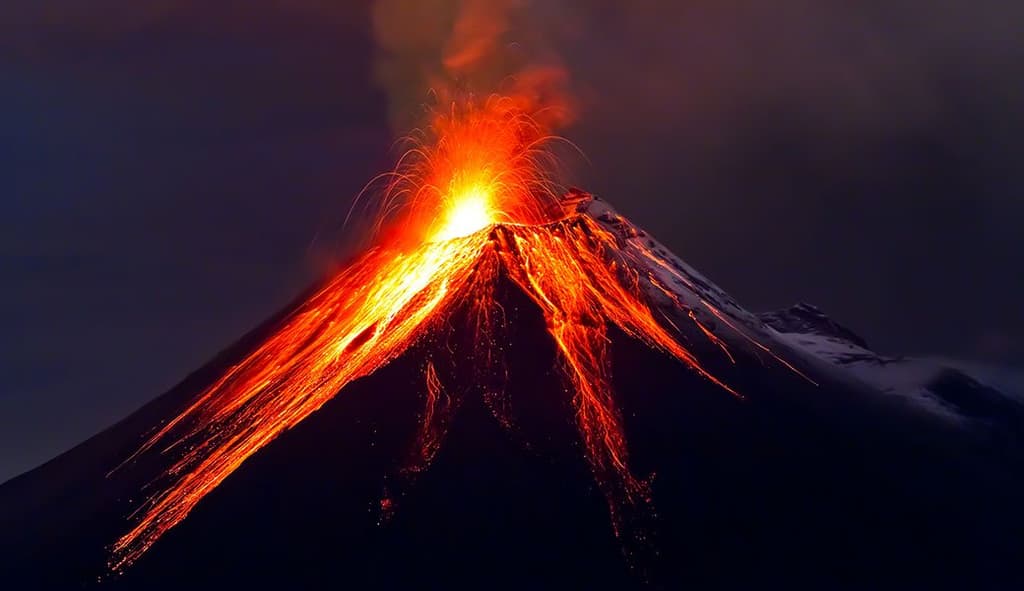
No VEI ≥4 eruptions have occurred in the first 7.5 months of 2026, per Smithsonian Global Volcanism Program records of 47 total eruptions, all classified at lower VEI levels. This absence, paired with the inherent rarity of VEI 4+ events—typically spaced years apart based on Holocene data and volume thresholds exceeding 0.1 km³ with plumes over 10 km—strongly favors a zero or single-event outcome. Ongoing monitoring shows mostly smaller, ongoing activity at sites like Sakurajima and Kīlauea without signs of rapid escalation to large explosive phases. With roughly 4.5 months remaining, model consensus on low near-term probability of major events reinforces trader weighting toward zero or one, though new seismic or gas data from observatories could shift assessments before year-end.
Riepilogo sperimentale generato dall'AI con riferimento ai dati di Polymarket. Questo non è un consiglio di trading e non ha alcun ruolo nella risoluzione di questo mercato. · AggiornatoQuante grandi eruzioni vulcaniche (vei ≥4) nel 2026?
Quante grandi eruzioni vulcaniche (vei ≥4) nel 2026?
0 67%
1 18%
2 3.6%
5+ <1%
$1,156,063 Vol.
$1,156,063 Vol.
0
72%
1
18%
2
4%
3
1%
4
1%
5+
1%
0 67%
1 18%
2 3.6%
5+ <1%
$1,156,063 Vol.
$1,156,063 Vol.
0
72%
1
18%
2
4%
3
1%
4
1%
5+
1%
The primary resolution source will be the Smithsonian Institution Global Volcanism Program (GVP: https://volcano.si.edu/), specifically the cumulative figures for 2026 for VEI 4, VEI 5, and VEI 6 released on the page currently titled "Eruptions Avg 2000-2024 (N/T)" (https://volcano.si.edu/faq/index.cfm?question=eruptionsbyyear) as of March 31, 2027, 12 PM ET. Any prior updates will not be considered finalized.
If this dataset has not been updated to include all relevant events by March 31, 2027, or if the Smithsonian GVP becomes permanently unavailable, this market may resolve based on a consensus of credible scientific sources, including the U.S. Geological Survey (USGS), national or regional volcanic observatories, or credible reporting of a scientific consensus.
Note: Smithsonian Institution Global Volcanism Program databases, which include eruptions that reached the relevant threshold prior to this market’s timeframe (e.g., https://volcano.si.edu/faq/index.cfm?question=eruptionsbyyear&checkyear=2025), will not be considered.
Mercato aperto: Jan 2, 2026, 1:48 PM ET
Resolver
0x2F5e3684c...The primary resolution source will be the Smithsonian Institution Global Volcanism Program (GVP: https://volcano.si.edu/), specifically the cumulative figures for 2026 for VEI 4, VEI 5, and VEI 6 released on the page currently titled "Eruptions Avg 2000-2024 (N/T)" (https://volcano.si.edu/faq/index.cfm?question=eruptionsbyyear) as of March 31, 2027, 12 PM ET. Any prior updates will not be considered finalized.
If this dataset has not been updated to include all relevant events by March 31, 2027, or if the Smithsonian GVP becomes permanently unavailable, this market may resolve based on a consensus of credible scientific sources, including the U.S. Geological Survey (USGS), national or regional volcanic observatories, or credible reporting of a scientific consensus.
Note: Smithsonian Institution Global Volcanism Program databases, which include eruptions that reached the relevant threshold prior to this market’s timeframe (e.g., https://volcano.si.edu/faq/index.cfm?question=eruptionsbyyear&checkyear=2025), will not be considered.
Resolver
0x2F5e3684c...No VEI ≥4 eruptions have occurred in the first 7.5 months of 2026, per Smithsonian Global Volcanism Program records of 47 total eruptions, all classified at lower VEI levels. This absence, paired with the inherent rarity of VEI 4+ events—typically spaced years apart based on Holocene data and volume thresholds exceeding 0.1 km³ with plumes over 10 km—strongly favors a zero or single-event outcome. Ongoing monitoring shows mostly smaller, ongoing activity at sites like Sakurajima and Kīlauea without signs of rapid escalation to large explosive phases. With roughly 4.5 months remaining, model consensus on low near-term probability of major events reinforces trader weighting toward zero or one, though new seismic or gas data from observatories could shift assessments before year-end.
Riepilogo sperimentale generato dall'AI con riferimento ai dati di Polymarket. Questo non è un consiglio di trading e non ha alcun ruolo nella risoluzione di questo mercato. · Aggiornato

Fai attenzione ai link esterni.
Fai attenzione ai link esterni.
Domande frequenti