
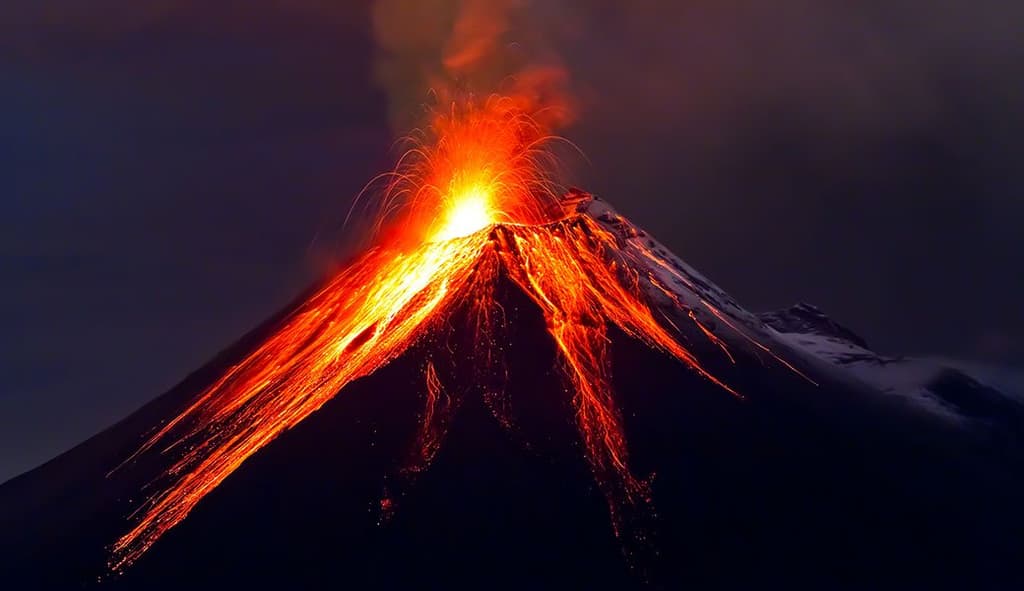
Global volcanic monitoring through mid-May 2026 shows no confirmed VEI ≥4 eruptions so far this year, aligning with the 60.5% market-implied probability for zero such events and the 34.5% chance of exactly one. Smithsonian Global Volcanism Program and USGS reports document 47 total eruptions, dominated by low-VEI effusive or moderate explosive activity at sites like Kīlauea’s episodic fountaining, ongoing Semeru and Sheveluch flows, and smaller phreatic events at Poás and Dempo. Historical patterns indicate VEI ≥4 eruptions occur roughly once every 1–2 years on average, yet current absence of rapid deformation, intense seismic swarms, or large ash plumes at stratovolcanoes or calderas supports trader consensus favoring a quiet remainder of 2026 unless new unrest emerges at monitored systems.
Experimental AI-generated summary referencing Polymarket data. This is not trading advice and plays no role in how this market resolves. · UpdatedHow many large volcano eruptions (VEI ≥4) in 2026?
0 61%
1 35%
2 4.0%
3 <1%
$1,079,749 Vol.
$1,079,749 Vol.
0
61%
1
35%
2
4%
3
1%
4
<1%
5+
<1%
0 61%
1 35%
2 4.0%
3 <1%
$1,079,749 Vol.
$1,079,749 Vol.
0
61%
1
35%
2
4%
3
1%
4
<1%
5+
<1%
The primary resolution source will be the Smithsonian Institution Global Volcanism Program (GVP: https://volcano.si.edu/), specifically the cumulative figures for 2026 for VEI 4, VEI 5, and VEI 6 released on the page currently titled "Eruptions Avg 2000-2024 (N/T)" (https://volcano.si.edu/faq/index.cfm?question=eruptionsbyyear) as of March 31, 2027, 12 PM ET. Any prior updates will not be considered finalized.
If this dataset has not been updated to include all relevant events by March 31, 2027, or if the Smithsonian GVP becomes permanently unavailable, this market may resolve based on a consensus of credible scientific sources, including the U.S. Geological Survey (USGS), national or regional volcanic observatories, or credible reporting of a scientific consensus.
Note: Smithsonian Institution Global Volcanism Program databases, which include eruptions that reached the relevant threshold prior to this market’s timeframe (e.g., https://volcano.si.edu/faq/index.cfm?question=eruptionsbyyear&checkyear=2025), will not be considered.
Market Opened: Jan 2, 2026, 1:48 PM ET
Resolver
0x2F5e3684c...The primary resolution source will be the Smithsonian Institution Global Volcanism Program (GVP: https://volcano.si.edu/), specifically the cumulative figures for 2026 for VEI 4, VEI 5, and VEI 6 released on the page currently titled "Eruptions Avg 2000-2024 (N/T)" (https://volcano.si.edu/faq/index.cfm?question=eruptionsbyyear) as of March 31, 2027, 12 PM ET. Any prior updates will not be considered finalized.
If this dataset has not been updated to include all relevant events by March 31, 2027, or if the Smithsonian GVP becomes permanently unavailable, this market may resolve based on a consensus of credible scientific sources, including the U.S. Geological Survey (USGS), national or regional volcanic observatories, or credible reporting of a scientific consensus.
Note: Smithsonian Institution Global Volcanism Program databases, which include eruptions that reached the relevant threshold prior to this market’s timeframe (e.g., https://volcano.si.edu/faq/index.cfm?question=eruptionsbyyear&checkyear=2025), will not be considered.
Resolver
0x2F5e3684c...Global volcanic monitoring through mid-May 2026 shows no confirmed VEI ≥4 eruptions so far this year, aligning with the 60.5% market-implied probability for zero such events and the 34.5% chance of exactly one. Smithsonian Global Volcanism Program and USGS reports document 47 total eruptions, dominated by low-VEI effusive or moderate explosive activity at sites like Kīlauea’s episodic fountaining, ongoing Semeru and Sheveluch flows, and smaller phreatic events at Poás and Dempo. Historical patterns indicate VEI ≥4 eruptions occur roughly once every 1–2 years on average, yet current absence of rapid deformation, intense seismic swarms, or large ash plumes at stratovolcanoes or calderas supports trader consensus favoring a quiet remainder of 2026 unless new unrest emerges at monitored systems.
Experimental AI-generated summary referencing Polymarket data. This is not trading advice and plays no role in how this market resolves. · Updated


Beware of external links.
Frequently Asked Questions