
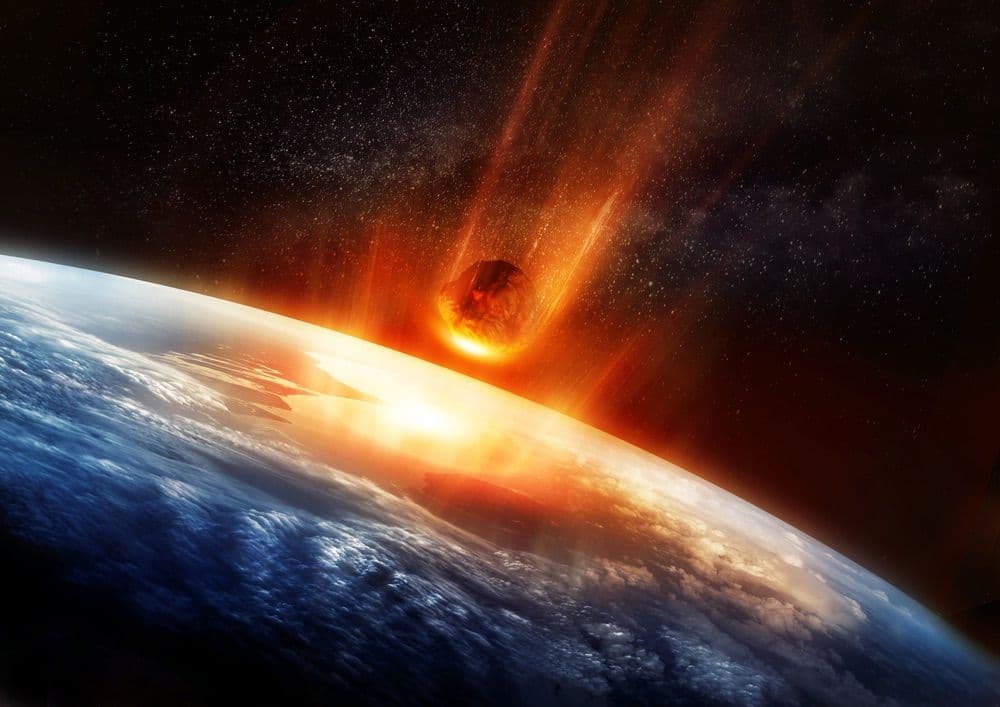
NASA's Center for Near-Earth Object Studies (CNEOS) Sentry system, which scans the asteroid catalog daily for collision risks, currently lists no potential impactors for 2026 capable of releasing 1 megaton of kinetic energy—equivalent to about twice the Chelyabinsk meteor's airburst—underpinning traders' 96.7% consensus on "No." Comprehensive surveys like Pan-STARRS and ATLAS have cataloged over 95% of hazardous near-Earth objects larger than 140 meters, with smaller threats increasingly tracked; recent safe close approaches by house-sized asteroids such as 2026 GD and HJ1 in March-April further affirm low risk. The first half of 2026 has passed without incident. Realistic shifts could stem from a rare undetected bolide evading telescopes, though probabilities remain below 1% per epidemiological models of impact rates; ongoing orbital refinements provide continual updates.
Experimental AI-generated summary referencing Polymarket data. This is not trading advice and plays no role in how this market resolves. · Updated1 megaton meteor strike in 2026?
1 megaton meteor strike in 2026?
$105,941 Vol.
$105,941 Vol.
$105,941 Vol.
$105,941 Vol.
The object must be classified as a natural meteoroid; events involving artificial objects or reentry vehicles do not qualify.
The primary resolution source will be the NASA JPL Fireball and Bolide Data repository: https://cneos.jpl.nasa.gov/fireballs/. The relevant field for determining impact energy is the “Impact Energy (kt)” column. If this dataset has not been updated to include all relevant dates by February 28, 2027, or if the NASA JPL Fireball and Bolide Data repository becomes permanently unavailable, this market may resolve based on a consensus of credible sources including the European Space Agency (ESA), the International Asteroid Warning Network (IAWN), the U.S. Department of Defense, or credible reporting of a scientific consensus, such as a NASA press release.
Market Opened: Jan 2, 2026, 2:24 PM ET
Resolver
0x65070BE91...The object must be classified as a natural meteoroid; events involving artificial objects or reentry vehicles do not qualify.
The primary resolution source will be the NASA JPL Fireball and Bolide Data repository: https://cneos.jpl.nasa.gov/fireballs/. The relevant field for determining impact energy is the “Impact Energy (kt)” column. If this dataset has not been updated to include all relevant dates by February 28, 2027, or if the NASA JPL Fireball and Bolide Data repository becomes permanently unavailable, this market may resolve based on a consensus of credible sources including the European Space Agency (ESA), the International Asteroid Warning Network (IAWN), the U.S. Department of Defense, or credible reporting of a scientific consensus, such as a NASA press release.
Resolver
0x65070BE91...NASA's Center for Near-Earth Object Studies (CNEOS) Sentry system, which scans the asteroid catalog daily for collision risks, currently lists no potential impactors for 2026 capable of releasing 1 megaton of kinetic energy—equivalent to about twice the Chelyabinsk meteor's airburst—underpinning traders' 96.7% consensus on "No." Comprehensive surveys like Pan-STARRS and ATLAS have cataloged over 95% of hazardous near-Earth objects larger than 140 meters, with smaller threats increasingly tracked; recent safe close approaches by house-sized asteroids such as 2026 GD and HJ1 in March-April further affirm low risk. The first half of 2026 has passed without incident. Realistic shifts could stem from a rare undetected bolide evading telescopes, though probabilities remain below 1% per epidemiological models of impact rates; ongoing orbital refinements provide continual updates.
Experimental AI-generated summary referencing Polymarket data. This is not trading advice and plays no role in how this market resolves. · Updated


Beware of external links.
Frequently Asked Questions