
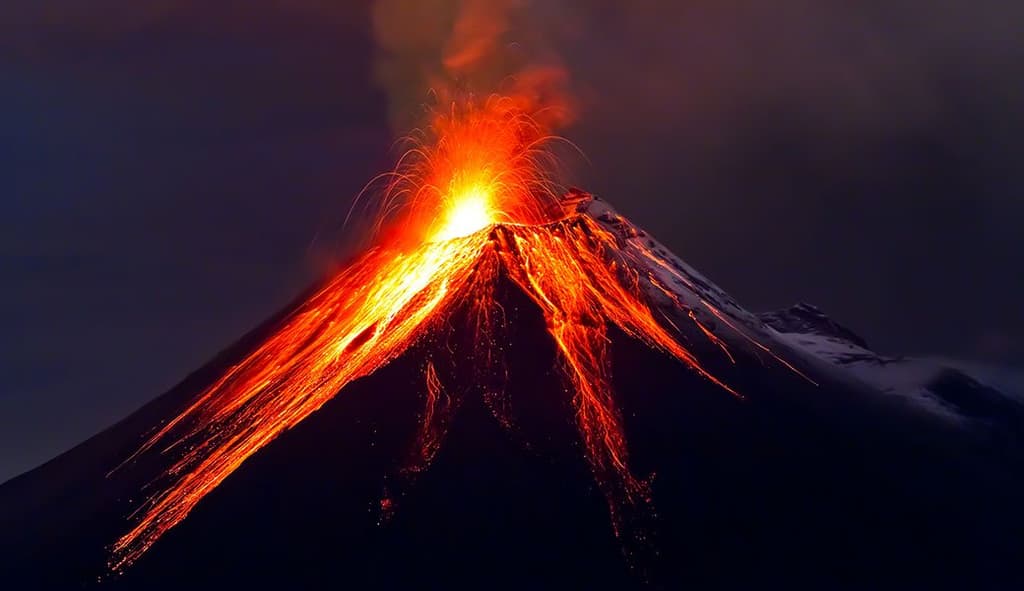
Trader consensus on Polymarket strongly favors zero or one VEI ≥4 eruption in 2026, driven by the complete absence of qualifying events through mid-May despite 47 confirmed smaller eruptions tracked by the Smithsonian Institution and USGS Global Volcanism Program. These large eruptions, defined by at least 0.1 km³ of tephra and plumes exceeding 10 km on the Volcanic Explosivity Index, occur at a long-term global average of roughly 0.6 per year. Recent weekly reports highlight elevated but sub-threshold activity, including brief high ash plumes at Dukono and ongoing unrest at Kīlauea, Popocatépetl, and Aira, none yet producing sufficient ejecta volume or sustained intensity. Unpredictable magmatic recharge and continued monitoring updates through year-end remain the primary variables that could alter these market-implied probabilities if a major system escalates.
Experimental AI-generated summary referencing Polymarket data. This is not trading advice and plays no role in how this market resolves. · UpdatedHow many large volcano eruptions (VEI ≥4) in 2026?
0 60%
1 35%
2 4.0%
3 <1%
$1,078,895 Vol.
$1,078,895 Vol.
0
60%
1
35%
2
4%
3
1%
4
<1%
5+
<1%
0 60%
1 35%
2 4.0%
3 <1%
$1,078,895 Vol.
$1,078,895 Vol.
0
60%
1
35%
2
4%
3
1%
4
<1%
5+
<1%
The primary resolution source will be the Smithsonian Institution Global Volcanism Program (GVP: https://volcano.si.edu/), specifically the cumulative figures for 2026 for VEI 4, VEI 5, and VEI 6 released on the page currently titled "Eruptions Avg 2000-2024 (N/T)" (https://volcano.si.edu/faq/index.cfm?question=eruptionsbyyear) as of March 31, 2027, 12 PM ET. Any prior updates will not be considered finalized.
If this dataset has not been updated to include all relevant events by March 31, 2027, or if the Smithsonian GVP becomes permanently unavailable, this market may resolve based on a consensus of credible scientific sources, including the U.S. Geological Survey (USGS), national or regional volcanic observatories, or credible reporting of a scientific consensus.
Note: Smithsonian Institution Global Volcanism Program databases, which include eruptions that reached the relevant threshold prior to this market’s timeframe (e.g., https://volcano.si.edu/faq/index.cfm?question=eruptionsbyyear&checkyear=2025), will not be considered.
Market Opened: Jan 2, 2026, 1:48 PM ET
Resolver
0x2F5e3684c...The primary resolution source will be the Smithsonian Institution Global Volcanism Program (GVP: https://volcano.si.edu/), specifically the cumulative figures for 2026 for VEI 4, VEI 5, and VEI 6 released on the page currently titled "Eruptions Avg 2000-2024 (N/T)" (https://volcano.si.edu/faq/index.cfm?question=eruptionsbyyear) as of March 31, 2027, 12 PM ET. Any prior updates will not be considered finalized.
If this dataset has not been updated to include all relevant events by March 31, 2027, or if the Smithsonian GVP becomes permanently unavailable, this market may resolve based on a consensus of credible scientific sources, including the U.S. Geological Survey (USGS), national or regional volcanic observatories, or credible reporting of a scientific consensus.
Note: Smithsonian Institution Global Volcanism Program databases, which include eruptions that reached the relevant threshold prior to this market’s timeframe (e.g., https://volcano.si.edu/faq/index.cfm?question=eruptionsbyyear&checkyear=2025), will not be considered.
Resolver
0x2F5e3684c...Trader consensus on Polymarket strongly favors zero or one VEI ≥4 eruption in 2026, driven by the complete absence of qualifying events through mid-May despite 47 confirmed smaller eruptions tracked by the Smithsonian Institution and USGS Global Volcanism Program. These large eruptions, defined by at least 0.1 km³ of tephra and plumes exceeding 10 km on the Volcanic Explosivity Index, occur at a long-term global average of roughly 0.6 per year. Recent weekly reports highlight elevated but sub-threshold activity, including brief high ash plumes at Dukono and ongoing unrest at Kīlauea, Popocatépetl, and Aira, none yet producing sufficient ejecta volume or sustained intensity. Unpredictable magmatic recharge and continued monitoring updates through year-end remain the primary variables that could alter these market-implied probabilities if a major system escalates.
Experimental AI-generated summary referencing Polymarket data. This is not trading advice and plays no role in how this market resolves. · Updated


Beware of external links.
Frequently Asked Questions