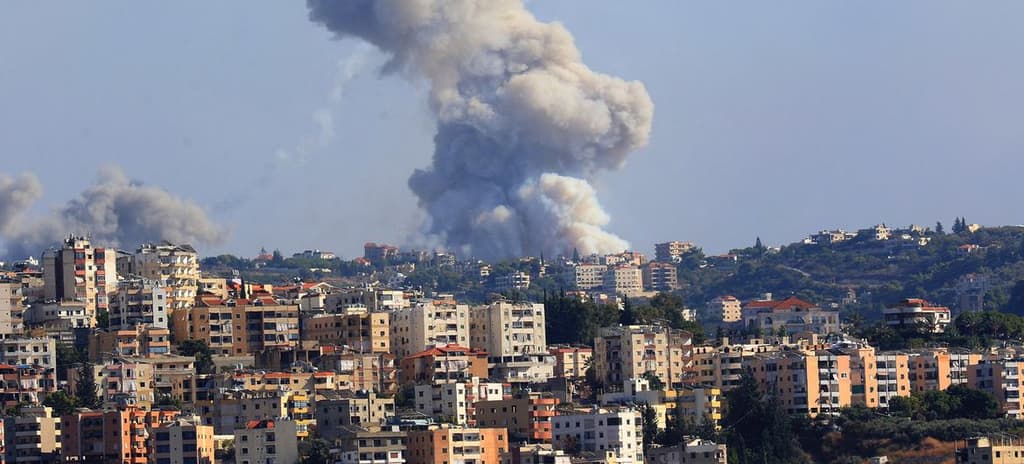
Recent Houthi missile and drone strikes on Israeli targets, resuming in late March 2026 amid the broader U.S.-Israel conflict with Iran, have heightened regional tensions and created direct incentives for Israeli military responses against Houthi infrastructure in Yemen. These attacks, launched in coordination with Iranian and Hezbollah efforts, target military sites and threaten shipping lanes, prompting Israeli defense assessments of retaliation options. Ongoing diplomatic efforts to contain the Iran confrontation and any U.S. signals on de-escalation timelines remain key variables that could influence whether Israel launches strikes within specific resolution windows. Trader sentiment reflects these dynamics, with the wisdom of crowds pricing in the balance between escalation risks and potential restraint.
Experimental AI-generated summary referencing Polymarket data. This is not trading advice and plays no role in how this market resolves. · UpdatedIsrael military action against Yemen by...?
Israel military action against Yemen by...?
$1,741,939 Vol.
May 31
13%
June 30
30%
$1,741,939 Vol.
May 31
13%
June 30
30%
For the purposes of this market, a qualifying "strike" is defined as the use of aerial bombs, drones or missiles (including cruise or ballistic missiles) launched by Israeli military forces that impact Yemen ground territory or any official Yemen embassy or consulate (e.g., if a weapons depot on Yemen soil is hit by an Israeli missile, this market will resolve to "Yes").
Missiles or drones that are intercepted and surface-to-air missile strikes will not be sufficient for a "Yes" resolution, regardless of whether they land on Yemen territory or cause damage.
Actions such as artillery fire, small arms fire, FPV or ATGM strikes directly, ground incursions, naval shelling, cyberattacks, or other operations conducted by Israeli ground operatives will not qualify.
The resolution source will be a consensus of credible reporting.
Market Opened: Mar 18, 2026, 1:43 PM ET
Resolver
0x65070BE91...For the purposes of this market, a qualifying "strike" is defined as the use of aerial bombs, drones or missiles (including cruise or ballistic missiles) launched by Israeli military forces that impact Yemen ground territory or any official Yemen embassy or consulate (e.g., if a weapons depot on Yemen soil is hit by an Israeli missile, this market will resolve to "Yes").
Missiles or drones that are intercepted and surface-to-air missile strikes will not be sufficient for a "Yes" resolution, regardless of whether they land on Yemen territory or cause damage.
Actions such as artillery fire, small arms fire, FPV or ATGM strikes directly, ground incursions, naval shelling, cyberattacks, or other operations conducted by Israeli ground operatives will not qualify.
The resolution source will be a consensus of credible reporting.
Resolver
0x65070BE91...Recent Houthi missile and drone strikes on Israeli targets, resuming in late March 2026 amid the broader U.S.-Israel conflict with Iran, have heightened regional tensions and created direct incentives for Israeli military responses against Houthi infrastructure in Yemen. These attacks, launched in coordination with Iranian and Hezbollah efforts, target military sites and threaten shipping lanes, prompting Israeli defense assessments of retaliation options. Ongoing diplomatic efforts to contain the Iran confrontation and any U.S. signals on de-escalation timelines remain key variables that could influence whether Israel launches strikes within specific resolution windows. Trader sentiment reflects these dynamics, with the wisdom of crowds pricing in the balance between escalation risks and potential restraint.
Experimental AI-generated summary referencing Polymarket data. This is not trading advice and plays no role in how this market resolves. · Updated


Beware of external links.
Beware of external links.
Frequently Asked Questions